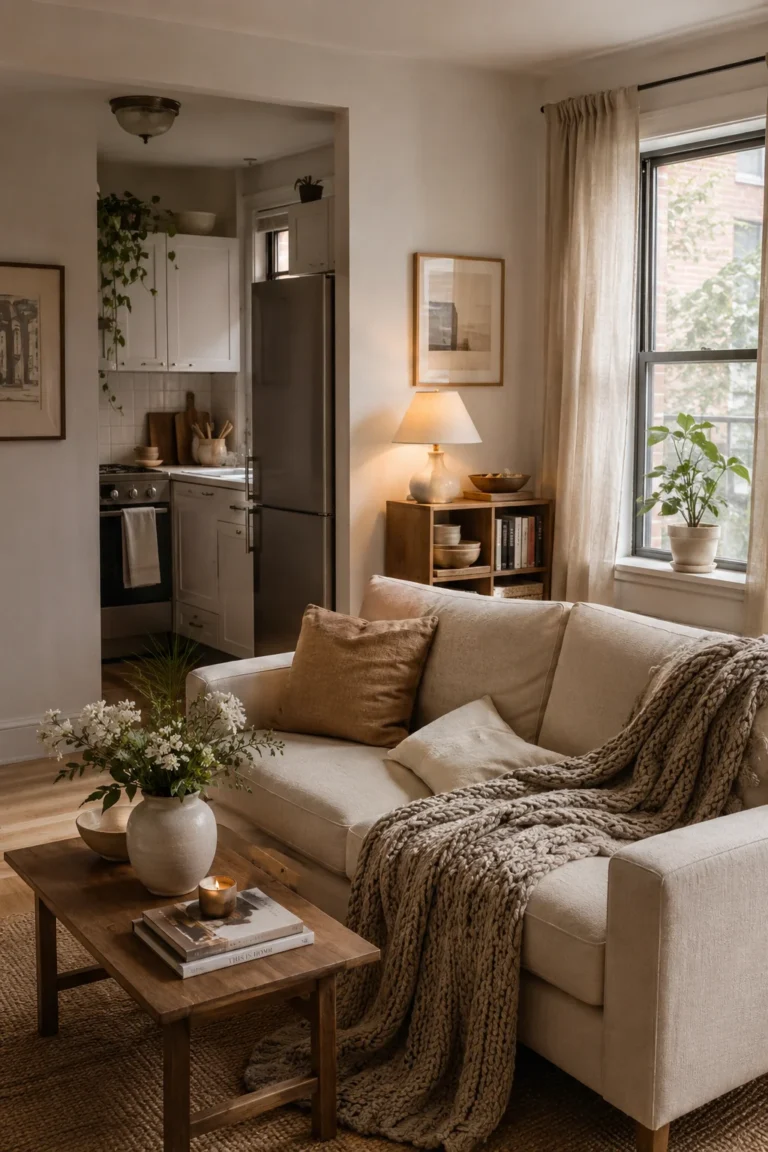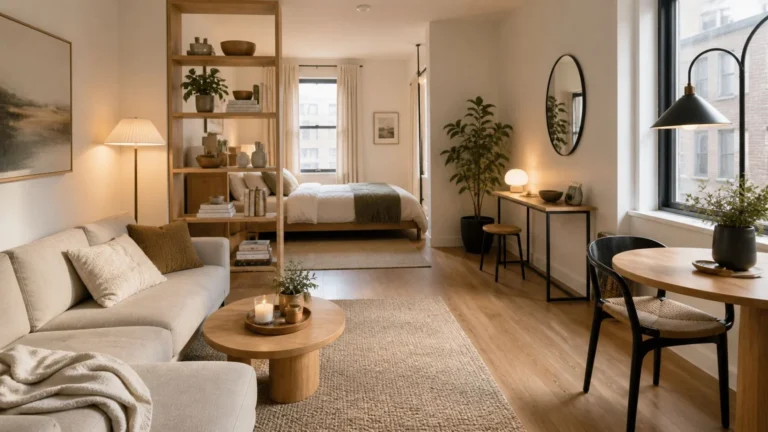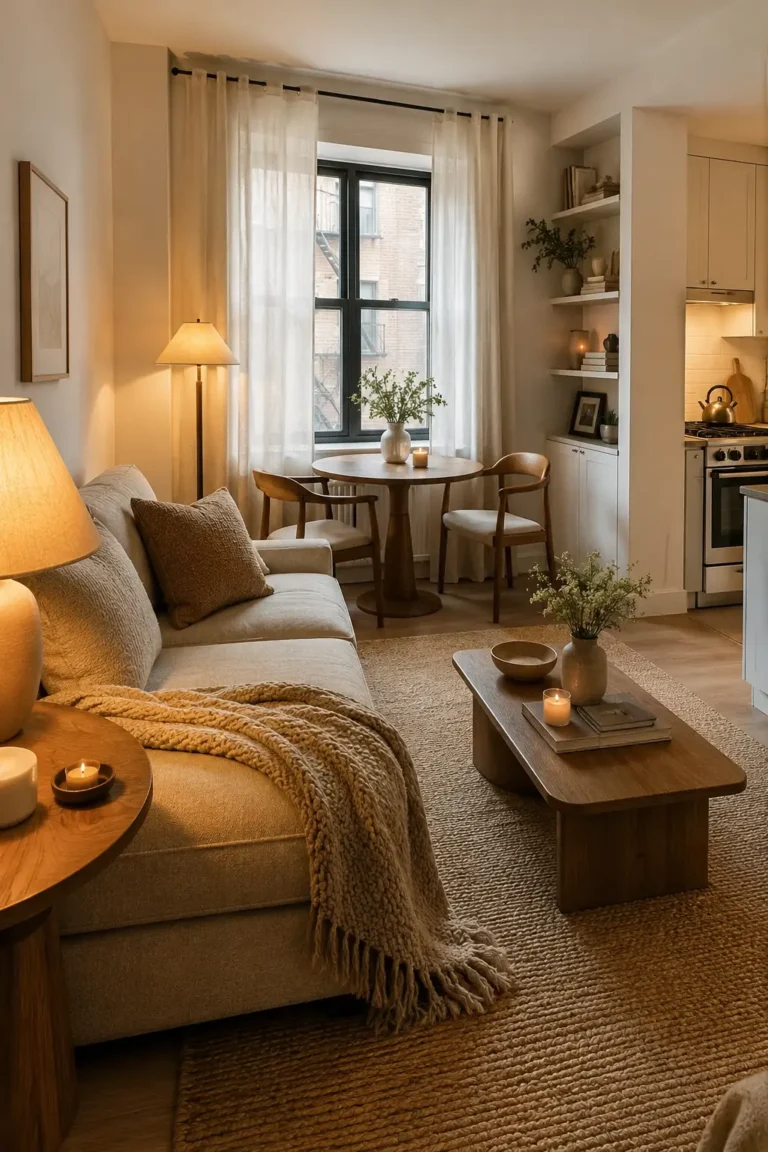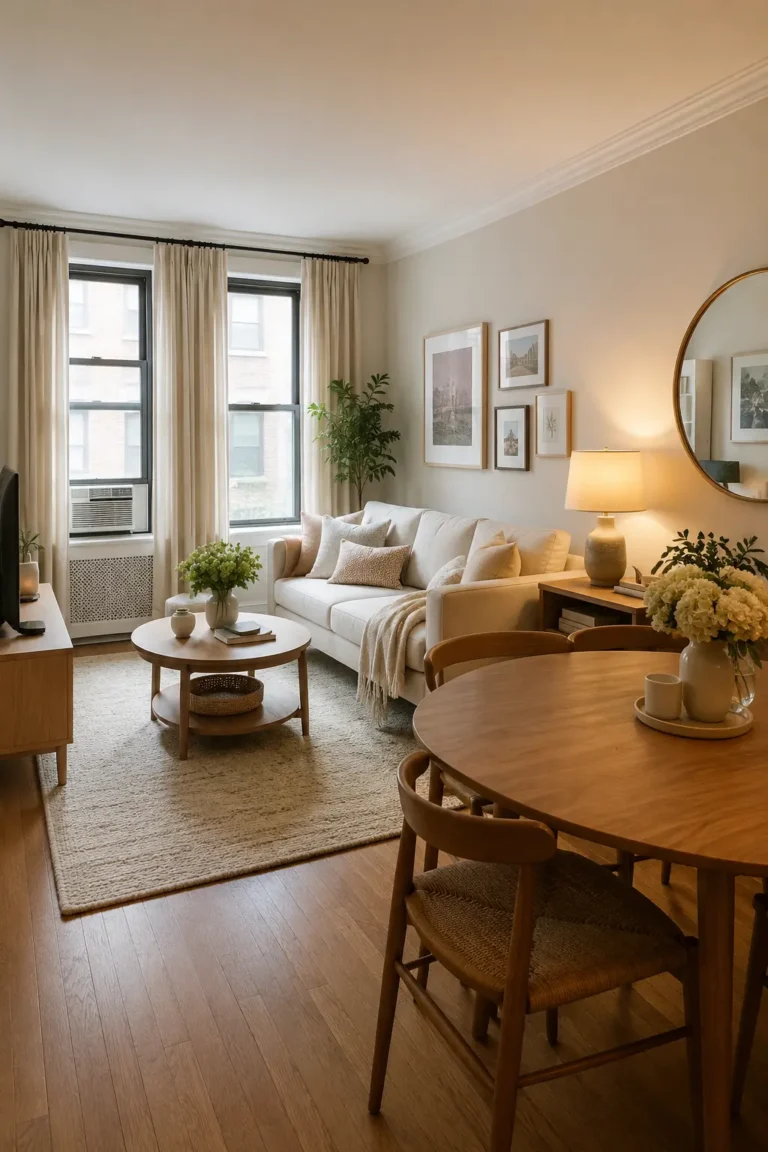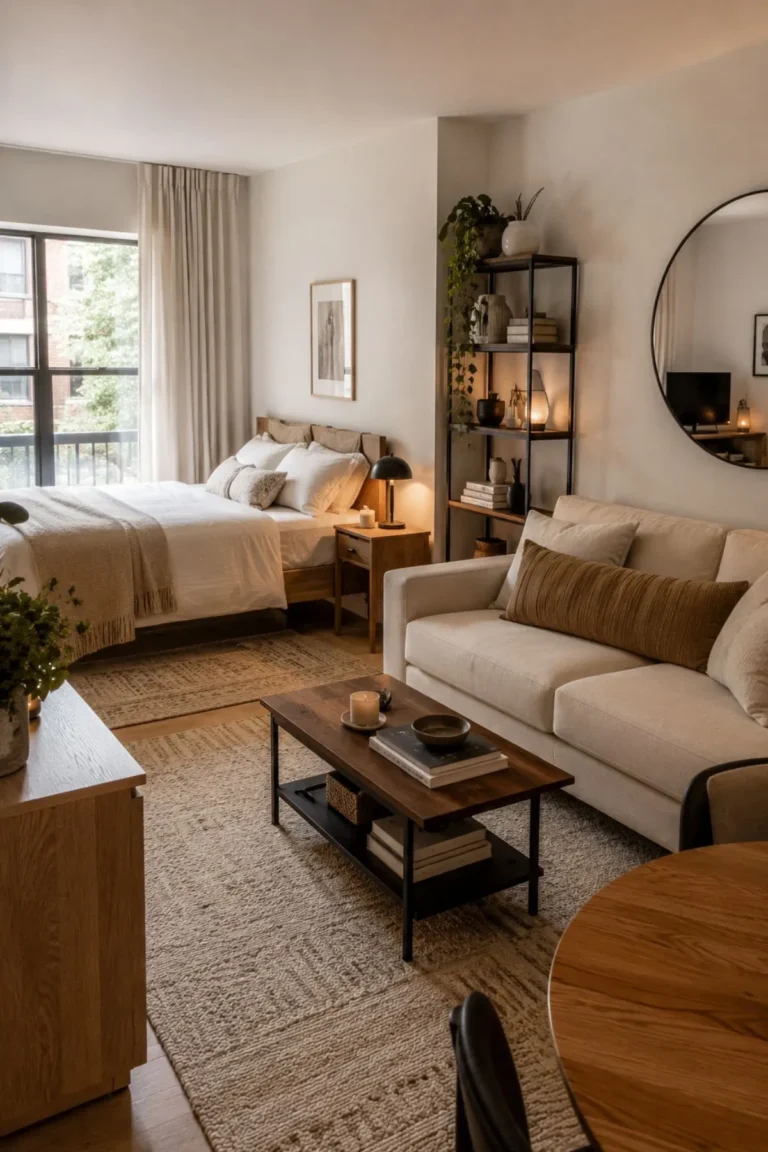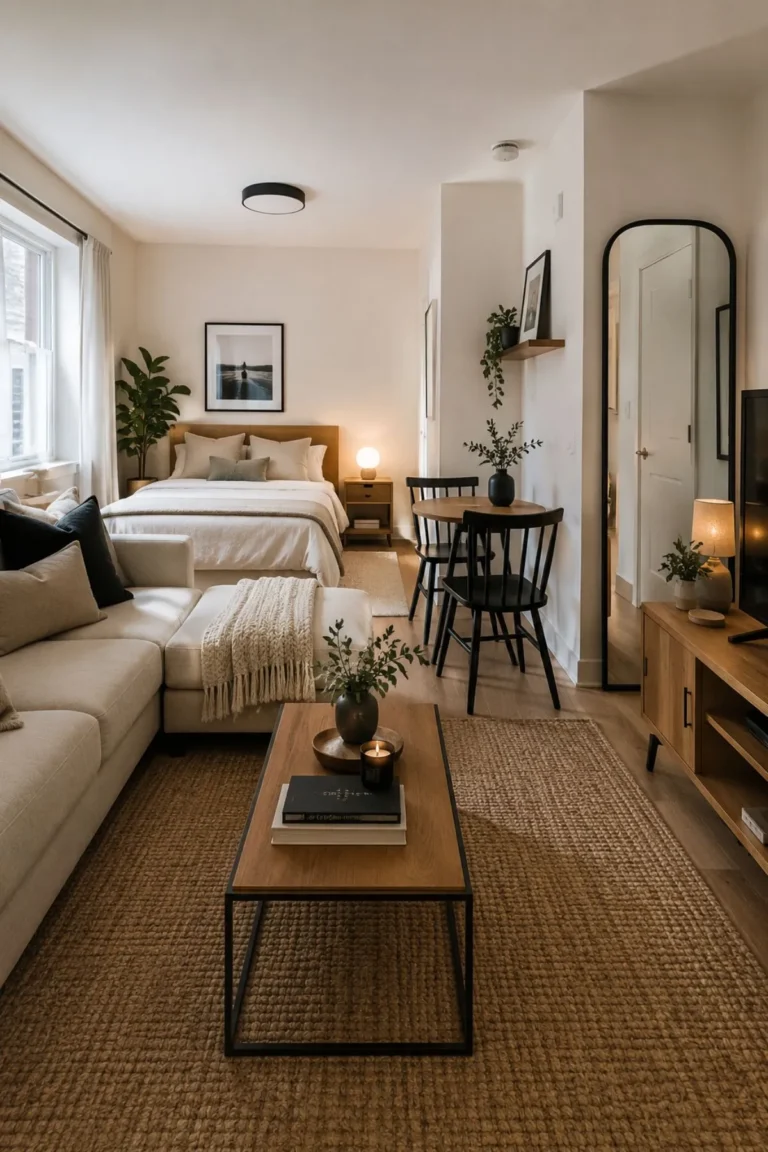
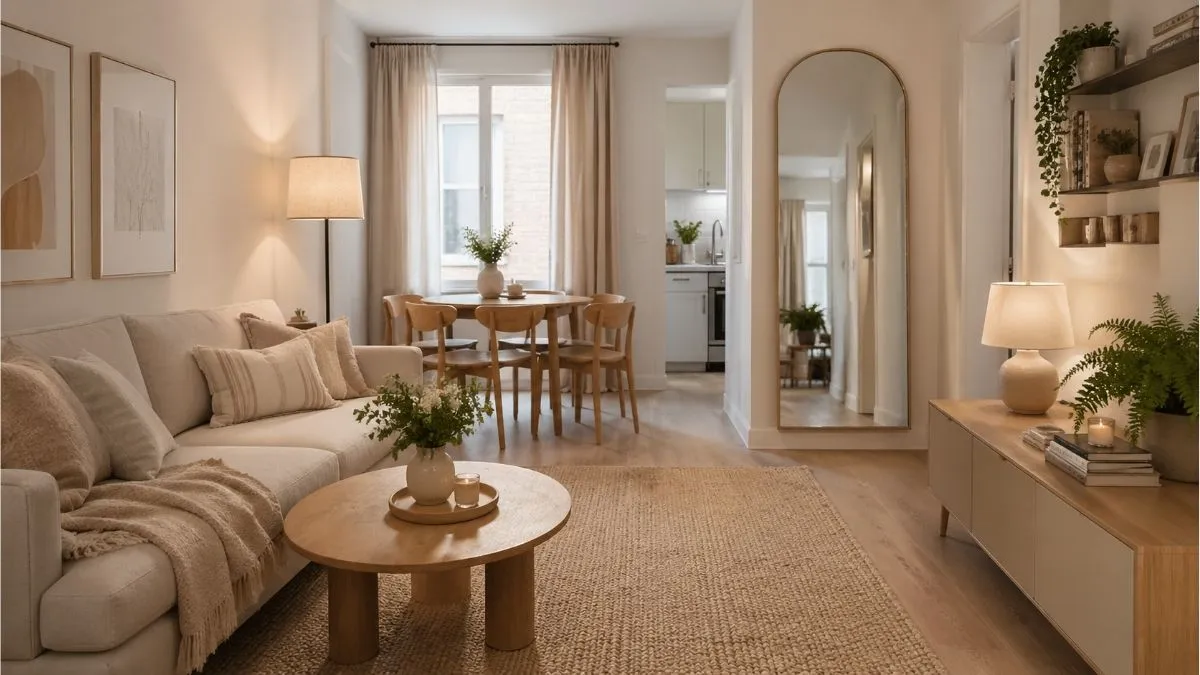
27 Small Apartment Ideas That Make Tiny Spaces Feel Bigger & Stylish
Most small apartment advice makes one mistake: it focuses on adding more — more storage, more decor, more furniture.
But in tight spaces, more usually makes things worse.
The apartments that actually feel bigger aren’t the ones with the most ideas — they’re the ones with the smartest layout decisions.
These small apartment ideas work especially well when paired with small apartment decor inspiration ideas that focus on layout, light, storage, and everyday function.
What are small apartment ideas?
Small apartment ideas are practical decorating, layout, and storage strategies that help compact homes feel more open, functional, and visually balanced. They usually focus on furniture scale, light, zoning, clutter control, and renter-friendly upgrades so a tiny space looks stylish without feeling crowded.
Whether you are searching for studio apartment ideas, renter-friendly decor, better storage, or a cozier layout, the biggest difference usually comes from a few smart visual decisions. Small-space styling is less about adding more and more about choosing pieces that improve flow, light, proportion, and daily life.
If you live in a one-room layout, these studio apartment decor ideas can help you style sleeping, lounging, storage, and work zones without making the space feel crowded.
Quick Wins for Small Apartments
- Choose one light, cohesive color palette across the main room.
- Use a larger rug than you think you need to visually widen the floor area.
- Hang curtains close to the ceiling to stretch wall height.
- Swap bulky furniture for slimmer, leggy pieces with visible floor space.
- Add one oversized mirror instead of several small decorative mirrors.
- Use warm layered lighting instead of relying on one harsh ceiling fixture.
- Hide everyday clutter in closed storage before adding more decor.
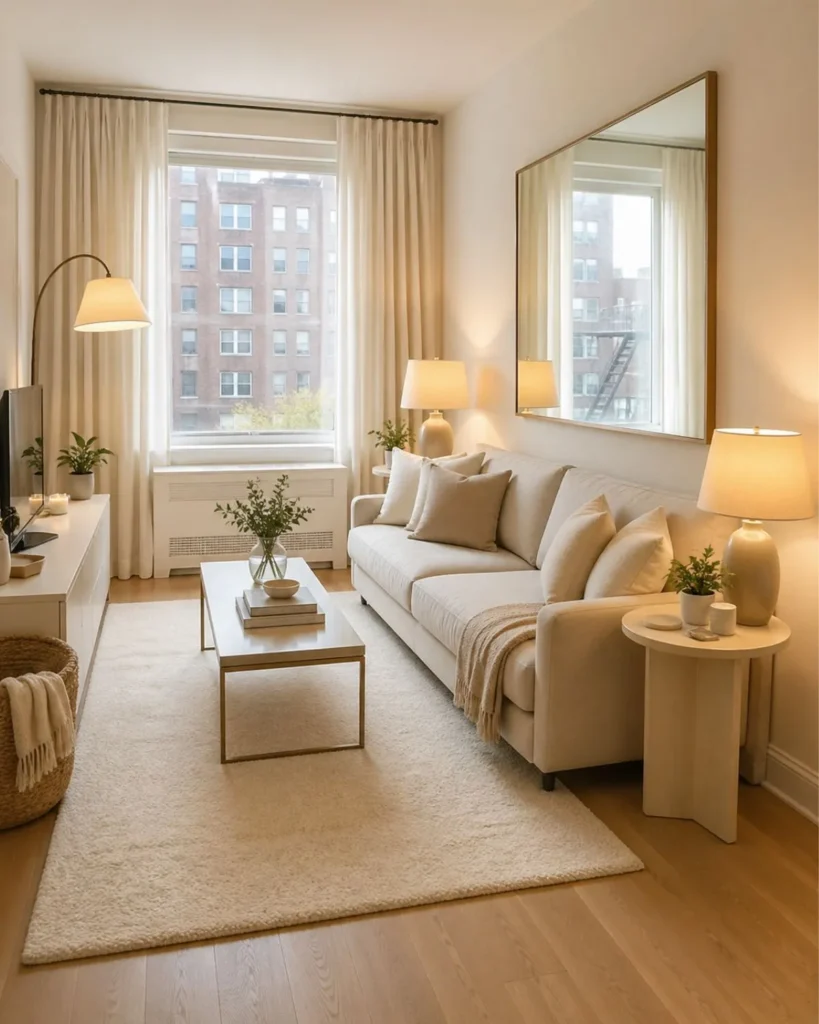
Small Apartment Ideas That Make Tiny Spaces Feel Bigger
1. Use one light, cohesive color palette
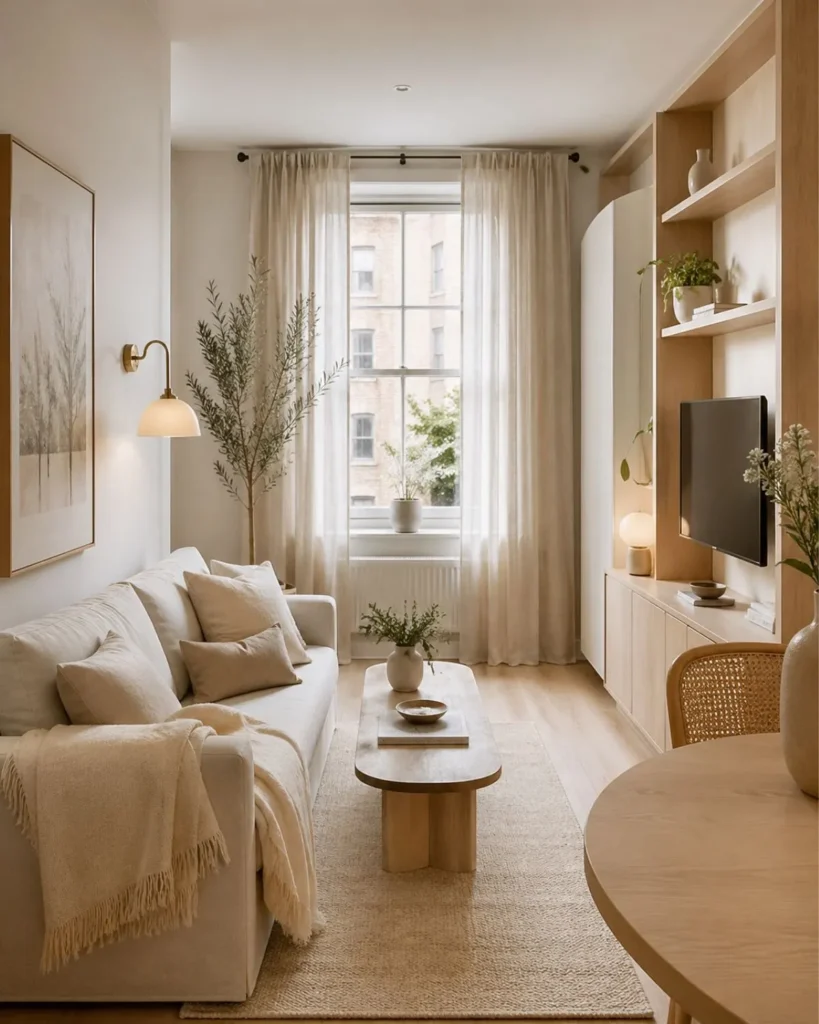
A choppy mix of unrelated colors can make a small apartment feel visually busy. Keeping your main shades in the same soft family helps walls, furniture, and textiles flow together instead of competing for attention. Think warm white, beige, oat, pale greige, soft taupe, or muted stone.
Why This Works Visually:
A cohesive palette reduces visual stopping points, so the eye travels more smoothly through the room.
Actionable tip:
Use one main neutral, one supporting tone, and one darker accent color for contrast.
2. Choose low-profile furniture
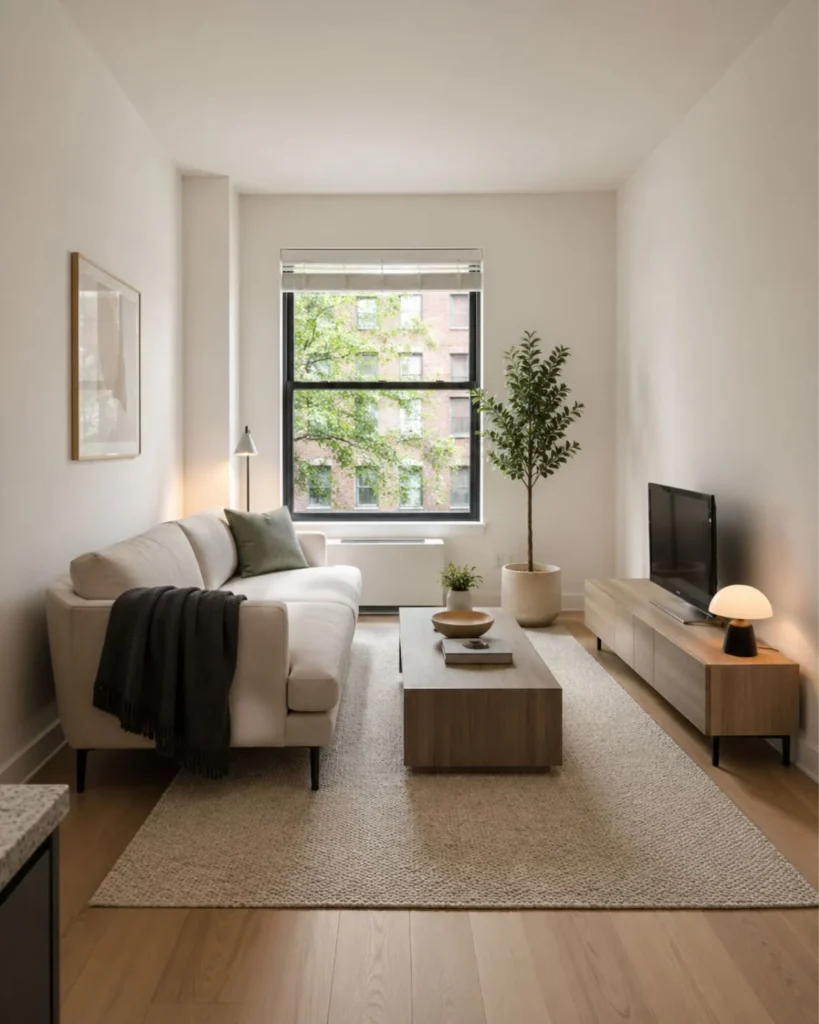
Tall, bulky furniture can overwhelm a compact room. Low-profile sofas, beds, and media units create more visible wall area above them, which makes the apartment feel less crowded. The room instantly reads wider and calmer when furniture does not dominate the full vertical field.
Interior Stylist Tip:
Low furniture also pairs beautifully with taller curtains and mirrors, which help stretch the room upward.
Actionable tip:
Look for sofas with lower backs and narrower arms instead of deep, overstuffed shapes.
3. Anchor the room with a larger rug
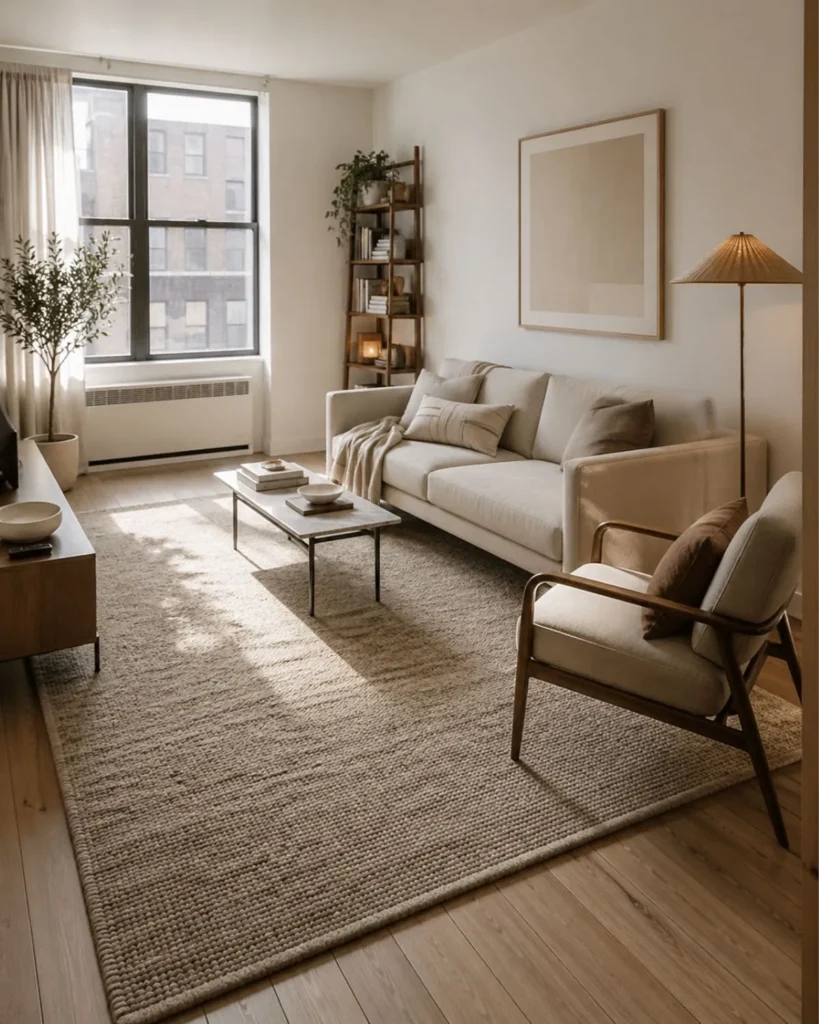
One of the most common small-space mistakes is choosing a rug that is too small. A tiny rug chops up the floor and makes furniture look awkwardly disconnected. A larger rug unifies the seating area and creates the impression of a wider, more intentional layout.
In small apartments, rugs that are too small don’t just look off — they visually shrink the room by breaking up the floor into smaller sections.
For more comfort-focused styling, these cozy apartment decor ideas can help you add warmth through rugs, lamps, curtains, throws, and simple decorative details.
Common Decor Mistake:
When only the coffee table sits on the rug, the room often looks smaller, not bigger.
Actionable tip:
Choose a rug large enough for at least the front legs of the main seating pieces to sit on it.
4. Hang curtains near the ceiling
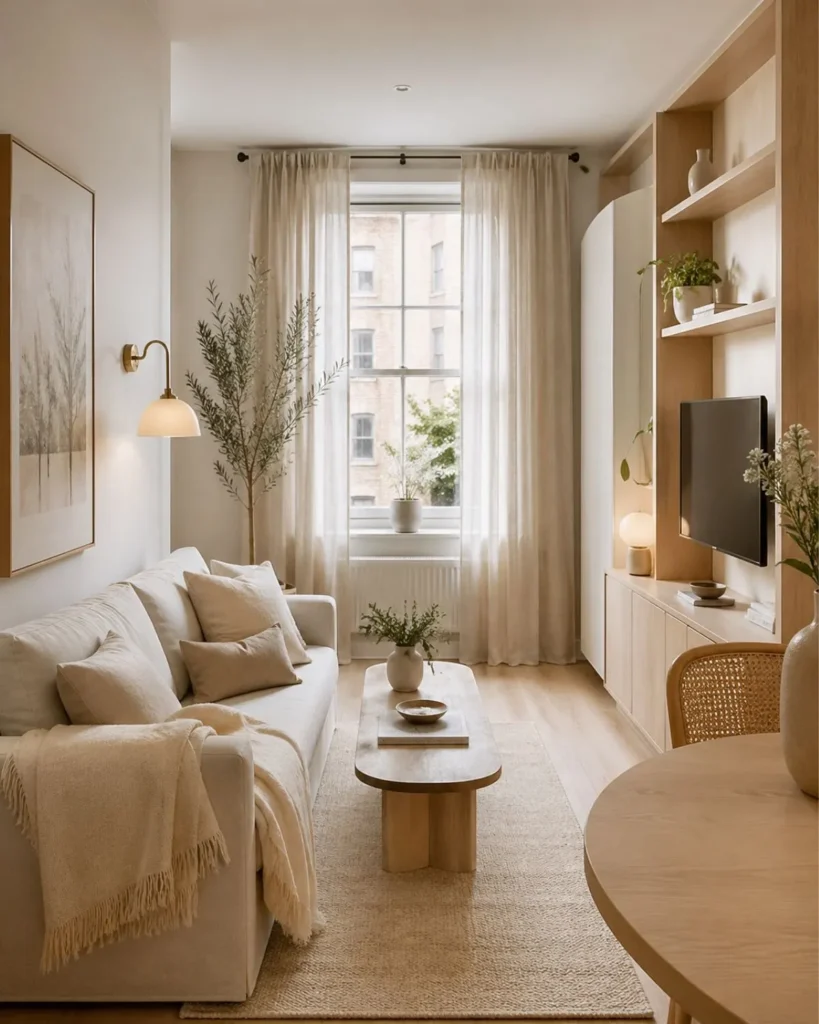
Curtains mounted just above the window frame can make walls feel shorter than they are. Hanging them closer to the ceiling draws the eye up and makes the room feel taller. This works especially well in apartments with average-height ceilings that need a little visual lift.
For a softer and warmer look, this cozy apartment aesthetic guide shares simple ways to use texture, lighting, color, and layered decor without making a small space feel crowded.
Designer Trick:
Even inexpensive curtains look more polished when the rod placement feels intentional.
Actionable tip:
Use curtain panels that just skim the floor and keep the fabric light to medium in visual weight.
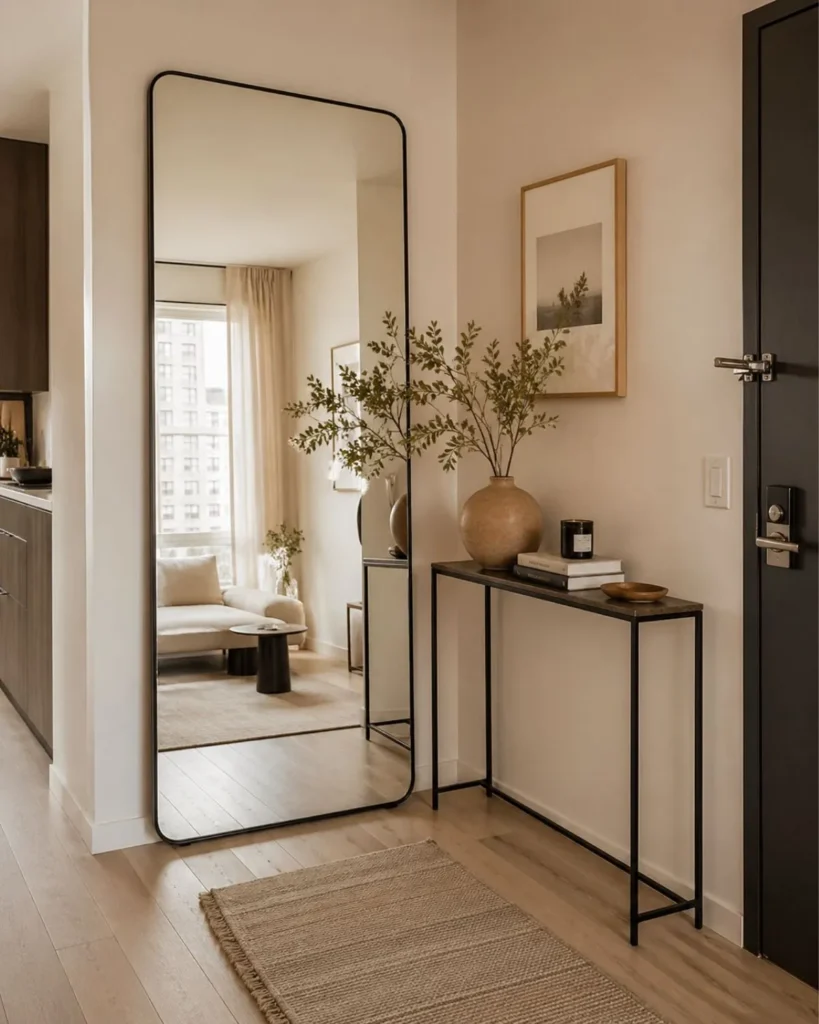
5. Add one large mirror instead of several tiny ones
A single large mirror reflects light and visually doubles part of the room. Several tiny mirrors often feel decorative but not especially useful. In a small apartment, one strong reflective surface tends to work much harder than a scattered collection.
Why It Matters:
Mirrors can brighten dark corners and help tight layouts feel less boxed in.
Actionable tip:
Place a large mirror opposite a window or where it reflects the brightest part of the room.
6. Use warm layered lighting
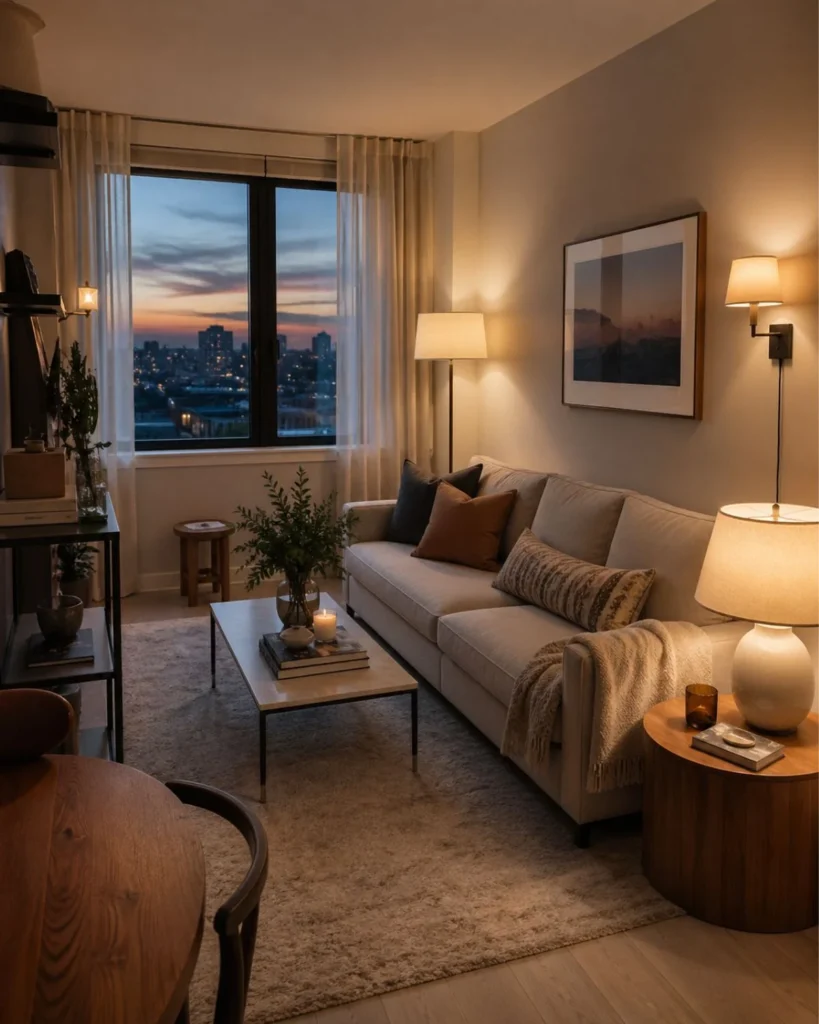
One overhead fixture rarely makes a small apartment feel cozy or flattering. Layering light through a floor lamp, table lamp, plug-in sconces, or under-shelf glow creates depth and softness. The room feels more finished, and different zones become easier to define.
Cool white lighting can make compact spaces feel flat and slightly harsh, while warm lighting adds depth and makes the space feel more relaxed.
Interior Stylist Tip:
Warm light makes compact spaces feel inviting rather than flat.
Actionable tip:
Aim for three light sources in the main room instead of depending on a single ceiling bulb.
7. Replace a bulky coffee table with nesting tables or a storage ottoman
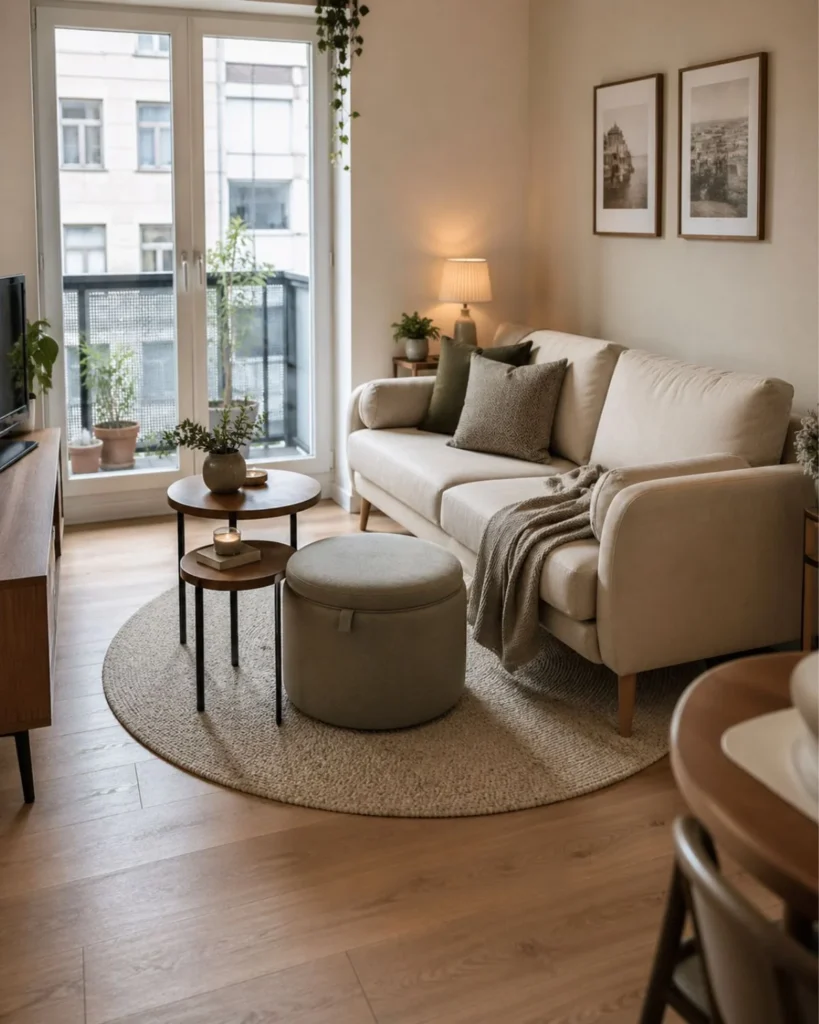
Bulky tables can eat up valuable floor space and make walking paths awkward. Nesting tables can spread out when needed and tuck away when not. A storage ottoman adds function while softening the room visually, which is especially useful in tighter seating areas.
Budget-Friendly Swap:
This is one of the easiest ways to make a cramped living room feel lighter.
Actionable tip:
Choose rounded edges in especially tight apartments to improve flow.
8. Pick furniture with visible legs
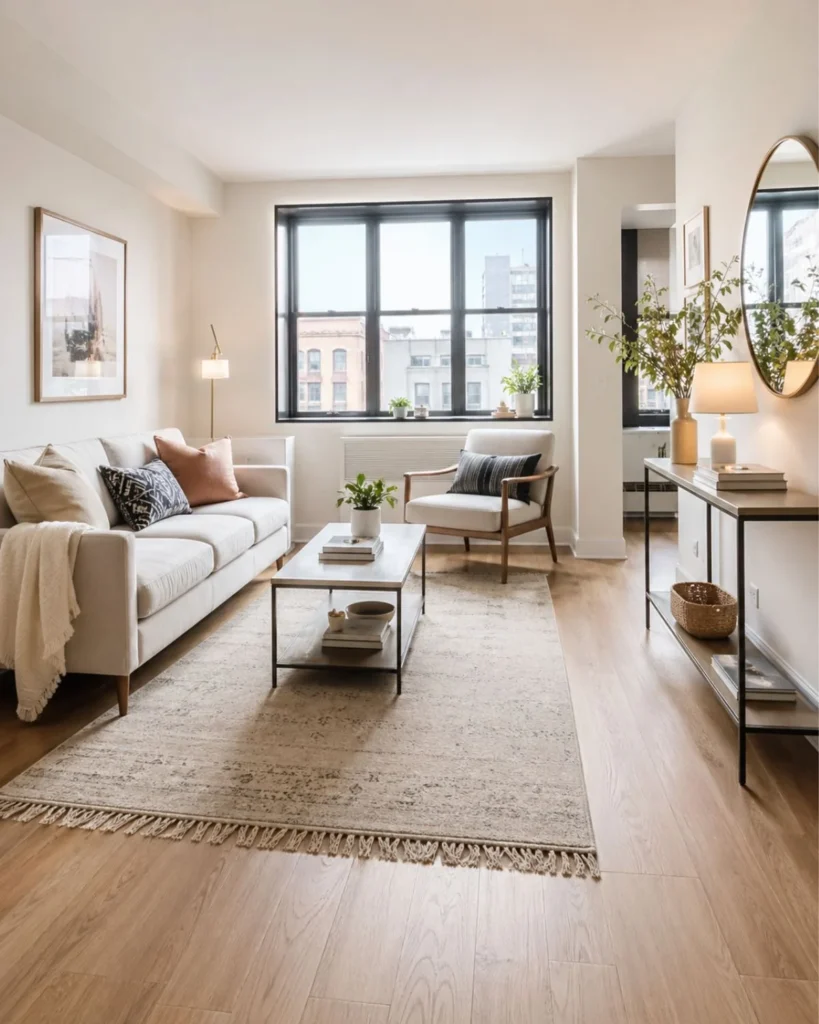
Furniture that sits directly on the floor can feel heavier in a small room. Pieces with visible legs allow more floor area to show, which makes the layout feel lighter and less dense. This simple visual trick works on sofas, chairs, consoles, and even bathroom vanities.
Why This Works Visually:
More visible floor space usually makes a room feel less compressed.
Actionable tip:
Mix leggy pieces with one or two grounded items so the room still feels warm and anchored.
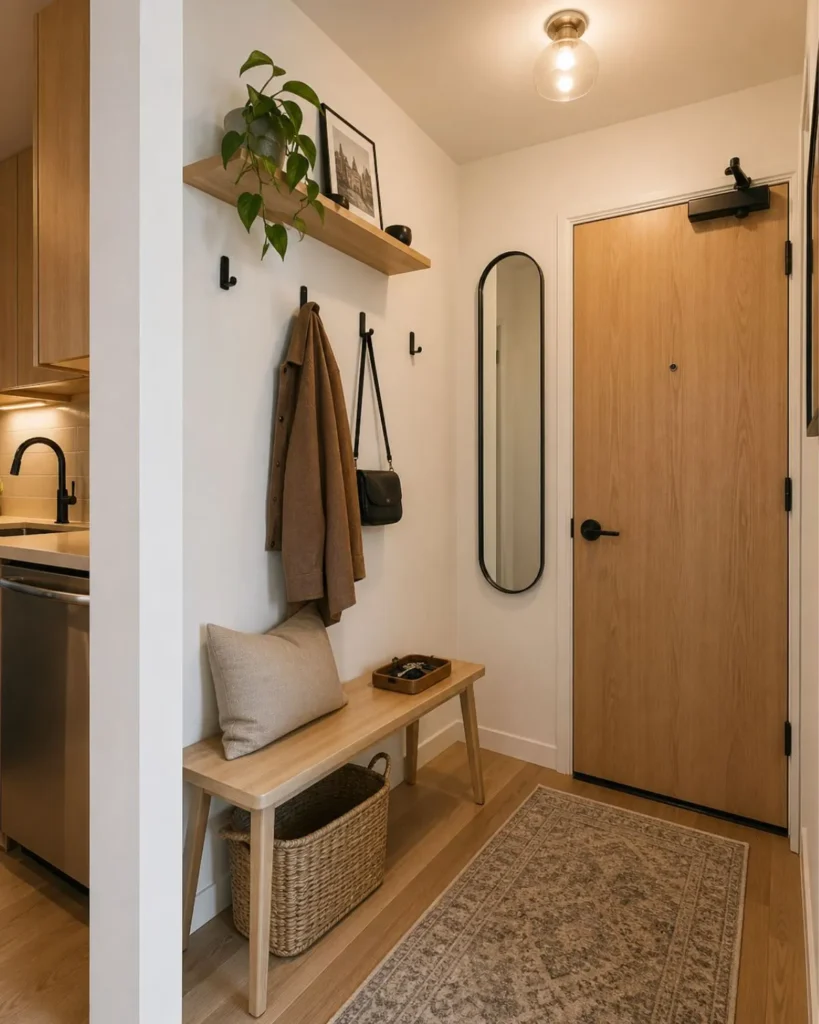
9. Create a tiny entry drop zone
Even the smallest apartment feels more put together when the entrance has a clear purpose. A narrow bench, hooks, and a tray for keys can stop clutter from spreading into the main room. Good entry organization also creates a stronger first impression when you walk in.
Renter-Friendly Note:
Hooks, removable strips, and slim wall-mounted shelves can do a lot without damaging walls.
Actionable tip:
Keep this zone shallow so it improves function without crowding the walkway.
10. Use vertical shelving to draw the eye upward
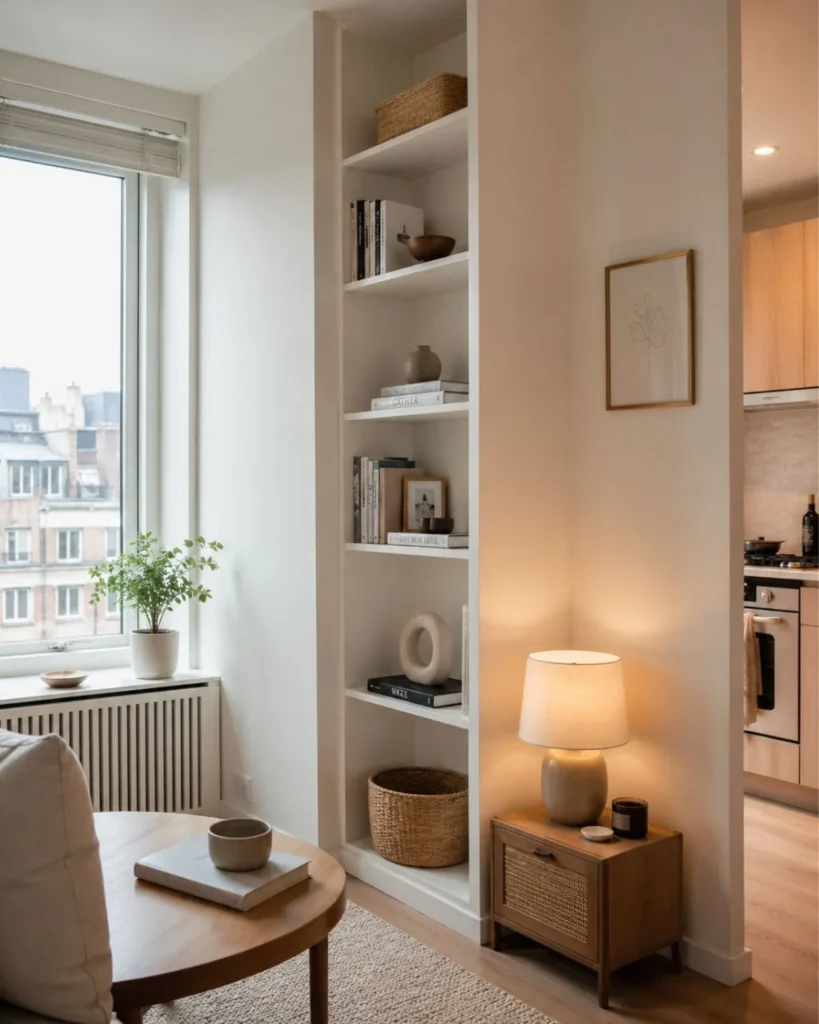
In a small apartment, wall height matters. Tall shelving or stacked wall storage can expand usable space without taking over the floor. The key is to style it with restraint so it feels intentional rather than overloaded.
Most advice recommends tall shelving everywhere, but in very tight rooms, filling shelves all the way to the top can make the upper wall feel crowded. Leaving the top section slightly open often feels more spacious.
Common Decor Mistake:
Filling every inch of shelving with small objects can make the room feel more crowded.
Actionable tip:
Leave visible gaps between objects and mix books, baskets, and a few larger decorative pieces.
11. Use more closed storage in busy areas
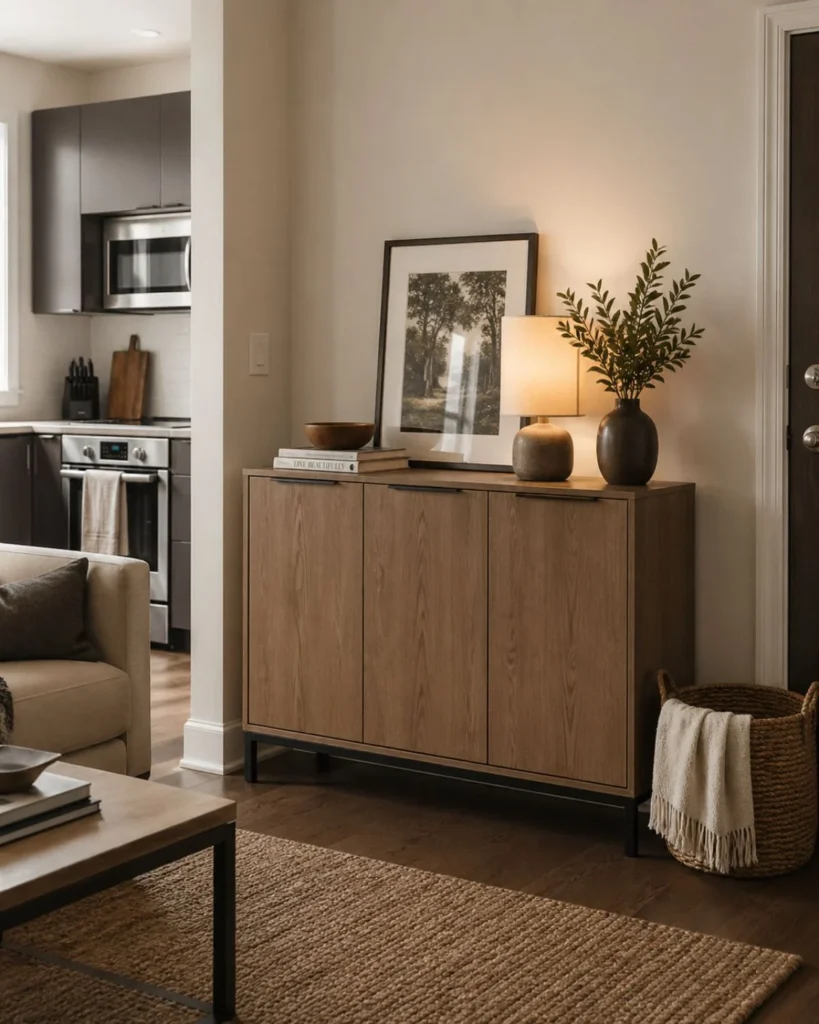
Open storage can look lovely in styled photos, but real apartments usually need places to hide chargers, paperwork, extra linens, and everyday clutter. Closed cabinets, lidded boxes, and storage benches make compact rooms feel calmer and easier to maintain.
Why It Matters:
Less visual noise makes the whole apartment feel more spacious.
Actionable tip:
Use open storage for display and closed storage for life.
12. Zone a studio apartment without fully blocking it
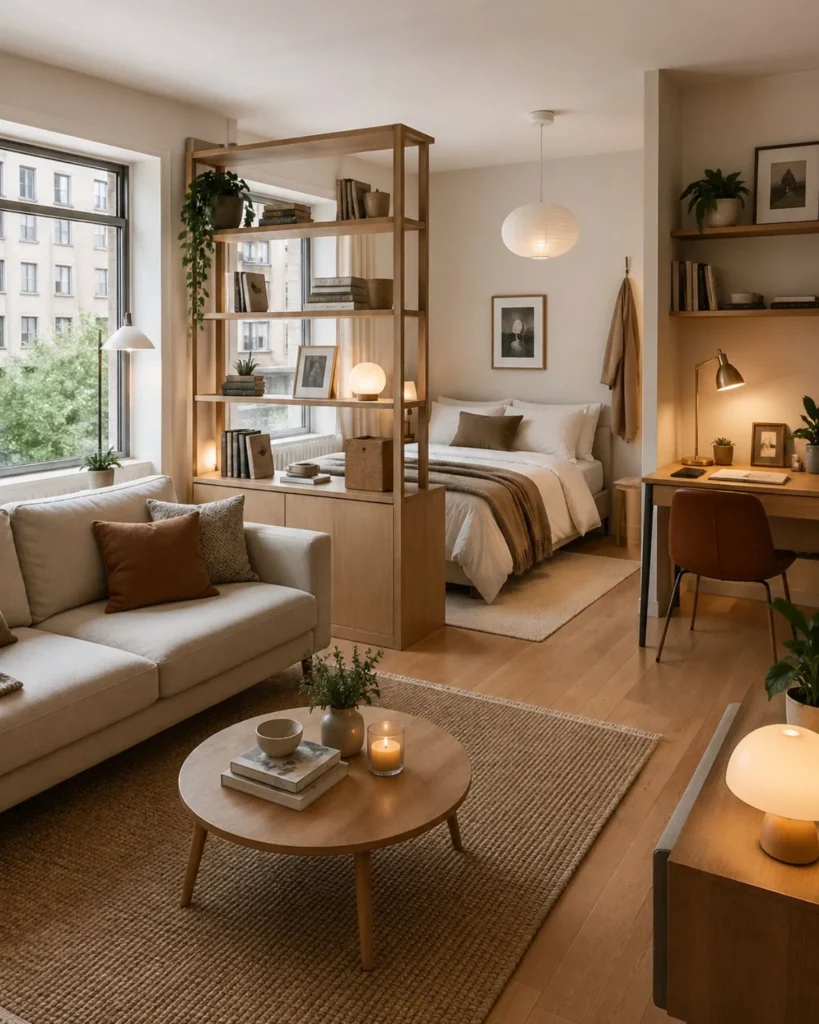
If your living, sleeping, and working areas all share one room, zoning becomes essential. Rugs, lighting, furniture placement, and open bookcases can define different functions without making the apartment feel boxed in. The goal is separation with flow, not rigid division.
Fully separating zones with heavy dividers often makes a studio feel smaller. Partial separation usually creates a better balance between openness and function.
Designer Trick:
A sofa can act as a soft divider when its back faces the sleeping area or desk zone.
Actionable tip:
Use distinct rugs or light sources to signal where one zone ends and another begins.
If you’re working with a one-room layout, these studio apartment layout ideas go deeper into zoning, flow, and making one space feel more functional.
13. Use a round dining table when space is tight
Sharp corners can make a tiny dining area feel harder to move through. A round pedestal table often fits more gracefully into awkward apartment layouts and allows easier circulation. It can also soften the lines in a room filled with rectangular walls and storage pieces.
Budget-Friendly Swap:
A compact café-style table can work beautifully in a small apartment corner.
Actionable tip:
Pair a round table with lighter chairs that tuck fully underneath.
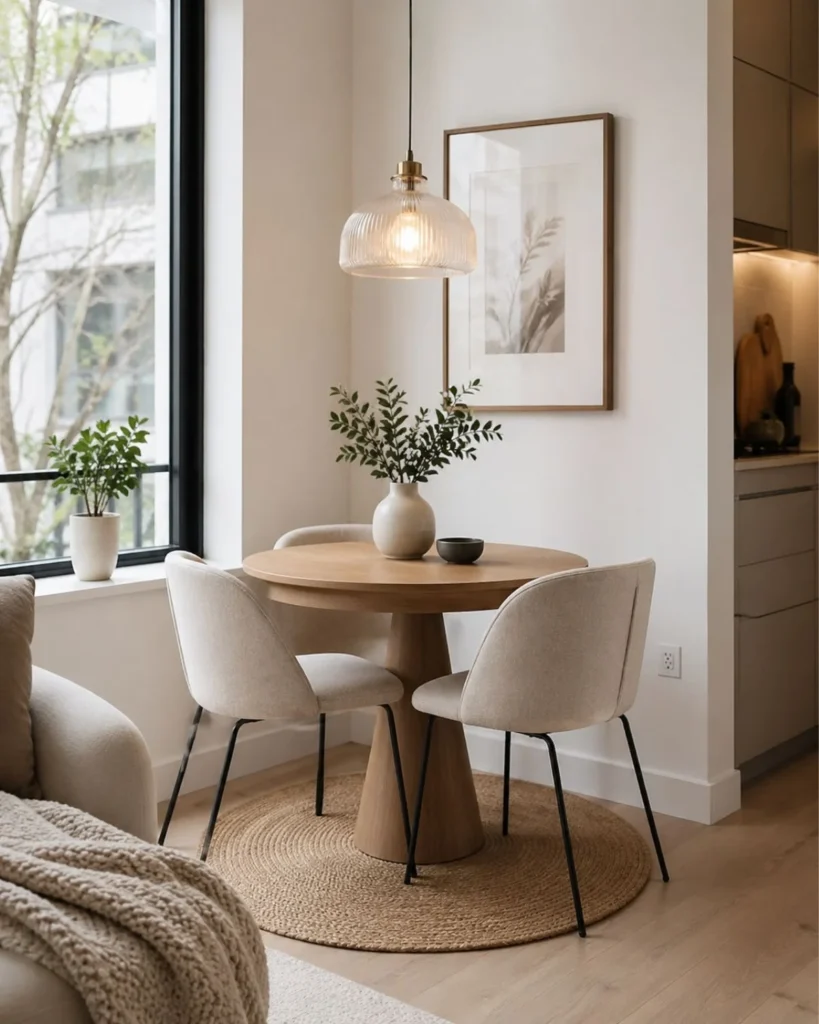
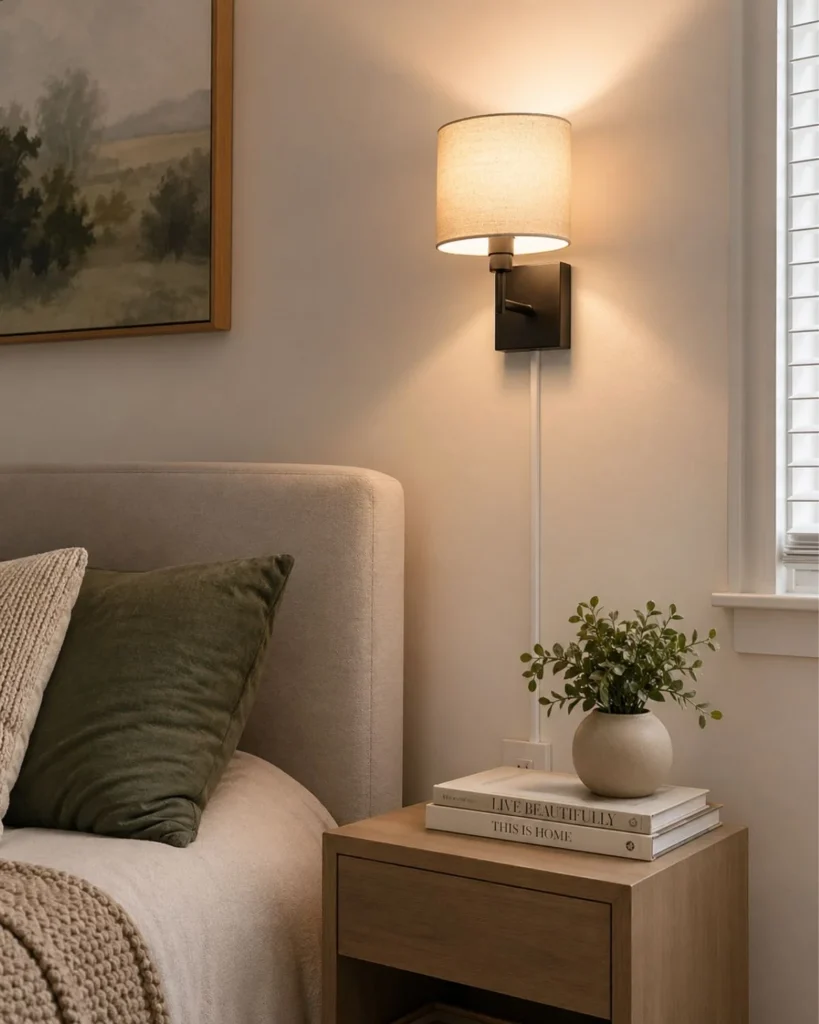
14. Swap table lamps for plug-in sconces where possible
Surface space is precious in compact apartments. Plug-in sconces can free up nightstands, desks, and consoles while still giving you warm, flattering light. They feel elevated but can also be renter-friendly when installed thoughtfully.
Renter-Friendly Note:
Look for plug-in options with cord covers for a cleaner finish.
Actionable tip:
Use sconces beside the bed or sofa to release tabletops for actual daily use.
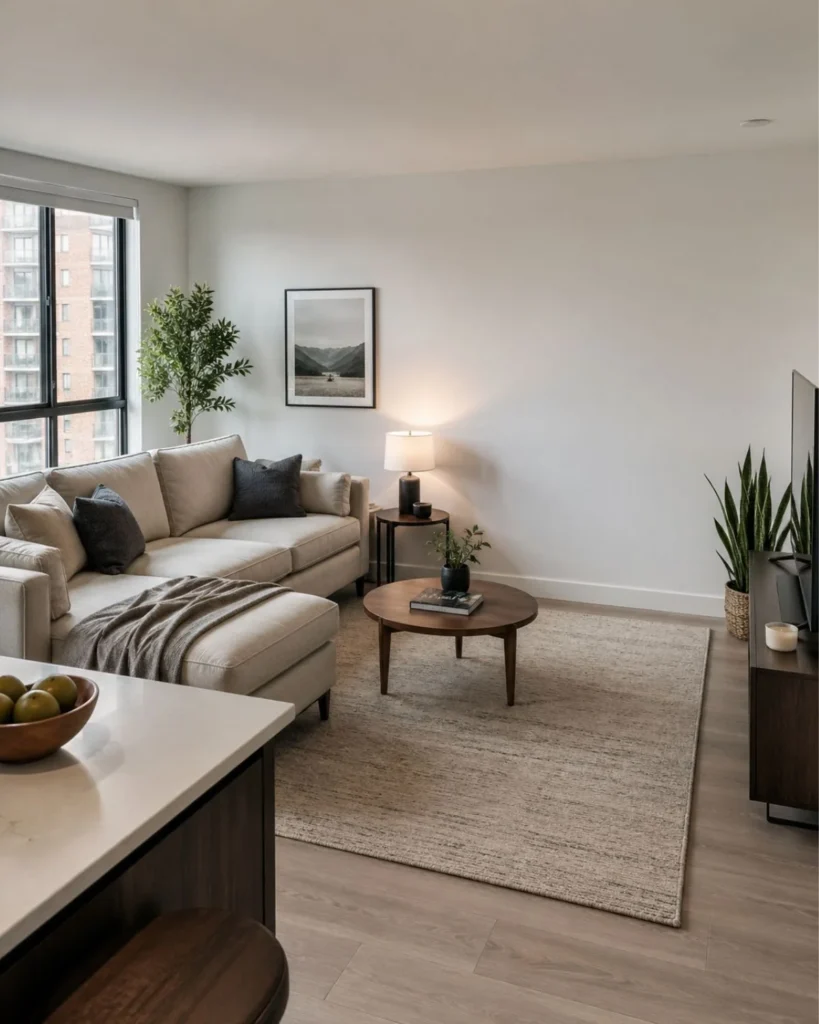
15. Keep one wall visually quiet
When every wall has art, shelves, mirrors, or decor, a small apartment can start to feel noisy. Leaving one wall mostly open creates breathing room. That blank space is not wasted. It gives the eye a place to rest and makes the rest of the room feel more intentional.
In small apartments, empty space is not wasted space — it’s what allows the rest of the room to feel intentional instead of crowded.
Why This Works Visually:
Negative space is part of good styling, especially in small homes.
Actionable tip:
If a room already has a gallery wall or shelving, let the opposite wall stay simple.
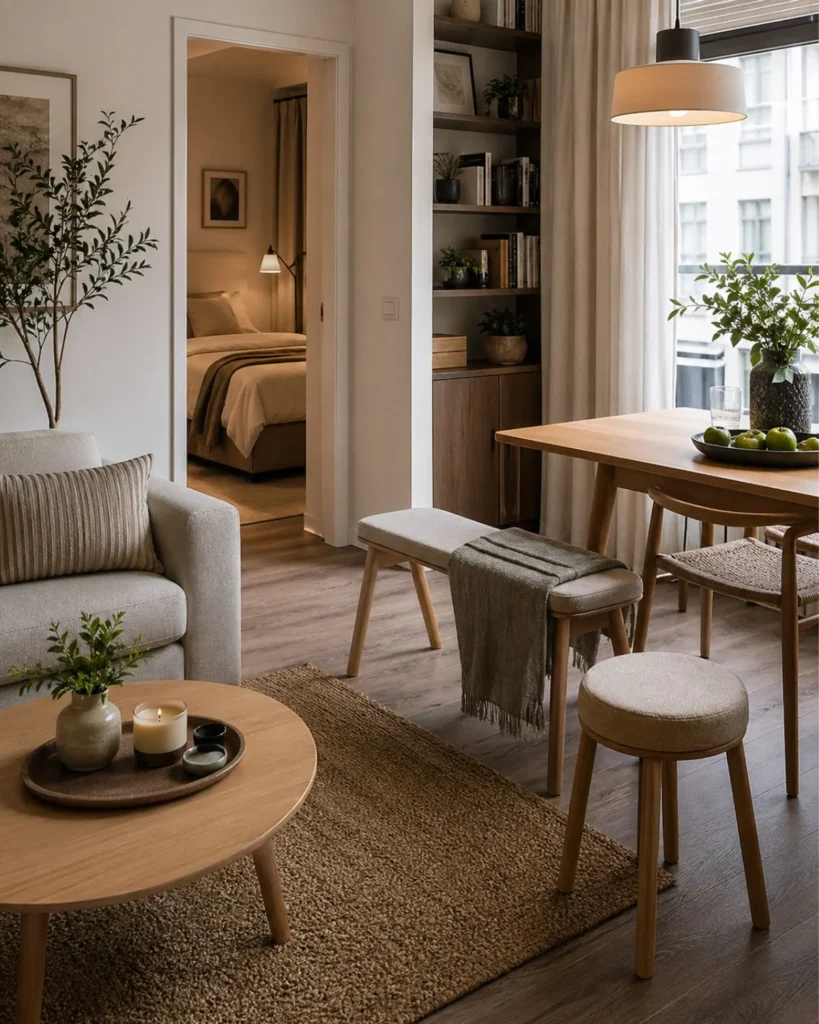
16. Use benches and stools that can move where needed
Flexible seating matters in small apartments. Benches, stools, and compact poufs can shift between dining, entry, living room, and desk use without demanding permanent space. Pieces that move easily help the apartment adapt to real life.
Small-Space Function:
The best compact furniture earns its place in more than one zone.
Actionable tip:
Choose one or two lightweight pieces in finishes that blend with the rest of your palette.
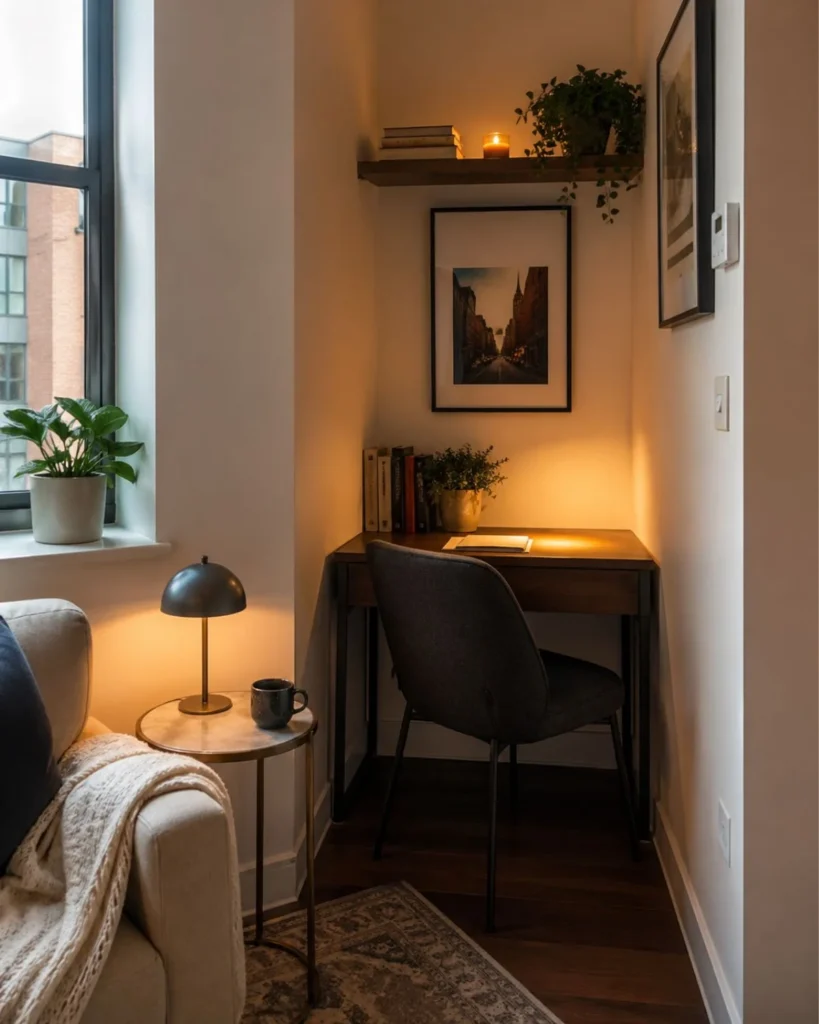
17. Turn an awkward corner into a real function zone
Most small apartments have one odd corner that becomes a dead zone. Instead of ignoring it, give it a clear job. It might become a reading chair corner, mini desk nook, bar cart station, or slim storage moment that actually improves the room.
Designer Trick:
A small defined corner often makes the larger room feel more organized too.
Actionable tip:
Use one anchor piece, one light source, and one small decorative element only.
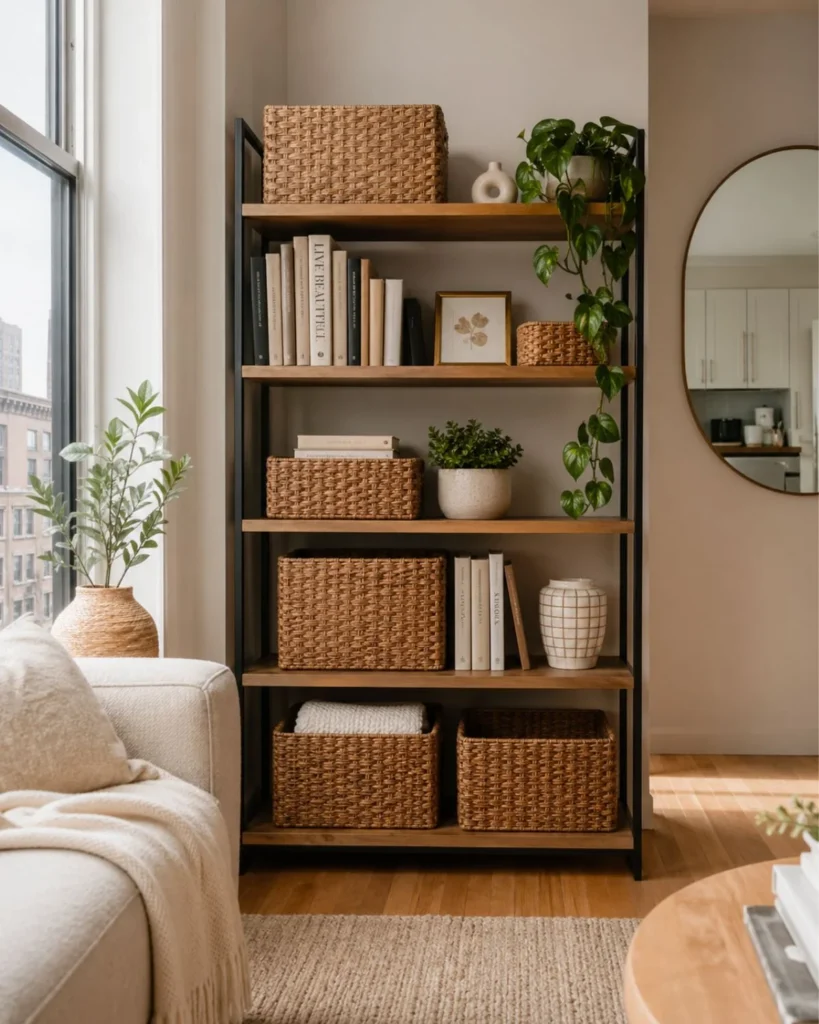
18. Hide daily clutter in matching baskets and bins
Storage looks calmer when it feels consistent. A collection of random containers can still read as clutter, even if everything is technically put away. Matching baskets or bins create visual order and make open shelves look far more intentional.
Why It Matters:
Consistency helps the eye read storage as part of the design, not just a pile of stuff.
Actionable tip:
Stick to one or two basket materials and tones for the main living zone.
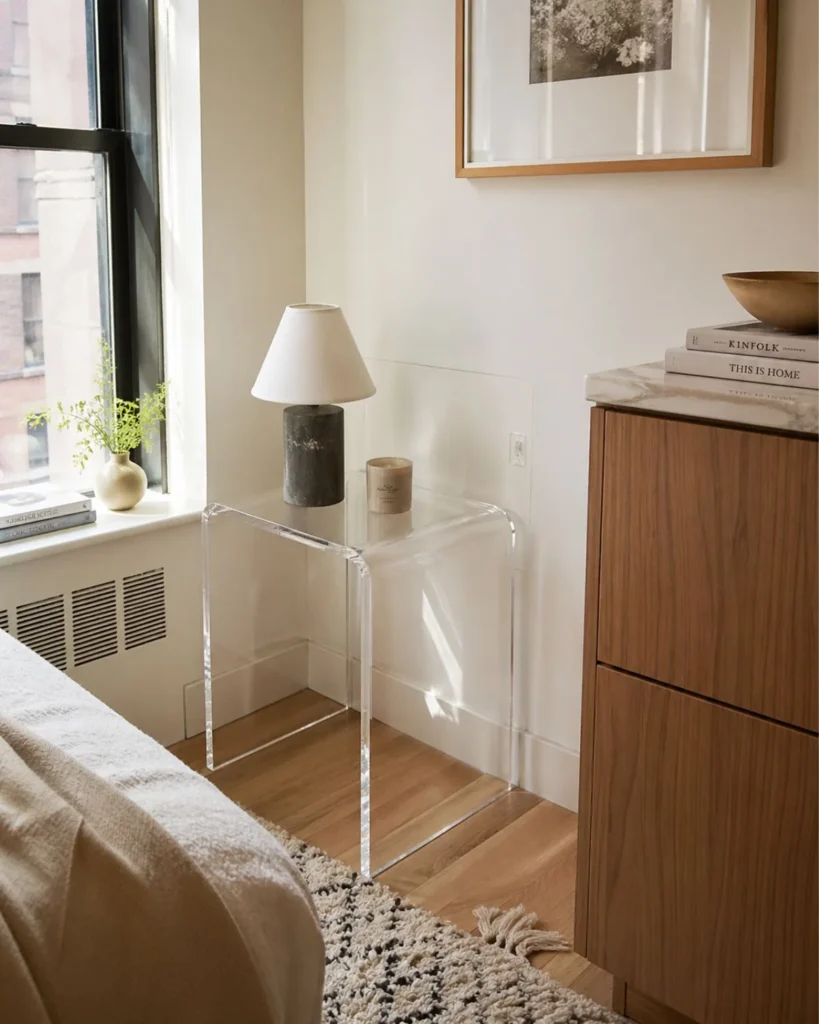
19. Add one clear or acrylic piece in a tight zone
Transparent furniture can be surprisingly useful in small apartments because it takes up less visual weight. A clear side table, acrylic desk chair, or ghost dining chair can help a packed area feel less dense without sacrificing function.
Interior Stylist Tip:
Use this sparingly. One piece is often enough to lighten the scene.
Actionable tip:
Try a clear table beside a sofa or chair where heavier wood would feel too bulky.
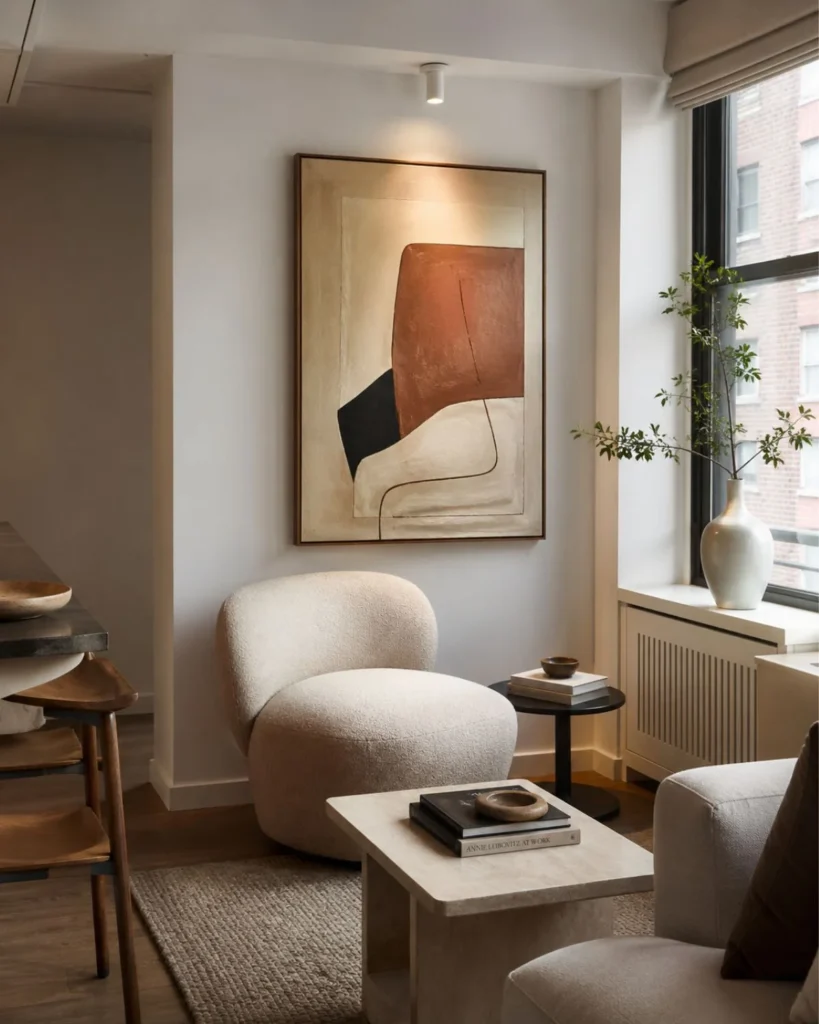
20. Use one statement piece per zone instead of many small accents
A compact apartment does not need endless tiny decorative items to feel styled. In fact, too many small accents often create visual noise. One stronger piece per zone, like bold art, a standout lamp, or a sculptural chair, usually looks cleaner and more confident.
Common Decor Mistake:
Small rooms often feel busier because of too many little decor objects, not because of too little space.
Actionable tip:
Let one focal item carry the personality in each area.
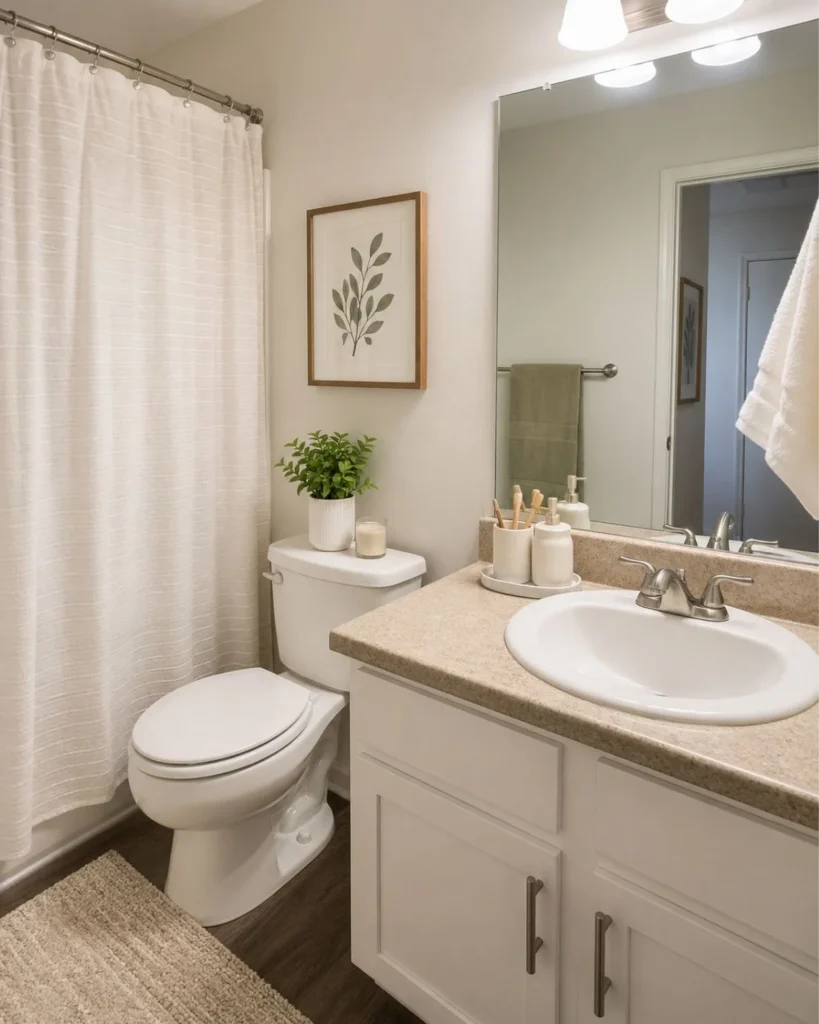
21. Make the bathroom feel bigger with a lighter visual line
Small apartment bathrooms can feel especially cramped when every item is dark, chunky, or mismatched. A soft shower curtain, a simple mirror, better lighting, and coordinated containers can make the room feel cleaner and more open without requiring renovation.
Renter-Friendly Note:
Textiles, peel-and-stick details, and upgraded accessories can do a lot here.
Actionable tip:
Use clear or tonal containers instead of multiple brightly colored products on show.
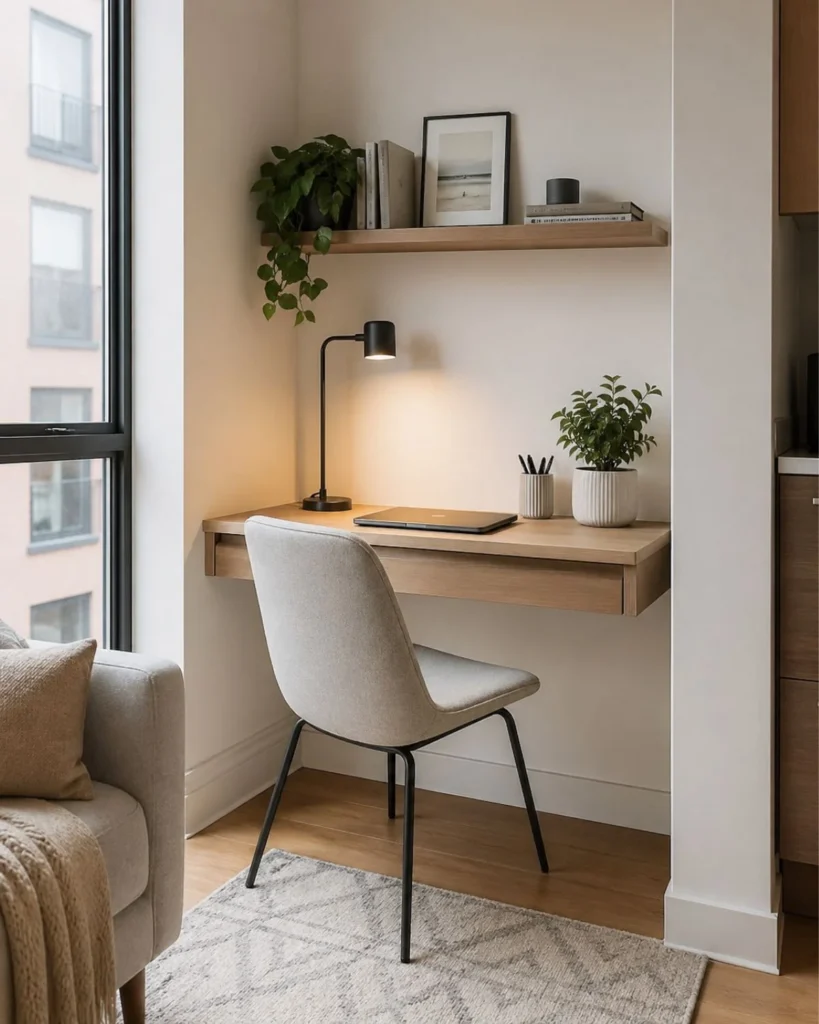
22. Turn a blank wall into a slim work zone
A dedicated workspace does not have to mean a full office. In a small apartment, a shallow wall-mounted desk or slim console paired with a compact chair can create a workable nook without consuming the whole room. The trick is keeping it visually light.
Why It Matters:
A defined work zone prevents laptops and paperwork from taking over dining and coffee tables.
Actionable tip:
Use vertical storage above the desk instead of deep side storage beside it.
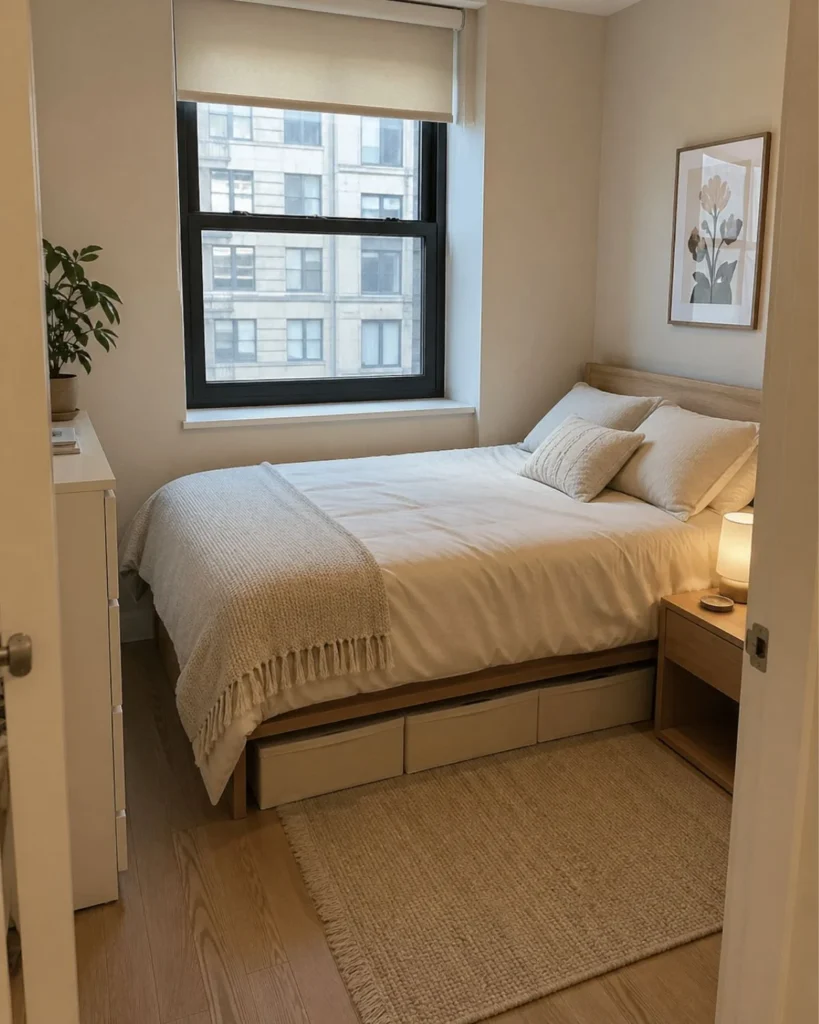
23. Use under-bed storage that disappears visually
Beds often take up one of the largest footprints in a small apartment, so the space underneath matters. Under-bed bins, drawers, or low-profile storage bags can hold seasonal clothing, extra bedding, or less-used items without adding visible bulk elsewhere.
Designer Trick:
When the storage is hidden, the room stays calm even while it works harder.
Actionable tip:
Use matching containers and label them so the system stays useful.
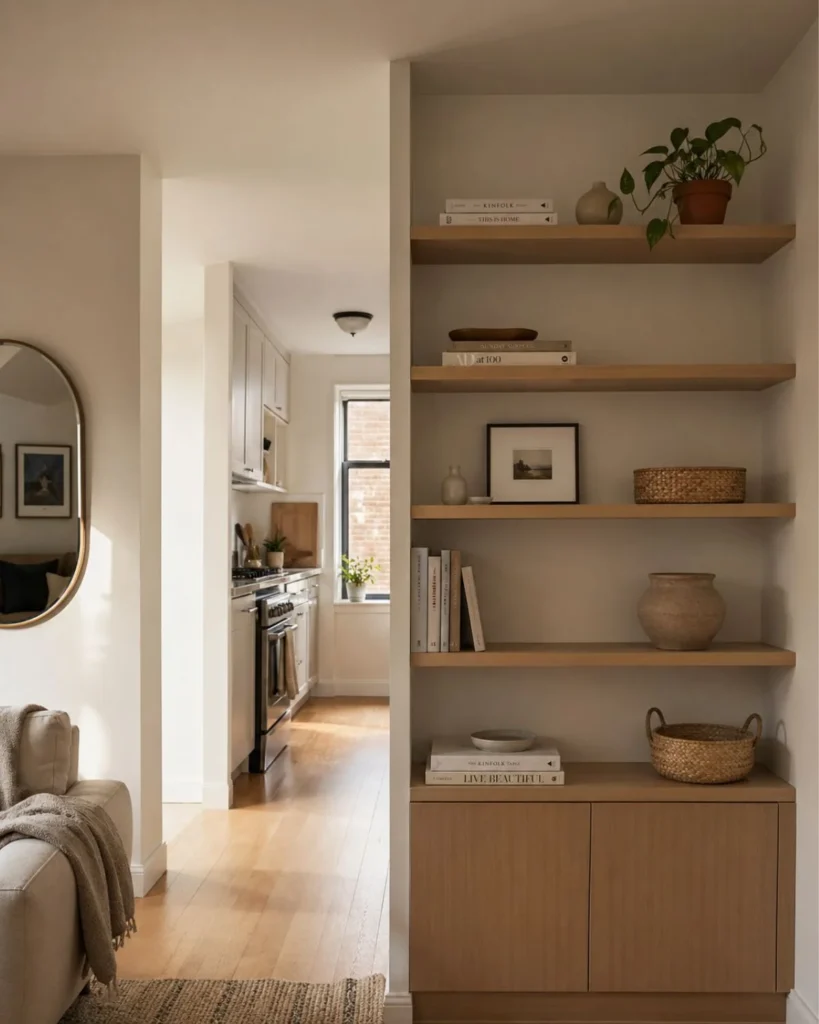
24. Edit open shelves more than you think you need to
Open shelving can easily become overcrowded in small apartments. When every shelf is full, the room feels denser and busier. Leaving space between objects, repeating a few tones, and limiting the number of items makes shelves feel decorative instead of stressful.
Common Decor Mistake:
Trying to display everything at once usually makes the room look smaller.
Actionable tip:
Group objects in threes and leave at least a little empty space on every shelf.
25. Repeat a few materials across the apartment
When the apartment uses too many finishes, it can feel fragmented. Repeating a few materials like light wood, black metal, linen-look fabric, or matte ceramic creates continuity from one zone to another. That continuity helps even a tiny home feel more cohesive and intentional.
Why This Works Visually:
Repetition creates rhythm, and rhythm makes compact spaces feel more designed.
Actionable tip:
Pick two primary materials and one accent finish to repeat in different rooms.
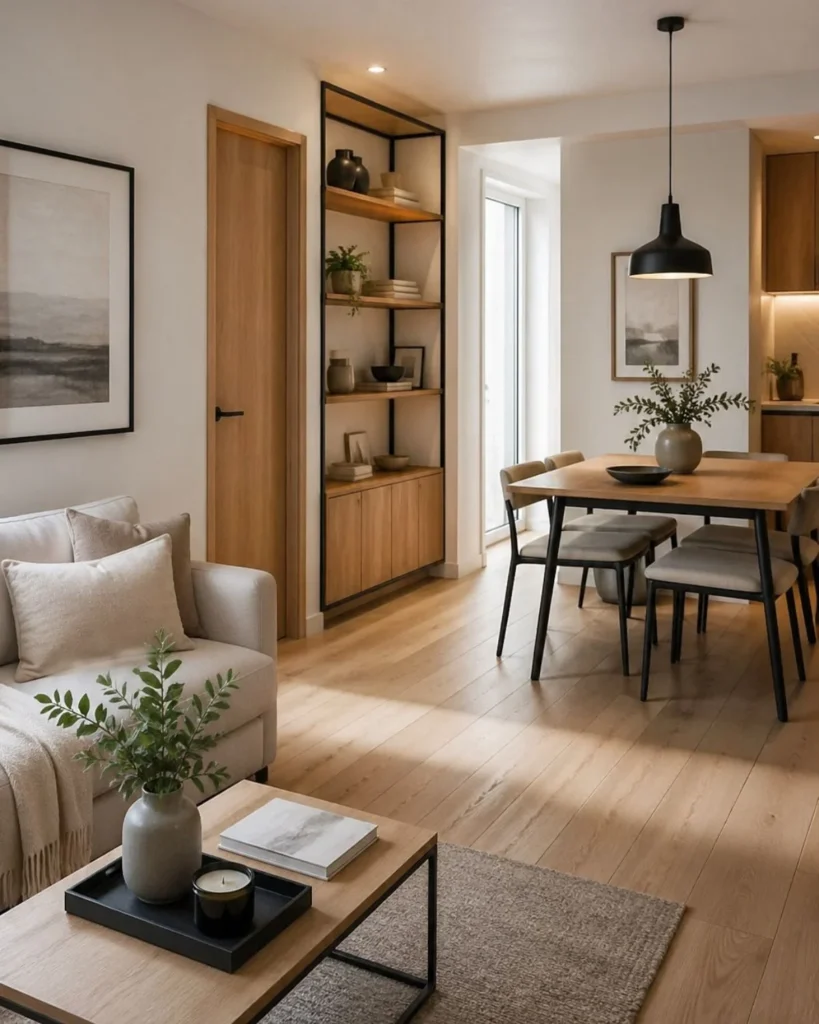
26. Add mobile storage in the kitchen
Small apartment kitchens rarely have enough built-in storage. A slim rolling cart can hold pantry items, coffee tools, dishes, or prep supplies and move where needed. It adds function without committing you to a bulky permanent piece.
Budget-Friendly Swap:
A simple cart often works harder than a large freestanding cabinet in a tight kitchen.
Actionable tip:
Keep the cart styled with categories so it looks intentional, not temporary.
27. Protect negative space instead of filling every gap
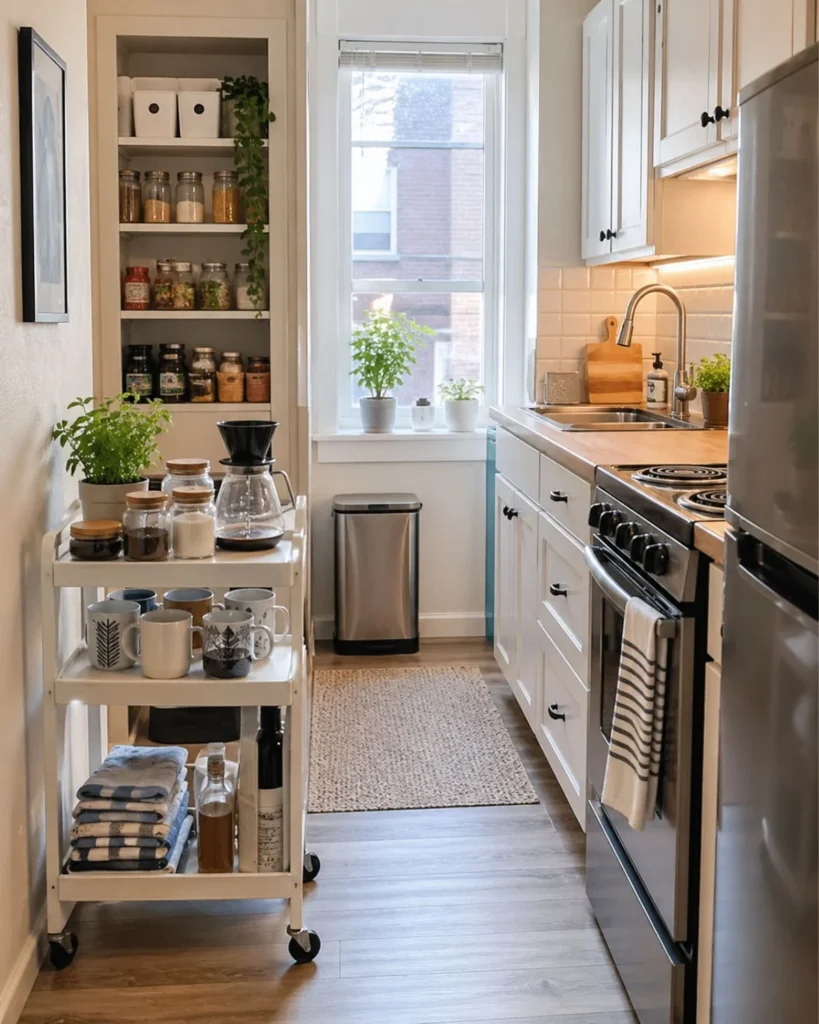
The final idea is often the one people resist most. Not every empty corner, wall, or tabletop needs something on it. In a small apartment, preserved negative space is part of the design. It makes the room feel easier to breathe in, easier to clean, and far more stylish.
Interior Stylist Tip:
A room can feel finished without being full.
Actionable tip:
When tempted to add one more accent piece, remove one first and compare the result.
Small Apartment Ideas at a Glance
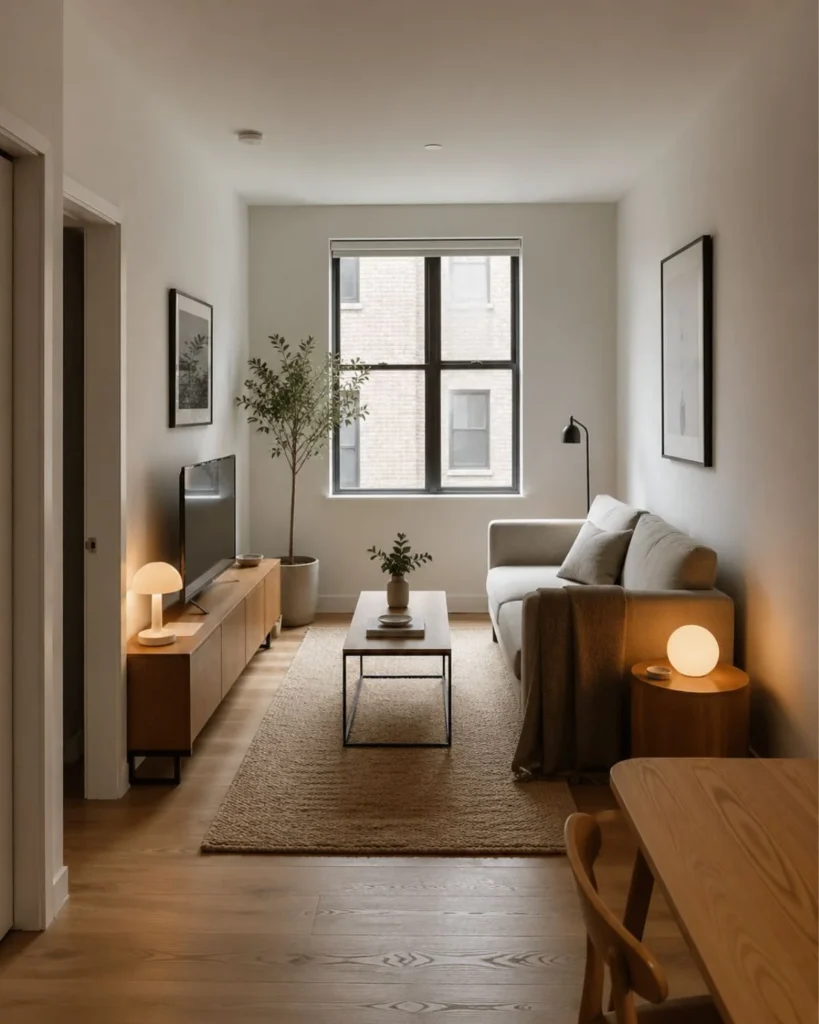
Use this as a quick styling checklist:
- Keep the palette cohesive and calm.
- Choose low-profile, leggy furniture where possible.
- Size rugs generously instead of too small.
- Hang curtains high to stretch the wall line.
- Use one large mirror for light and depth.
- Layer lighting instead of relying on one overhead bulb.
- Favor closed storage in high-clutter areas.
- Zone studio spaces with rugs, light, and furniture placement.
- Use flexible furniture that can move between zones.
- Protect negative space so the apartment can breathe.
Frequently Asked Questions
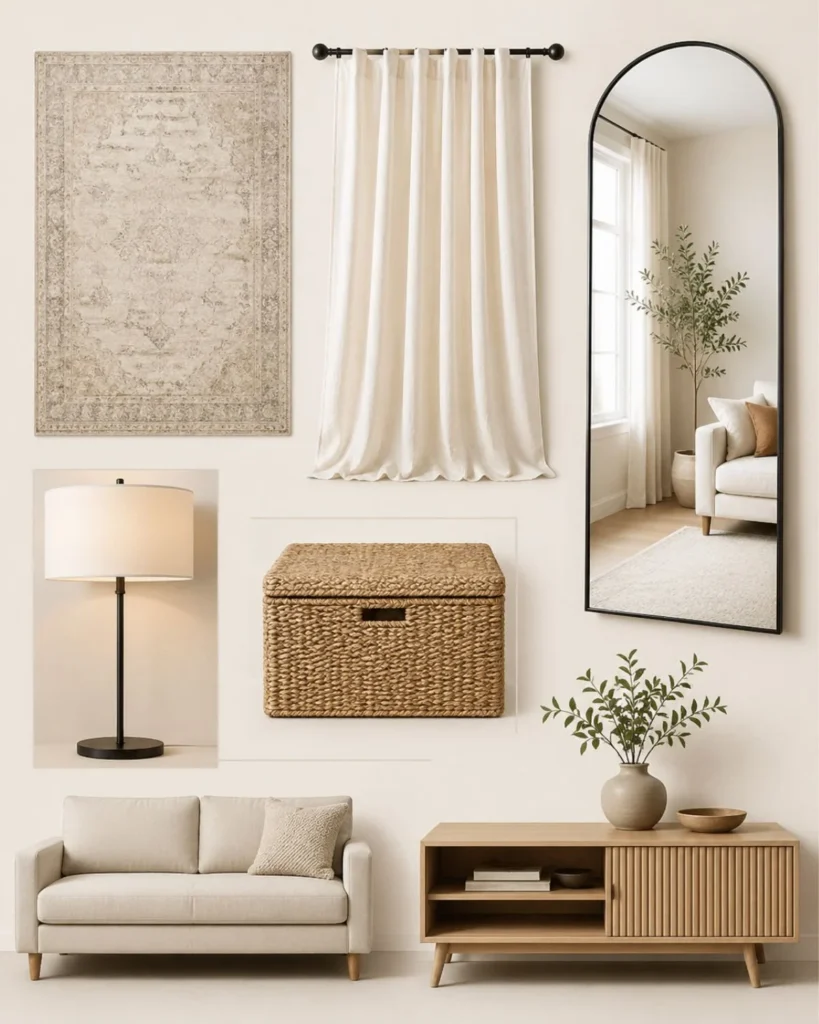
Here are quick answers to common small apartment decorating questions, including colors, furniture, lighting, storage, and simple styling tricks that make compact rooms feel more open.
Design Notes and Supporting References
This article is built around realistic small-space styling rather than fantasy interiors. The strongest results usually come from combining layout logic with restraint. Better scale, better lighting, better storage, and better visual editing will almost always outperform simply adding more decor.
If you expand this topic later, the best supporting cluster posts would cover studio zoning, renter-friendly wall ideas, small apartment lighting, small bedroom storage, compact entryways, and cozy apartment color palettes.
For furniture measuring and room planning guidance, IKEA’s small-space planning tools are a reliable practical reference.
Final Thoughts
Small apartments don’t need more things — they need better decisions.
When layout, light, and storage work together, even the smallest space can feel calm, open, and genuinely comfortable to live in.
If you want a broader starting point before choosing furniture or colors, these apartment inspiration ideas can help you plan the overall mood, layout, and decorating direction for your space.
Focus on what improves your daily life, not just what looks good in photos — that’s what actually makes a small apartment work.
Because in a small space, every choice matters.