Entryway Bench With Shoe Storage: 17 Smart Ideas for Small Apartments
Tripping over a pile of sneakers while balancing on one foot to tie your boots is the fastest way to make a compact home feel chaotic. In a small apartment or townhouse with no dedicated mudroom, an entryway bench with shoe storage solves two major daily headaches in a single footprint: it gives you a comfortable perch for putting on footwear and corrals messy shoes underneath or behind closed doors.
When your front door opens straight into a narrow hallway, a living room corner, or a short strip of drywall, standard suburban mudroom benches will overwhelm the walkway. Investing in a thoughtfully scaled small apartment entryway bench requires narrow depth measurements, visually light frames, and storage formats tailored to how your household actually comes and goes.

Essential Sizing, Clearance & Ergonomic Rules for Entryway Benches
Before ordering any shoe storage bench for entryway use online, pull out a tape measure and mark the floor with painter’s tape. In a compact entrance, two extra inches of bench depth or an inward-swinging door can render a bench unusable.
- Minimum Walkway Clearance: Maintain at least 32 to 36 inches of clear floor space in front of the bench so you can walk past comfortably and bend down to tie your shoes without hitting the opposite wall, aligning with universal ADA Accessibility Standards for clear routes.
- Ideal Bench Depth for Small Spaces:
- Ultra-Slim Flip-Down Benches (9.5 to 11.5 inches deep): Best for tight hallways between 42 and 46 inches wide where shoes are stored vertically inside a tilt-out drawer. Explore our dedicated narrow entryway ideas for more shallow-depth layout strategies.
- Compact Cubby or Rack Benches (12 to 14 inches deep): The sweet spot for a versatile narrow entryway bench. Note that a US Men’s Size 10 or 11 sneaker measures roughly 11.5 to 12.5 inches long—if your bench is 11 inches deep, larger shoes will need to sit at a slight diagonal on open shelves.
- Standard Storage Trunks (15 to 17 inches deep): Only use in open-plan foyers or wider entry alcoves where hallway width is not restricted.
- Ergonomic Seat Height: Look for a bench measuring 17 to 19 inches high (including the seat cushion), which matches standard dining chair height and makes sitting down and standing up effortless for adults.
- Bench Width & Capacity Rule: Allow 22 to 24 inches of bench width per seated person, and roughly 8 to 9 inches of horizontal shelf width per pair of adult shoes. A compact 30- to 36-inch-wide bench comfortably seats one adult and stores 6 to 8 pairs of shoes across two tiers.
- Cubby & Shelf Height Clearances: Standard sneakers and flats need 5.5 to 6.5 inches of vertical shelf height, ankle boots require 8 to 10 inches, and tall winter or rain boots need 14 to 17 inches of height.
- Structural Weight Capacity: Verify that the bench is rated for a minimum static load of 250 to 300 pounds if it will be used for daily adult seating—many ultra-cheap particleboard shoe racks are only rated for 120 pounds and will bow over time.
Quick Wins for Choosing the Right Shoe Storage Bench
If you want your entrance to look calmer and work smoothly from day one, keep these foundational principles in mind when selecting a shoe bench for small spaces:
- Match the storage format to your sightlines: Choose open cubbies or slatted racks for tucked-away hallways where fast grab-and-go access wins, and pick closed flip-down or drawer benches when the front door opens directly into your living room.
- Keep the base visually light: Benches with recessed legs, slender metal frames, or pale wood finishes let light and floor lines pass around them so the foyer feels wider.
- Stick to a tailored, low-profile seat pad: A crisp 1.5- to 2-inch firm linen or performance bouclé cushion adds comfort without looking puffy or bulky.
- Pair the bench with vertical wall function: Anchor the wall above your bench with a mirror or a row of coat hooks at 60 to 64 inches high so the entire vertical column works as a mini mudroom.
- Protect wood and carpet from wet soles: Always tuck a washable rubber boot tray or felt liner inside lower shelves if you live in a rainy or snowy climate.
17 Entryway Bench With Shoe Storage Ideas for Small Apartments
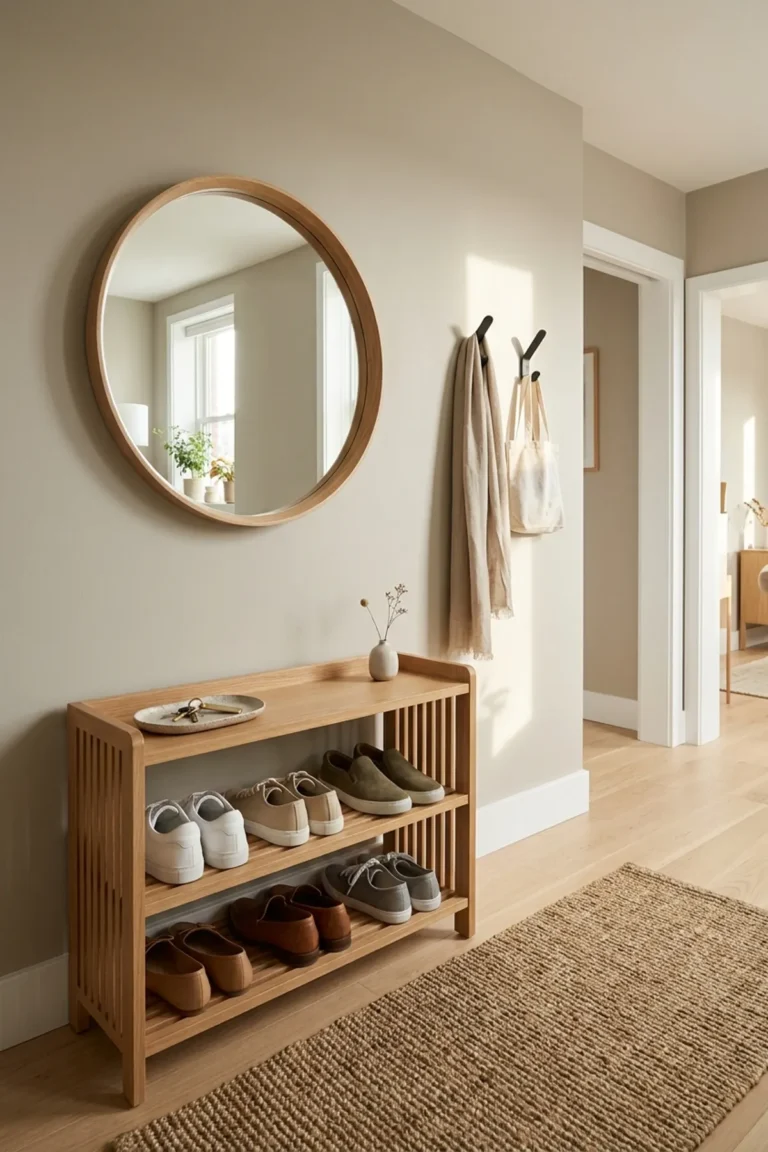
1. Slim Open-Cubby Bench for Fast Daily Access
When mornings are rushed, fumbling with cabinet latches or heavy lids slows everyone down. A slim open-cubby entryway bench with shoe storage (12 to 13 inches deep) with two tiers of divided compartments keeps your top six everyday pairs visible and ready to slip on in seconds.
Why This Works Visually: Seeing the structured grid of light oak dividers breaks up shoe clutter while keeping the bench profile airy and open.
Interior Stylist Tip: Restrict open cubbies strictly to your neatest neutral daily sneakers and flats, and store bright neon running shoes or muddy hiking boots inside a dedicated shoe closet.
2. Flip-Down Tilt-Out Cabinet Bench for Studio Sightlines
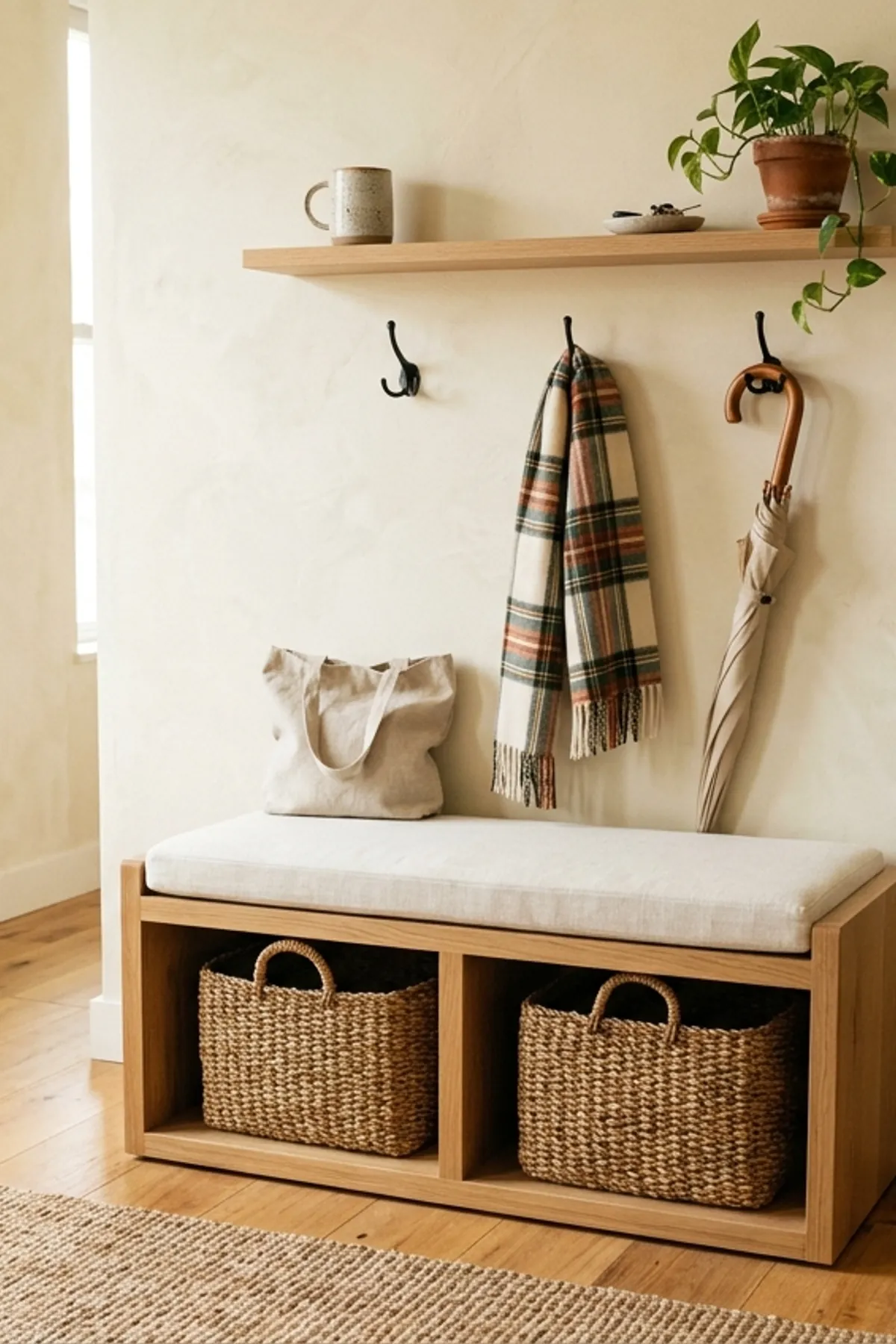
In studio apartments and open-plan layouts where you can see the front door directly from your sofa, visible shoes create constant background noise. A flip-down shoe cabinet bench (10 to 12 inches deep) conceals footwear vertically behind a flat, seamless drawer front.
Why This Works Visually: When closed, the bench reads like a sleek piece of minimalist living room cabinetry rather than utilitarian shoe storage.
Designer Trick: Choose a handle-free design with a finger-pull beveled edge or push-to-open latch so protruding knobs never snag your bags or shins in a tight walkway.
3. Wooden Bench with Matching Woven Basket Slots
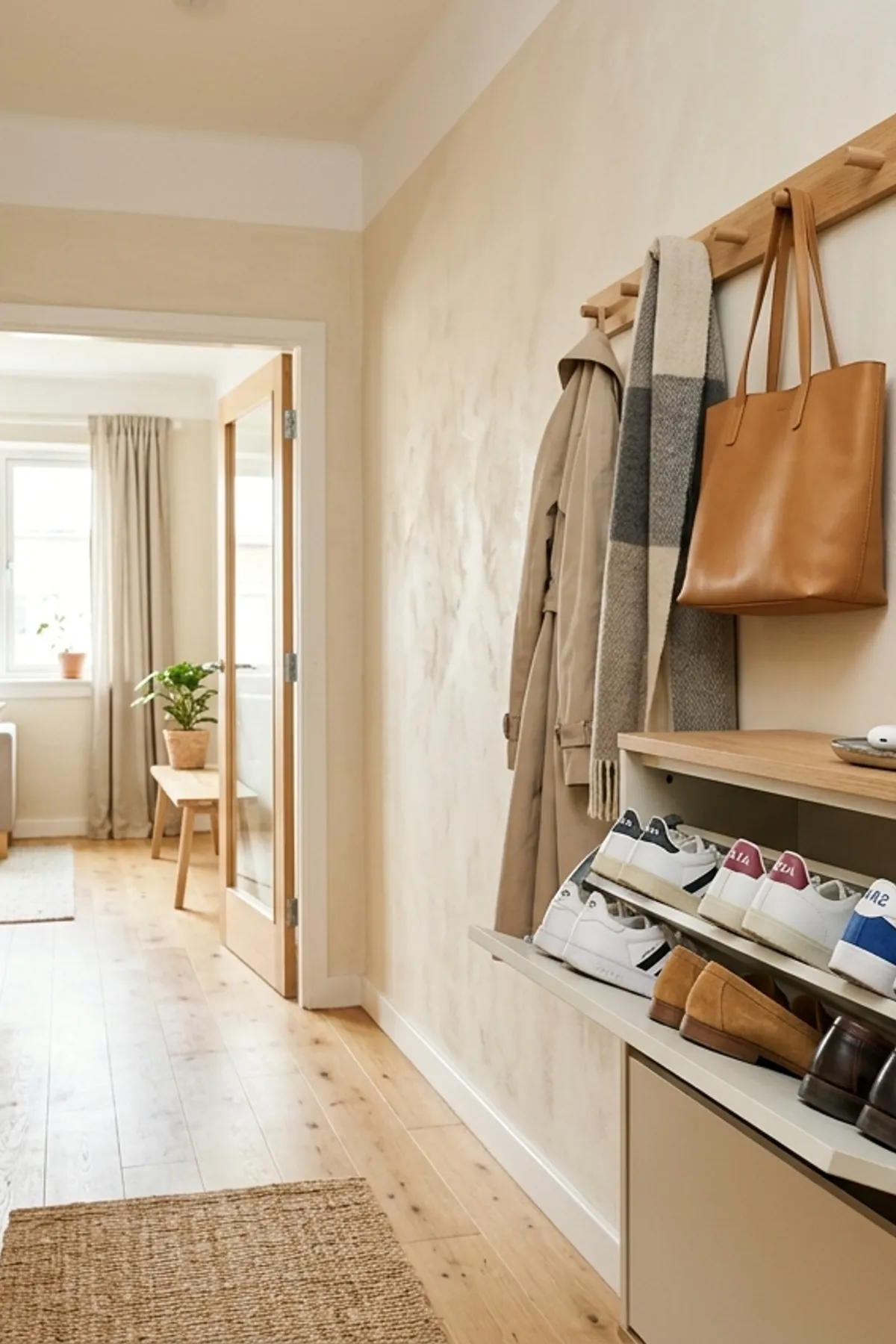
Not every household item fits neatly inside a rigid 6-inch shoe cubby. Styling a warm wooden entryway bench with shoe storage featuring a tall 10- to 12-inch open lower shelf fitted with two or three matching seagrass or rattan baskets hides bulky winter boots, dog towels, and slip-on sandals effortlessly.
Why This Works Visually: Identical woven baskets hide mismatched shoe colors while adding warm organic texture to sterile drywall entrances.
Actionable Tip: Stick adhesive felt pads to the bottom of coarse rattan or seagrass baskets so sliding them in and out never scratches the lower wooden shelf of your bench.

4. Upholstered Lift-Top Bench with a Hidden Shoe Compartment
If your apartment has zero hallway closet space and you want a soft, living-room-worthy look by the door, opt for a tailored hidden shoe storage bench (13 to 15 inches deep) raised on tapered wooden legs with an upholstered lift-top seat.
Why This Works Visually: It eliminates every trace of visible storage hardware while providing a deep interior trunk for shoes, umbrellas, and winter scarves.
Actionable Tip: Line the interior fabric bottom of an upholstered lift-top bench with a wipeable clear vinyl mat or shallow plastic bins so street grit from shoe soles never stains the upholstery liner.
5. Narrow Powder-Coated Metal and Oak Slatted Bench
Solid wooden side panels can make a narrow corridor look boxed in. A contemporary bench framed in thin 0.75-inch matte black steel tubing with a solid oak seat and a slatted metal wire shoe rack underneath leaves 80% of the wall and floor behind it completely visible.
Why This Works Visually: Thin architectural lines preserve sightlines to your baseboards, making a 42-inch hallway feel noticeably wider.
Actionable Tip: Because slatted racks allow airflow underneath shoe soles, this style is ideal for airing out damp gym sneakers or rain-soaked loafers.
6. Bench with Assigned Vertical Cubbies for Shared Apartments
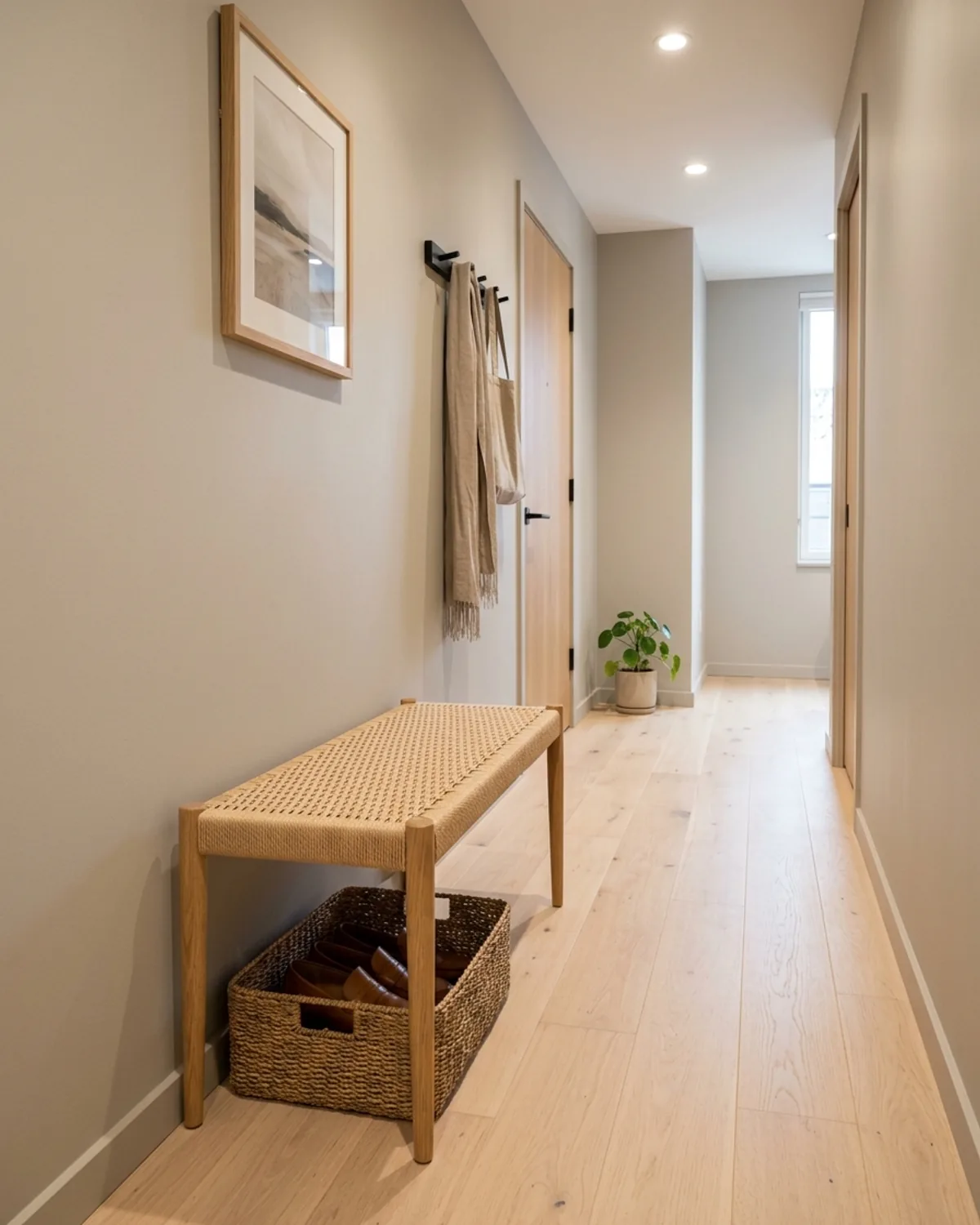
When roommates, couples, or kids share a tiny apartment entrance, shoes quickly turn into a tangled free-for-all. A bench featuring six to eight individual vertical cubby slots lets you assign two dedicated slots per person, integrating seamlessly with proven small space entryway organization systems.
Why This Works Visually: Individual compartments enforce a hard capacity limit—if your two cubbies are full, a pair has to go back to your bedroom closet before another pair comes out.
Actionable Tip: Look for models with removable middle shelves on one side so you can convert two stacked sneaker cubbies into one tall 13-inch vertical cubby for rain boots.
7. Tailored Upholstered Bench with Pull-Out Shoe Drawers
Lift-top benches require you to clear off anything sitting on the seat before you can open the lid. Selecting a tailored upholstered entryway bench with shoe storage featuring two smooth-gliding pull-out drawers underneath lets you leave a throw pillow or bag on top while still accessing hidden shoes below.
Why This Works Visually: Blending soft oatmeal upholstery on top with flush wood drawer fronts below bridges the gap between cozy bedroom furniture and hardworking foyer storage.
Common Decor Mistake: Avoid deep button-tufted velvet benches with rolled arms, which eat up 6 to 8 inches of extra width and look dated in compact apartments.
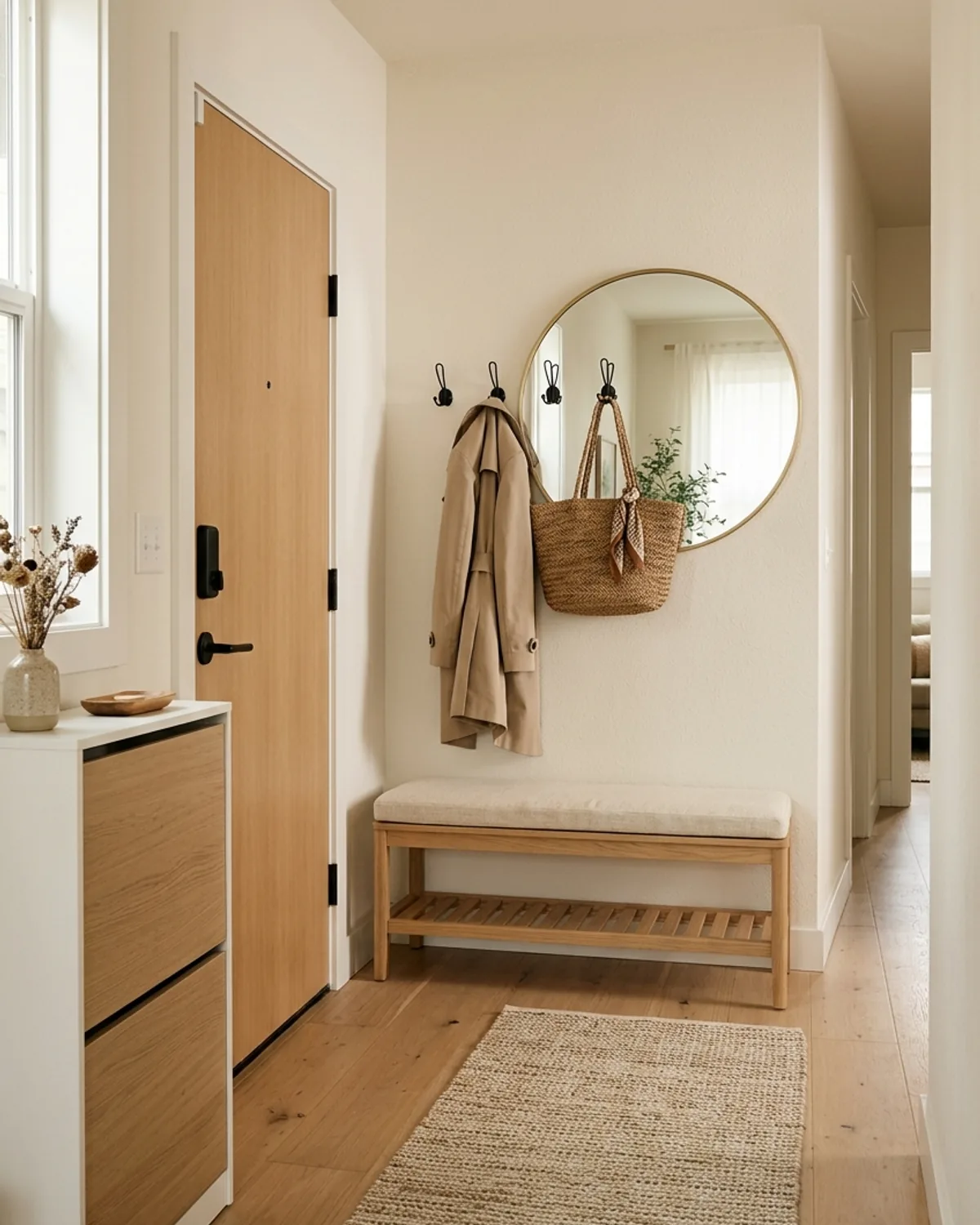
8. Floating-Look Recessed-Base Bench for Airy Hallways
In a tight corridor, the more unbroken flooring your eye can see, the wider the space feels. If you cannot wall-mount a heavy floating bench into structural studs, choose a freestanding bench designed with an inset plinth or deeply recessed legs paired with an open bottom shoe shelf—a key strategy among top tiny hallway ideas.
Why This Works Visually: Shadow lines underneath the recessed base create a floating optical illusion that keeps the hallway floor feeling expansive.
9. Compact L-Shaped Corner Bench for Awkward Entry Nooks
Many apartments feature an awkward dead corner right beside the hinge side of the front door where a standard 36-inch straight bench won’t fit. Tucking a compact corner bench or a 24-inch square shoe cube bench into that pocket turns wasted square footage into a cozy seating nook.
Why This Works Visually: Utilizing the corner pulls traffic out of the main hallway path and softens rigid 90-degree drywall angles.
Actionable Tip: Hang two rows of coat hooks on the perpendicular walls above the corner bench to create a wrap-around micro-mudroom in under four square feet.
10. All-in-One Hall Tree Bench with a Slim Back Panel and Hooks
When you want a cohesive built-in look without hiring a carpenter, choose a narrow entryway bench integrated with a vertical back rail and upper coat hooks (12 to 14 inches deep by 68 to 72 inches tall).
Why This Works Visually: Drawing the eye straight up to the ceiling makes low apartment ceilings feel taller while consolidating shoes, coats, tote bags, and hats onto a single narrow footprint.
Renter-Friendly Tip: Always secure tall hall-tree benches to the wall at the top rail using a heavy-duty anti-tip anchor strap, following official CPSC Anchor It! furniture safety guidelines so pulling a heavy winter coat off a hook never tips the frame forward.
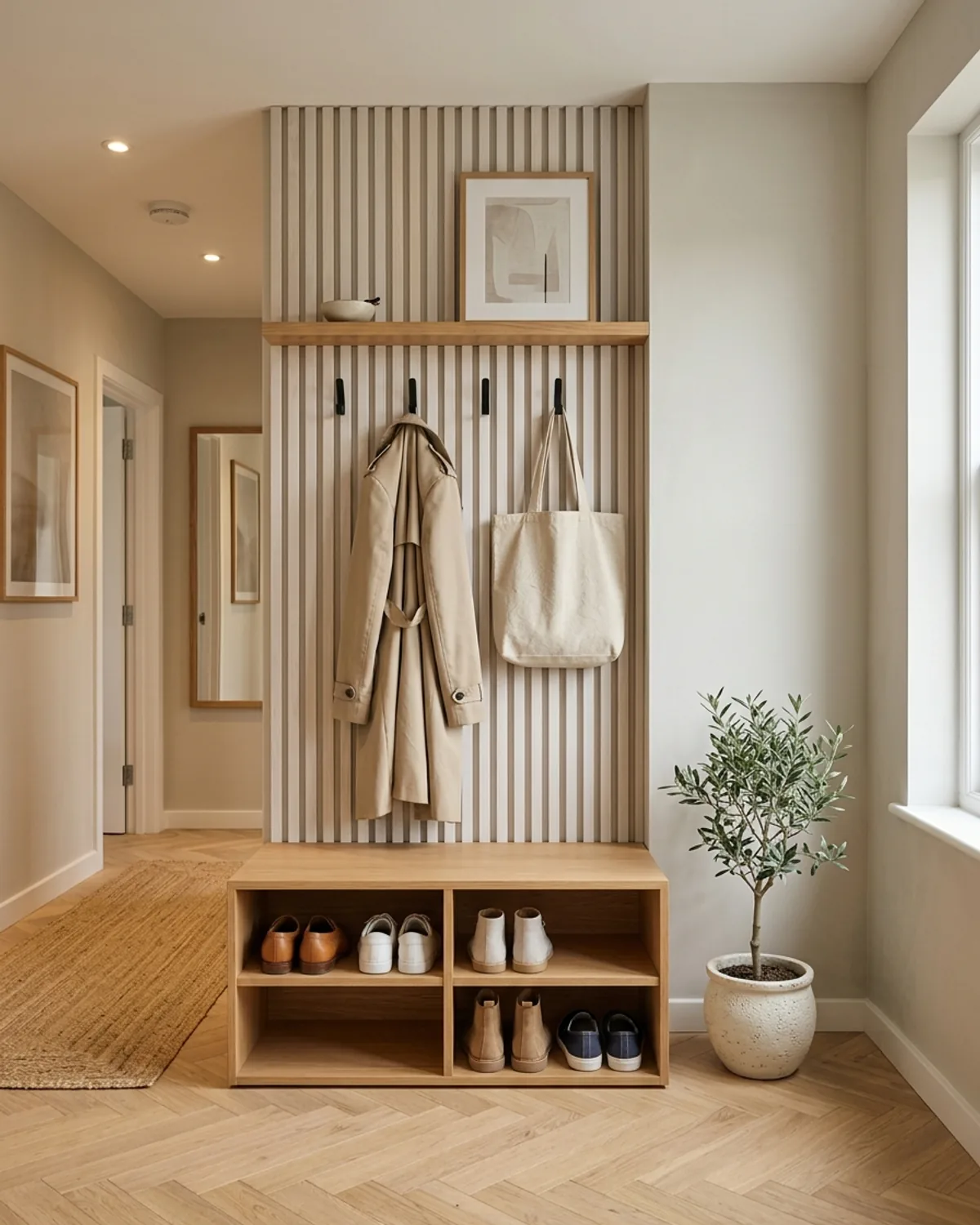
11. Sliding Tambour or Slatted-Door Bench for Zero Swing Clearance
Hinged cabinet doors and pull-out drawers require 10 to 14 inches of open floor clearance in front of the bench just to open them. In a narrow hallway, a bench with sliding tambour doors or smooth bypass slatted panels lets you conceal shoes completely with zero outward door swing.
Why This Works Visually: Curved tambour wood slats add rich mid-century or Japandi architectural texture while operating cleanly inside the bench’s own 12-inch depth.
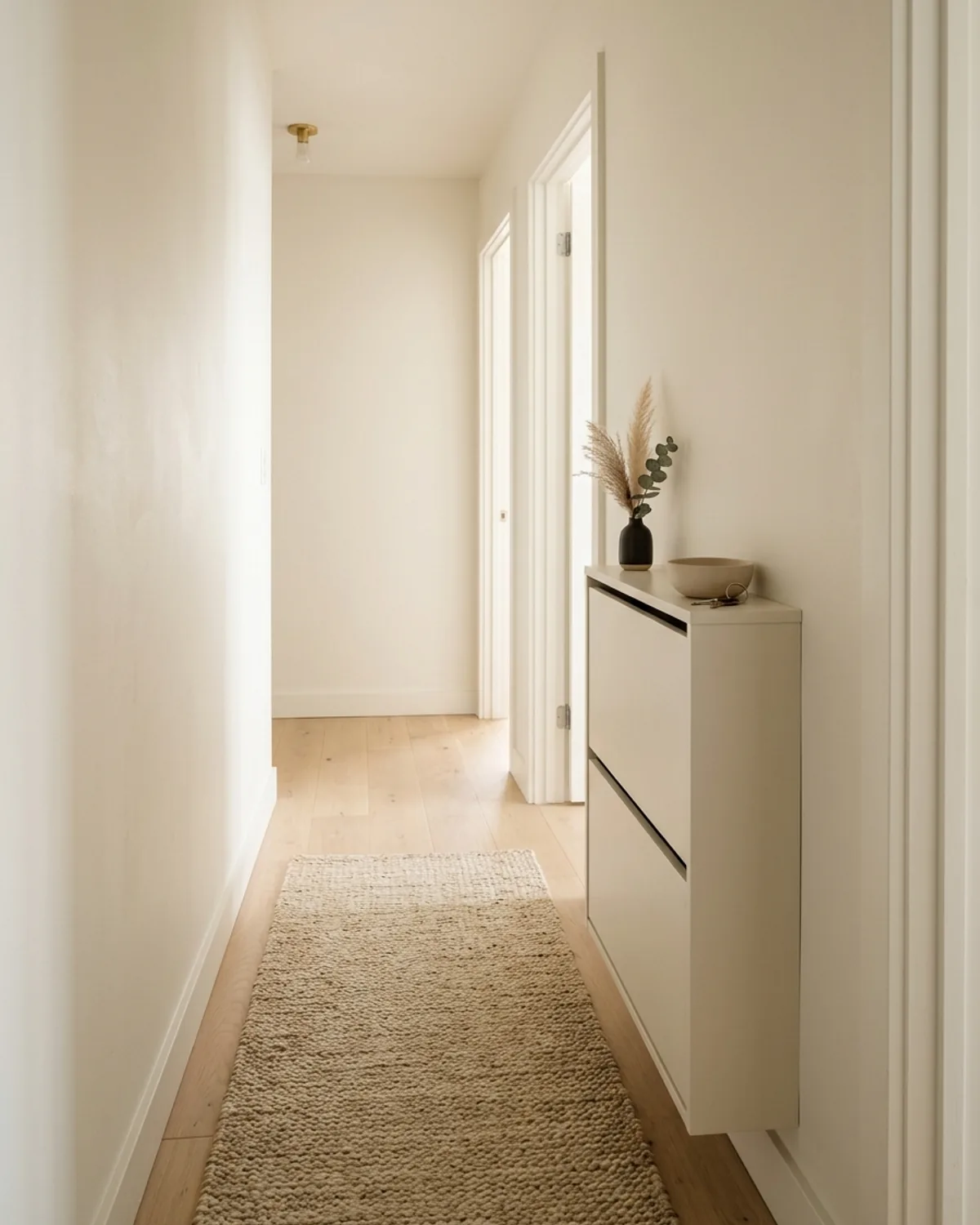
12. Open-Frame Bench with a Removable All-Weather Boot Tray
If you live in a region with heavy rain, slush, or mud, placing wet boots directly inside closed wooden cabinets traps moisture and warps MDF boards. Pair a minimalist open-frame bench with a 12 x 30-inch raised-lip rubber or galvanized metal boot tray slid directly underneath the bottom stretchers.
Why This Works Visually: The dark tray grounds the space underneath the bench and keeps water puddles, road salt, and gravel contained in one wipeable perimeter.
Actionable Tip: Fill the bottom of a galvanized metal boot tray with a thin layer of smooth river pebbles to elevate wet shoe soles so air circulates underneath and dries them twice as fast.

13. Asymmetric Mixed-Storage Bench (Open Cubbies + Closed Door)
Real life is rarely all-neat or all-messy. An asymmetric bench that pairs two open horizontal shelves on the left with a single closed cabinet door or deep drawer on the right gives you the best of both worlds.
Why This Works Visually: You can keep two pairs of attractive daily loafers or clean white sneakers on the open shelves while hiding bulky winter boots, dog waste bags, and shoe care brushes behind the closed door.
14. Shoe Bench Paired with an Upper Floating Ledge System
A low 18-inch shoe bench sitting alone against a tall eight-foot apartment wall can look bottom-heavy and unfinished. Balance the vertical proportions by mounting a matching 6-inch-deep floating shelf and peg rail at 58 to 62 inches off the floor directly above the bench.
Why This Works Visually: The upper shelf frames the top of the vignette, giving you a high landing zone for keys, mail, and woven storage bins while the bench handles seating and footwear below.
15. Color-Drenched Minimalist Bench Painted to Match the Wall
If your foyer is extremely small and you want the storage bench to virtually vanish into the room, paint a clean-lined wooden closed shoe bench in the exact same warm alabaster, pale greige, or muted sage shade as your wall and baseboards—a signature technique from our small entrance hall ideas guide.
Why This Works Visually: Erasing color contrast between the furniture and the drywall tricks the brain into reading the bench as built-in architectural millwork rather than bulky freestanding furniture.
16. Breathable Cane-Webbing or Louvered-Door Shoe Bench
Storing worn everyday shoes inside an airtight solid-door cabinet can trap stale odors over time. Choosing a closed shoe bench crafted with natural rattan cane webbing or slatted louvered doors hides visual clutter while allowing continuous cross-ventilation.
Why This Works Visually: Woven cane panels filter out the sight of dark shoes inside while keeping the furniture piece feeling light, breezy, and warm.
Actionable Tip: Tuck a small activated-charcoal deodorizer pouch inside the back corner of any closed shoe bench to keep the entryway smelling fresh year-round.

17. Style Your Bench as a Complete “Faux Foyer” Vignette
In an apartment without an architectural entrance hall, positioning an entryway bench with shoe storage along the wall next to the front door can look lonely if left unstyled. Turn it into a complete arrival zone by anchoring the floor beneath it with a 2.5 x 6-foot washable runner, hanging a 28- to 32-inch round mirror centered above the seat, and resting a small stone catchall tray or lumbar pillow on one corner of the bench.
Why This Works Visually: Grouping the bench, mirror, hooks, and rug into a tight vertical rectangle visually carves out a distinct foyer even inside a single studio room.
Entryway Shoe Bench Comparison Guide by Apartment Layout
Use this side-by-side reference chart to pick the exact hallway bench with shoe storage style and dimensions that fit your specific layout and footwear volume:
| Shoe Bench Style | Ideal Depth & Width | Typical Shoe Capacity | Best Apartment Layout & Use Case |
|---|---|---|---|
| Flip-Down Cabinet Bench | 9.5″ – 11.5″ D × 24″ – 32″ W | 6 – 8 pairs (stored vertically) | Tight hallways (42″–46″ wide) & open studio sightlines |
| Open-Cubby Wood Bench | 12″ – 13.5″ D × 30″ – 36″ W | 6 – 9 pairs (individual slots) | Shared apartments, couples & fast daily sneaker access |
| Sliding Tambour Door Bench | 11.5″ – 13″ D × 32″ – 38″ W | 6 – 8 pairs (concealed) | Narrow corridors where swing-out doors block the path |
| Woven Basket Shelf Bench | 12.5″ – 14″ D × 30″ – 36″ W | 4 – 6 pairs + bags/accessories | Cozy living room entries needing mixed gear storage |
| Metal Frame + Boot Tray Bench | 11″ – 12.5″ D × 28″ – 36″ W | 5 – 7 pairs (wet/everyday) | Rainy/snowy climates & low-maintenance rentals |
| Cane-Front Closed Bench | 12″ – 14″ D × 32″ – 40″ W | 6 – 8 pairs (ventilated) | Closed-door clutter control with breathable airflow |
Common Entryway Bench Buying & Styling Mistakes to Avoid
Before clicking checkout on a shoe bench, make sure you avoid these frequent small-space pitfalls:
- Forgetting to check men’s shoe length against cabinet depth: Many standard horizontal shoe cabinets measure 11.5 inches deep on the outside, meaning the interior shelf is only 10 inches deep—too short to close the door on a US Men’s Size 10.5 or 11 shoe unless stored in an angled tilt-out drawer or placed diagonally.
- Sealing wet shoes inside solid MDF cabinets: Closing damp leather or canvas shoes inside an unventilated particleboard cabinet causes mildew smells and peeling veneer. Let wet shoes dry on a boot tray first, or buy a bench with cane or slatted fronts.
- Piling the bench seat with decorative pillows and bags: If you have to move three throw pillows and a tote bag just to sit down and tie your laces, the bench stops functioning as seating. Keep at least two-thirds of the bench seat completely clear.
- Blocking baseboard heaters or wall outlets: In older apartments, hallways often house baseboard radiators. Never push a closed wooden shoe bench flush against an active electric or hot-water baseboard heater—leave at least 4 to 6 inches of clearance or choose a wall-mounted floating shelf instead.
Frequently Asked Questions
Conclusion
The right entryway bench with shoe storage transforms a chaotic apartment threshold into a calm, welcoming arrival zone without sacrificing precious walking space. Whether you choose a 10-inch flip-down cabinet bench to keep studio sightlines spotless, a breathable cane-front bench to hide everyday sneakers, or a slender metal-and-oak rack paired with a washable boot tray, success comes down to matching the bench’s depth and storage mechanism to your real daily habits. Measure your hallway clearance today, cap your front-door footwear to the pairs you actually wear each week, and anchor the wall above your bench with hooks and a mirror for a complete mini-mudroom setup.


Article Written by
Claire Bennett
Claire is the founder and interior styling writer behind The Decor Nook, where she focuses on smart proportions, layered lighting, renter-friendly upgrades, and practical ways to make compact homes feel comfortable and functional.