
Renter-Friendly Balcony Ideas: 19 Zero-Damage Apartment Tips
A tiny rental balcony can become one of the most useful and comforting parts of an apartment when planned with intention. The best renter-friendly balcony ideas do not depend on square footage or permanent modifications; they rely on smart proportion, open circulation, reversible materials, and a clear purpose that makes the outdoor area feel welcoming without risking your security deposit.
Even a narrow rental balcony can easily work as a morning coffee perch, a cozy reading corner, a compact container garden, or a soft evening retreat. The goal is not to drill into exterior stucco or fill every edge. It is to create one functional, damage-free zone that feels naturally connected to your home and remains effortless to pack up when your lease ends. For furniture footprints and weatherproof layout planning beyond rental-only upgrades, see our small apartment balcony ideas.
If you are planning your entire layout before styling the outdoor corner, these small apartment ideas can help organize storage, furniture scale, lighting, and movement throughout the interior.
For broader footprint inspiration and complete furniture layouts, you can also explore our guide on apartment balcony ideas. The following renter-friendly balcony ideas focus specifically on damage-free setups, non-permanent flooring, and drill-free upgrades designed for real rental living.
What Are Renter-Friendly Balcony Ideas?
Renter-friendly balcony ideas are practical, damage-free decorating and layout solutions that make a compact outdoor space functional and stylish without violating lease terms. They prioritize reversible materials, drill-free privacy screens, clamp-on fixtures, and appropriately scaled freestanding furniture that keep circulation clear and safeguard your security deposit.
The strongest rental setups solve a practical need first. A morning coffee spot needs a fold-away surface and one comfortable chair that doesn’t block door clearance. A plant nook needs lightweight containers, protective drip trays, and secure, non-permanent railing brackets. An evening retreat relies on outdoor-rated solar or rechargeable lighting rather than running extension cords across the doorway.
Because many apartment dwellers work around lease limits, these renter-friendly decor ideas offer a useful companion guide for reversible changes that protect walls and finishes.
Quick Wins for a Renter-Friendly Balcony
The most effective renter-friendly balcony ideas begin with one clear purpose and damage-free solutions before furniture, plants, or decorative accessories are introduced:
- Choose one primary use: Focus on a single function—such as a morning coffee perch, reading nook, container herb garden, or casual dining corner—rather than overcrowding the zone.
- Opt for lightweight, collapsible furniture: Use folding bistro sets, stackable chairs, or open-frame designs that pack flat easily when your lease ends.
- Anchor the base with temporary flooring: Lay down a flatwoven, mold-resistant outdoor rug or interlocking composite deck tiles that require zero adhesives or fasteners.
- Keep greenery vertical and secure: Utilize freestanding ladder shelves or clamp-on railing planters fitted with protective rubber pads to avoid scratching landlord-owned finishes.
- Layer low-voltage, drill-free lighting: Hang solar string lights using clear zip ties and add rechargeable table lanterns instead of running cords across door tracks.
- Stick to a cohesive, neutral palette: Repeat two or three durable materials—such as matte black metal, warm acacia wood, and woven outdoor fabrics—to create visual harmony without clutter.
- Preserve open circulation: Always leave at least one third of the floor and the door clearance completely unobstructed for safe movement and easy maintenance.

Which Balcony Setup Works Best for Your Rental Space?
Use your balcony’s shape, sun exposure, and lease guidelines to choose an arrangement before purchasing decor. This comparison ensures your renter-friendly balcony ideas remain practical, reversible, and suited to the layout you have:
| Balcony condition | Best setup | Key pieces | Avoid |
| Very narrow balcony | One-chair reading or coffee nook | Slim chair, wall-side stool, narrow rug | Two-chair sets and deep planters |
| Short square balcony | Compact bistro corner | Round table, two tuck-in chairs, one plant cluster | Rectangular furniture that blocks circulation |
| Sunny balcony | Container garden with shaded seating | Sun-tolerant pots, rail planters, light textiles | Heat-sensitive decor and dark heavy fabrics |
| Windy or exposed balcony | Low, stable arrangement | Weighted planters, compact furniture, secured textiles | Tall unstable stands and loose accessories |
| Low-light balcony | Cozy seating and foliage-focused plants | Warm lighting, shade-tolerant containers, pale surfaces | Plants that require full sun |
| Multi-use balcony | Flexible fold-away layout | Folding table, stackable chair, storage bench | Permanent furniture covering the full floor |
If your rental balcony is an ultra-narrow corridor or micro space under 3 feet deep, explore our dedicated guide to tiny balcony ideas for zero-floor-footprint rail bars and diagonal space tricks.
19 Renter-Friendly Balcony Ideas That Feel Cozy and Practical
1. Choose a Fold-Flat Bistro Set With Non-Marring Feet
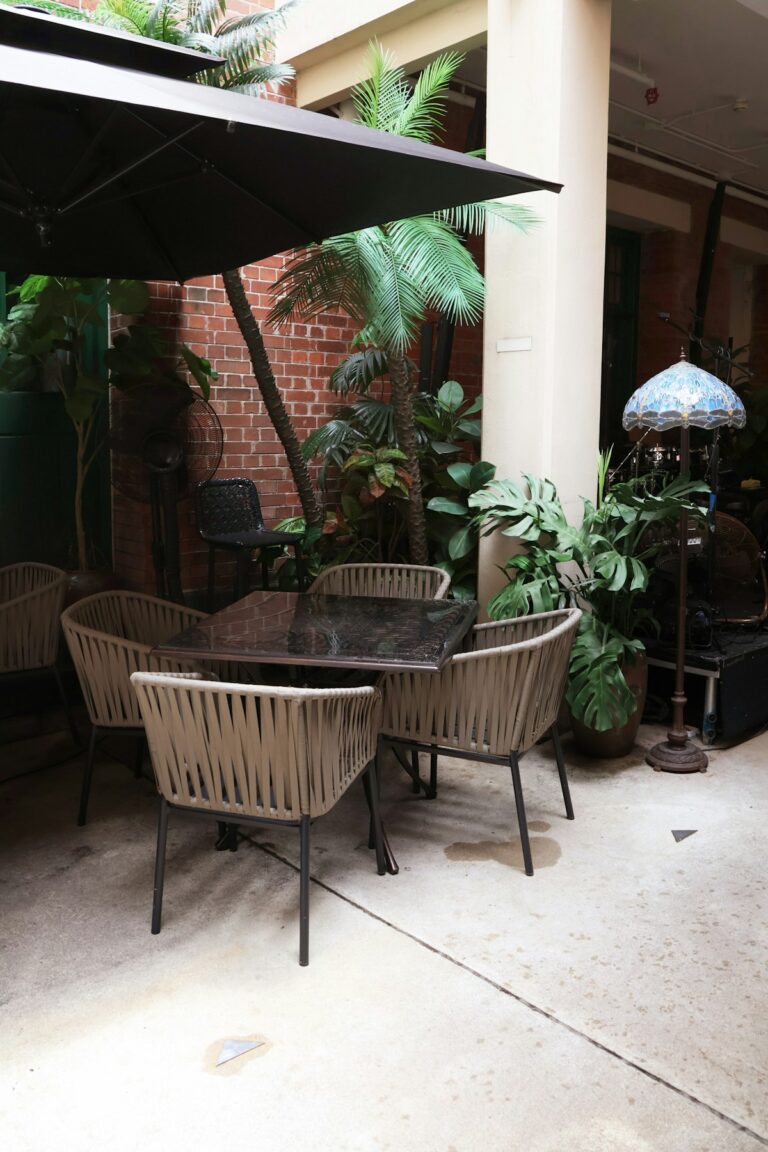
Among the most versatile renter-friendly balcony ideas, a compact bistro set provides an immediate outdoor dining spot without requiring permanent structural changes. Look for lightweight powder-coated steel or aluminum bistro tables and chairs equipped with dense rubber or nylon non-marring foot caps. These protective feet prevent metal legs from scratching ceramic balcony tiles or abrading painted concrete coatings under daily shifting weight.
Why it works for rentals: When your lease ends, fold-flat bistro furniture collapses completely flat in seconds, fitting into the backseat of a car or a moving van without disassembly. During tenancy, chairs fold neatly against the wall for quick floor cleaning or landlord inspections.
Renter setup tip: Check chair and table leg bottoms before assembling outside; if factory caps are hard plastic or missing, slip heavy-duty silicone furniture socks or adhesive felt-rubber pads over the feet to guarantee zero floor scuffs that could risk your security deposit.

2. Use a Breathable, Non-Staining Outdoor Rug to Protect Rental Flooring
Rental balcony flooring is often weathered concrete, bare quarry tile, or composite decking that landlords inspect closely upon move-out. A high-quality outdoor rug acts as a protective barrier against furniture gouges and dropped mugs, but it must be constructed from breathable, flat-woven polypropylene or recycled plastic fibers rather than solid rubber-backed mats.
Deposit protection rule: Solid rubber or latex backings trap rainwater and condensation directly against porous concrete, which breeds mildew, promotes efflorescence, and leaves dark water rings that are stubborn to scrub away during move-out inspections. An open-weave, synthetic outdoor rug allows water to drain freely beneath it and dries quickly in the sun.
Maintenance check: Roll back your outdoor rug once a month to inspect the underlying surface, sweep away trapped dirt, and let the concrete air dry completely after sustained rainfall.

3. Use Portable Indoor-Outdoor Cushions You Can Take Inside
Instead of investing in bulky, permanent outdoor cushions that require fixed storage boxes, choose lightweight, weather-resistant cushions that transition easily between your living room and balcony. Portable floor pillows, tufted seat cushions, and water-repellent lumbar cushions provide immediate comfort across basic folding chairs or floor arrangements without requiring any mounting hardware or brackets.
Renter mobility advantage: Multi-use cushions double as casual floor seating inside your apartment when guests visit, maximizing your investment across a rental footprint. When weather turns wet or windy, carrying two or three cushions inside takes less than a minute, eliminating the need for bulky exterior storage trunks.
Move-out benefit: Removable, zippered covers made of solution-dyed polyester or acrylic can be machine-washed right before moving day, packing down compactly into standard vacuum-seal storage bags for effortless transport.
4. Use Drill-Free Clamp-On Railing Planters
When implementing botanical renter-friendly balcony ideas, growing herbs, flowers, or cascading greenery should never involve drilling holes into exterior masonry, siding, or metal top rails. Drill-free clamp-on railing planters use compression brackets and threaded turn-screws that lock securely around horizontal or vertical balusters without piercing metal or chipping powder-coated finishes.
Renter safety and lease rules: Before mounting planters along your railing, consult your rental lease agreement. Many property management companies strictly prohibit outward-hanging planters due to pedestrian liability or falling-object regulations. Choose inward-facing compression troughs that rest securely on the interior side of the balustrades.
Surface protection tip: Place thin rubber strips or cut pieces of silicone shelf liner between the metal clamp brackets and the balcony railing bars before tightening. This prevents the compression hardware from marring the paint or leaving rust rings on the landlord’s railing.

5. Try a Freestanding Hammock Chair or Swing With Its Own Stand
Hanging a swing or hammock chair from an overhead balcony ceiling or structural beam is one of the quickest ways to violate your lease and forfeit your security deposit, as exterior drilling into concrete or overhead framing can compromise waterproofing membranes and structural safety. A freestanding hammock chair or hanging egg chair supported by its own powder-coated steel base delivers identical swaying comfort with zero anchor holes.
Renter considerations: Freestanding swing stands distribute weight evenly across a broad circular or curved footprint rather than concentrating dynamic pull on a single overhead point. When your tenancy ends, the frame disassembles into three or four manageable poles that require no plaster patching or touch-up painting.
Practical check: Review your building bylaws regarding balcony weight allowances and wind safety. If your balcony is prone to strong gusts at higher floor levels, anchor the freestanding base with removable sandbags or tuck the chair frame into a protected corner when not in use.

6. Hang Solar or Battery String Lights Without Nails
Illuminating a rental balcony after dark often presents an obstacle: most older apartment buildings lack exterior weatherproof electrical outlets, and drilling screw-hooks or masonry nails into exterior siding is universally prohibited by landlords. Low-voltage solar-powered or waterproof battery-operated LED string lights bypass both constraints effortlessly. When shopping for reliable lighting, look for fixtures that comply with official ENERGY STAR residential exterior lighting guidelines to ensure certified weather-resistance, safe thermal ratings, and long-lasting energy efficiency.
Damage-free mounting method: Fasten your light strand along top railings, vertical spindles, or freestanding plant shelves using clear, UV-resistant outdoor cable ties (zip ties) or removable outdoor adhesive clips rated for exterior temperature swings. Never drive staples, nails, or metal screw-eyes into window trim or exterior walls.
Move-out restoration: At move-out, simply snip the cable ties with wire cutters or pull the adhesive release tabs straight down parallel to the wall. The entire lighting installation disappears in five minutes without leaving adhesive residue, chipped paint, or anchor cavities behind.

7. Use Rechargeable Table Lanterns Instead of Permanent Wiring
Hardwired exterior sconces and pendant fixtures require electrical permits, junction box modifications, and landlord approval that renters cannot obtain. Cordless rechargeable LED table lanterns deliver flexible, portable illumination that can be charged indoors via USB and brought outside whenever you use the space.
Why they suit renters: Portable lanterns require zero wiring, zero wall penetrations, and zero reliance on outdoor GFCI outlets. Many models feature touch-dimming, warm color temperatures (2700K), and all-weather IP54/IP65 ratings that withstand evening dew and light drizzles without damage.
Moving practicality: Compact table lanterns take up minimal storage in a drawer or shelf during winter months and pack into standard moving cartons alongside your living room table lamps when moving into a new apartment.
8. Choose Folding Chairs That Pack Flat for Your Next Move
While a bistro set provides a structured spot for meals, many renters prefer dedicated lounge seating for relaxing outdoors. Instead of heavy, fixed-frame armchairs or modular sectionals that consume entire rental hallways and moving vans, invest in high-quality folding directors’ chairs, sling chairs, or fold-flat wooden deck chairs.
Moving and storage practicality: Individual folding chairs collapse to an ultra-slim profile of less than 3 inches deep. Between moves or during inclement weather, two or three folding chairs slide easily into a standard apartment utility closet, under a bed frame, or lean flat against an interior wall behind a door.
Renter checklist: Look for chairs featuring weather-resistant powder-coated frames and durable canvas or sling fabric that can be removed for washing. Ensure each chair leg terminates in smooth, non-marking foot caps so that setting up and stowing seating never scratches your rental patio tiles.
9. Use Lightweight Planters With Saucers to Prevent Rental Surface Stains
Solid concrete, glazed ceramic, and terracotta planters look beautiful, but they present two major hazards for renters: extreme weight that can exceed cantilevered balcony load ratings and porous undersides that trap moisture and leach mineral salts into the landlord’s flooring. Lightweight resin, fiberglass, or UV-stabilized polypropylene planters offer identical visual elegance at a fraction of the weight.
Preventing surface stain penalties: Every container on a rental balcony must sit in a dedicated saucer or drip tray to catch excess watering runoff. Water draining freely from flowerpots carries soil tannins, fertilizers, and dissolved minerals that permanently discolor concrete, grout lines, and balcony coatings—a common cause of deposit deductions during move-out checks.
Portability and cleaning: Lightweight resin planters allow you to shift containers easily to sweep the floor beneath them. Furthermore, on moving day, you can lift and transport them yourself without needing professional movers or risking spinal strain.

10. Use a Freestanding Weatherproof Deck Box You Can Take When You Move
Outdoor storage on a rental balcony must be completely self-contained and freestanding, requiring zero attachment brackets to exterior building walls. A heavy-duty, weather-sealed resin deck box provides dry, lockable storage for outdoor cushions, gardening trowels, potting soil, and lantern chargers without altering the building envelope.
Move-out versatility: Unlike custom-built balcony storage units or wall-hung shelving, a freestanding deck box is fully portable. Many models feature integrated side handgrips and flat tops rated to support adult seating weight, functioning as temporary bench seating during your tenancy.
Packing bonus on moving day: When your lease expires, your deck box serves double-duty as a sturdy, water-resistant moving crate. Simply load your balcony accessories, cushions, and tools directly inside, latch the lid shut, and wheel or carry it straight to the moving truck.
11. Create Removable Balcony Privacy Without Drilling
For privacy-focused renter-friendly balcony ideas, shielding your outdoor nook is essential in dense urban complexes, but attaching permanent wooden lattice or plastic panels to railings with screws or masonry bolts violates virtually every rental lease. Removable rolled natural reed, bamboo slat, or breathable mesh privacy screens allow you to shield your outdoor space from neighboring sightlines using non-invasive attachment methods.
Railing-safe fastening: Unroll the screening along the interior side of your balustrades and secure it at top, middle, and bottom intervals using heavy-duty, UV-stabilized nylon cable ties (zip ties). The ties wrap firmly around the vertical railing spindles without chipping paint or drilling into metal.
Wind and safety compliance: Ensure the privacy material is breathable to prevent strong winds from turning your balcony into a sail and stressing the railing’s structural anchor welds. At move-out, clipping the zip ties with scissors takes less than three minutes, releasing the rolled screen cleanly for reuse at your next home.

12. Use Collapsible or Inflatable Outdoor Seating for Easy Moving
For renters who host occasional friends on the balcony but lack the floor space or moving capacity for extra rigid chairs, collapsible and heavy-duty inflatable outdoor seating provides a practical, damage-free solution. Modern inflatable ottomans and pop-up fabric camp stools deliver comfortable occasional perches without claiming permanent floor space.
Portability and temporary use: High-density puncture-resistant inflatable ottomans with removable water-repellent covers can be inflated in minutes using a handheld air pump. When not in use, they deflate down into compact flat disks that tuck into a closet bin or drawer, keeping your balcony open for everyday circulation.
Transit efficiency: Moving rigid furniture between rental walk-up apartments is exhausting and costly. Collapsible seating adds virtually zero weight and zero moving-box volume to your move-out inventory, making it the most rental-friendly seating category available.
13. Use a Removable Clamp-On Railing Table Instead of a Fixed Bar
Balcony bar ledges create an ideal surface for morning coffee or evening laptop work, but installing a fixed wall shelf or drilling into balcony handrails is strictly off-limits for tenants. A removable clamp-on railing table locks over square, round, or flat top rails using adjustable tension brackets, creating an instant cantilevered work surface with zero permanent modifications.
Railing compatibility and installation: Choose an adjustable model that accommodates your specific railing depth (typically 1 to 6 inches). Ensure the clamp mechanisms feature protective rubber or foam cushioning pads that shield the railing’s powder-coated paint from scratches or pressure dents.
Manufacturer load limits: Never lean heavily or place excessive weight on clamp-on tables. Adhere strictly to the manufacturer’s rated weight limit (typically 15 to 30 pounds), and select a model with fold-down hinges so the tabletop drops flat against the balusters when not in use. At move-out, unthreading the two clamp knobs releases the entire unit immediately.
14. Choose a Freestanding A-Frame Plant Shelf With Protective Feet
Displaying multiple potted plants without cluttering your balcony floor should never involve mounting floating shelves or hanging brackets into exterior brick, concrete, or stucco siding. A freestanding A-frame plant ladder shelf supports multiple tiers of herbs and flowers purely through balanced gravitational geometry, requiring zero wall fasteners or adhesive strips.
Renter surface protection: Verify that the legs of your plant ladder are equipped with non-slip, non-marring rubber boots. These feet prevent the stand from sliding in gusty winds, stop wood legs from rotting in standing water, and prevent metal frames from scuffing your landlord’s exterior floor finish.
Move-out portability: Choose an A-frame unit constructed with hinged shelf trays that fold flat like an ironing board. When your lease ends, you can lift off the pots, fold the entire ladder frame flat in one motion, and carry it through apartment doorways without bumping walls or scraping trim.

15. Hang Outdoor Curtains With a Tension Rod—No Drilling Required
On covered rental balconies flanked by solid side walls or recessed alcove masonry, heavy-duty stainless steel spring tension rods allow you to hang sheer outdoor curtains without drilling bracket anchors into exterior stucco. The tension mechanism pushes securely outward against the opposing masonry walls, holding light curtain panels securely in place.
Wind safety and fabric selection: Outdoor curtains act as sails in high winds, which can exert enough lateral force to dislodge a tension rod. Use lightweight, semi-sheer outdoor-rated fabrics that let breeze pass through freely, and install bottom tie-backs or weighted hems that keep panels secured to vertical railing posts when wind speeds pick up.
Building rules and removal: Check your lease and HOA rules before hanging fabric panels, as some residential properties enforce uniform exterior window and balcony aesthetics. When moving out, simply twist the tension rod to relieve internal spring pressure and take down the entire assembly in seconds, leaving pristine, unmarred walls.
16. Install Removable Click-Lock Deck Tiles Without Adhesive
One of the most transformative renter-friendly balcony ideas for masking ugly concrete floors is installing click-lock modular deck tiles—provided they are installed purely as a floating, non-permanent surface. Made from weather-treated acacia wood, composite decking, or porcelain on plastic grid bases, these tiles snap together edge-to-edge without a single drop of glue, mastic, or mechanical fasteners.
Preserving the rental surface: Because the tile system floats freely above the concrete, it causes zero chemical or mechanical damage to the underlying floor. The elevated plastic grid base maintains continuous air and water circulation beneath the tiles, allowing rainwater to drain naturally toward the building’s floor scupper without pooling.
Move-out removal process: At the end of your tenancy, simply unclick the tiles starting at one corner, stack them into manageable bundles, and pack them into moving boxes. Give the original concrete a light sweep and rinse to restore it to the exact condition recorded on your initial move-in inspection sheet.

17. Choose Balcony Decor That Fits Lease and Building Appearance Rules
Personalizing a rental balcony requires balancing your creative aesthetic with building exterior regulations. Most tenancy agreements and condominium HOAs enforce visual uniformity guidelines that govern visible exterior decor, hanging items, and balcony clutter to maintain consistent property appeal.
Reversible styling strategy: Never apply permanent paint, wood stains, or adhesive contact paper to exterior balcony walls, railings, or window sills without explicit written permission from your landlord. Instead, introduce color, pattern, and warmth entirely through reversible elements: decorative weather-resistant pillows, tabletop planters, patterned floor cushions, and portable throws.
Checking building rules: Review your lease terms regarding items permitted on private balconies. Some buildings allow vibrant outdoor textiles and colorful furniture but prohibit drying laundry racks, string lighting visible from the street, or flags mounted to railings. Using reversible decor guarantees that if management ever requests a change, you can adjust your setup immediately without peeling paint or facing fines.
18. Protect the Rental Threshold With Removable Mats and Weather Guards
The doorway threshold connecting your apartment interior to the outdoor balcony is one of the most vulnerable areas for rental damage. Stepping between wet outdoor surfaces and interior hardwood, laminate, or carpet frequently transfers water, soil, and grit, leading to warped floorboards and soiled carpets that landlords penalize during security deposit reviews.
Removable threshold protection: Place an outdoor scraping mat directly outside the door to remove grit from shoe soles, paired with an absorbent, non-slip washable runner just inside the doorway. To block drafts, windblown rain, and blowing dust from entering under the sliding door track, install a slide-on or self-gripping door draft stopper that requires no drilling or permanent adhesive strips.
Preserving door tracks: Keep the sliding door track clean by vacuuming dirt and debris weekly. Dirt buildup can scratch door frames and grind down roller wheels. Protecting this transition zone ensures that heavy outdoor use never compromises the condition of your indoor rental finishes.

19. Keep Required Balcony Exits and Safety Access Clear
While styling your rental balcony is exciting, safety and lease compliance must remain the top priority. Many multi-story apartment balconies serve as emergency egress routes or contain built-in fire escape ladders, drop-down hatches, or designated rescue zones that must remain completely unobstructed at all times. In accordance with emergency egress regulations and U.S. Access Board ADA accessibility standards, maintaining an unobstructed walking path of at least 32 to 36 inches ensures that moving between indoors and outdoors is barrier-free and fully compliant with residential safety codes.
Maintaining required egress: Never place heavy planters, storage boxes, or lounge furniture over floor escape hatches, against emergency drop ladders, or blocking the full swing path of exterior doors. Property managers and municipal fire inspectors conduct periodic building checks, and blocking emergency escape equipment can result in immediate lease violation notices or mandatory removal fines.
Renter due diligence: Check your lease, building rules, and local fire-safety requirements to understand the specific safety corridors mandated for your apartment. Keeping access points completely clear ensures both emergency preparedness and a hassle-free rental inspection.
Balcony Formula at a Glance
The strongest renter-friendly balcony ideas combine portable seating, softness, container greenery, warm lighting, and visible breathing room in one balanced arrangement.
Use this practical formula to create a cozy outdoor retreat without risking your security deposit:
- Base: one outdoor rug or reversible floor treatment.
- Seating: one slim chair, narrow bench, or folding bistro set.
- Softness: two cushions or one light throw.
- Lighting: one warm layer, such as outdoor-rated string lights or an LED lantern.
- Greenery: one plant cluster, vertical stand, or secure rail planter group.
- Function: one side table, stool, tray, or hidden-storage bench.
- Privacy: one light screen, trellis, or approved outdoor curtain if needed.
- Breathing room: one clear route and one visible open section of floor.
A balcony does not need many things. It needs a clear purpose, appropriately scaled pieces, and enough open space for the setup to remain comfortable.

Frequently Asked Questions
These answers cover portable furniture, container plants, damage-free lighting, and the most practical renter-friendly balcony ideas for leased spaces.
How to Style a Rental Balcony Safely and Practically
The best renter-friendly balcony ideas must remain stable, reversible, weather-aware, and fully compliant with your lease agreement. Before buying furniture or attaching accessories, check building bylaws regarding weight limits, wind exposure, drainage pathways, and exterior modifications:
- Maintain exit pathways: Keep the balcony doorway, required emergency routes, railings, and floor drainage scuppers completely clear.
- Select outdoor-grade materials: Use weather-resistant lights, outdoor fabrics, mildew-resistant rugs, and powder-coated frames designed to withstand rain and sun.
- Fasten items without drilling: Secure rail planters, privacy screens, and lightweight decor using heavy-duty UV-rated zip ties or padded railing clamps according to manufacturer directions.
- Monitor combined weight: Use lightweight resin or composite pots rather than solid stone, accounting for the added weight of wet soil, furniture, and stored items.
- Choose flameless lighting: Opt for battery-operated LED candles or solar lanterns where open flames and charcoal are prohibited by rental rules.
- Protect lower balconies: Place deep saucers under plant containers to prevent dirty runoff water from staining concrete or dripping onto neighbors below.
- Secure loose textiles: Tie back outdoor curtains and bring lightweight floor cushions inside before seasonal winds or storms hit.
- Prioritize simple maintenance: Choose an open layout that can be swept, washed, and packed flat easily when your move-out inspection arrives.
Final Thoughts on Renter-Friendly Balcony Ideas
The most rewarding renter-friendly balcony ideas are rarely the most complicated. They succeed because they give the outdoor nook one clear purpose, respect structural guidelines, and combine softness, greenery, warm lighting, and open breathing room in a practical, damage-free way.
Living in a rental does not mean settling for a corporate concrete slab or risking your security deposit on unapproved alterations. One comfortable folding chair, a damage-free privacy screen, a cluster of healthy container plants, and a gentle evening glow are all you need to create an outdoor retreat you genuinely look forward to using every day.

Article Written by
Claire Bennett
Claire is the founder and interior styling writer behind The Decor Nook, where she focuses on smart proportions, layered lighting, renter-friendly upgrades, and practical ways to make compact homes feel comfortable and functional.