Shoe Closet Ideas: 17 Smart Ways to Organize Every Pair in Small Spaces
Opening a closet door to a tangled avalanche of sneakers, slumped leather boots, and mismatched cardboard boxes makes getting dressed feel stressful before your day even starts. Even in a spotless bedroom or hallway, footwear is usually the fastest category to overwhelm a small reach-in or walk-in wardrobe. The most effective shoe closet ideas do far more than cram extra pairs onto a shelf—they match vertical shelf spacing to actual shoe heights, protect delicate suede and leather from dust, and build an intuitive daily grab zone that stays tidy with zero daily friction.
Whether you are working with a shallow 24-inch apartment reach-in closet (or coordinating with broader small apartment ideas), a narrow hallway linen closet converted for footwear, or the bottom half of a shared wardrobe, smart shoe organization relies on reclaiming wasted vertical air. By combining adjustable low-profile shelving, breathable clear boxes, and frequency-based zoning, you can double your usable capacity while making your wardrobe look like a calm, curated dressing room. (If your front door drop zone also needs an overhaul, explore our companion breakdown of small space entryway organization to keep daily outdoor shoes separate from bedroom wardrobe storage.)
Standard Shoe Dimensions & Closet Shelf Spacing Rules
Before buying stackable bins or moving closet brackets, measure both the interior depth of your closet and the height of your footwear. Most builder-grade closets waste up to 40% of their vertical space simply because the shelves are spaced 12 to 15 inches apart—leaving seven inches of empty air above every pair of flats. (If your storage space is located inside an exceptionally tight corridor, review our architectural clearances in tiny hallway ideas to ensure unobstructed circulation.)
- Minimum Closet Shelf Depth: Standard reach-in closets measure 24 inches deep, while custom shoe shelves only need 12 to 14 inches of depth. A standard adult athletic shoe measures 11.5 to 12.5 inches long, while women’s flats and heels measure 9.5 to 10.5 inches. Never install 20-inch-deep fixed shoe shelves unless they are pull-out drawers, or back-row shoes will disappear into dark corners.
- Horizontal Width Per Pair: Allow 7 to 8 inches of shelf width per pair of women’s shoes and 8.5 to 9.5 inches per pair of men’s shoes. A standard 36-inch-wide closet shelf comfortably holds 4 pairs of adult shoes lined up side-by-side.
- Exact Vertical Shelf Spacing by Footwear Category:
- Flip-flops, ballet flats, and low slides: 4.5 to 5.5 inches of vertical clearance.
- Low-top sneakers, loafers, and everyday running shoes: 6 to 7 inches of vertical clearance.
- High-top sneakers, pumps, and dress heels: 7.5 to 9 inches of vertical clearance.
- Ankle booties and mid-calf boots: 9.5 to 12 inches of vertical clearance.
- Tall riding boots and knee-high winter boots: 16 to 19 inches of vertical clearance.
- Hanging Rod Clearance: Keep at least 4 to 6 inches of buffer space between the bottom hem of your hanging shirts or dresses and the top of your highest shoe shelf so clothing fabrics never brush against dusty shoe outsoles.
Quick Wins for an Immediately Calmer Shoe Closet
If your closet floor is currently buried under an unruly footwear pile, apply these foundational principles before purchasing new hardware:
- Claim waist-to-chest height for daily pairs: Store the 6 to 8 pairs you wear every single week between 28 and 50 inches off the floor so you never have to squat or climb a step stool on busy weekday mornings.
- Group by shoe height and function, not rainbow colors: Placing sandals with sandals and ankle boots with ankle boots allows you to set each shelf to the exact height required, eliminating wasted vertical gaps across your wardrobe.
- Flip one shoe backward (“Heel-to-Toe”) on tight shelves: Pointing the left shoe forward and the right shoe backward nests the narrow arch planes together, squeezing 20% to 25% more pairs onto a narrow shelf without crushing uppers.
- Evict cardboard retail boxes: Cardboard absorbs humidity, hides contents from view, and attracts silverfish and paper mites. Swap them for ventilated clear drop-front boxes or breathable linen bins.
- Banish off-season footwear to the top shelf: Heavy shearling snow boots should never occupy prime eye-level space in midsummer; rotate out-of-season pairs into labeled upper-shelf containers twice a year.
17 Shoe Closet Ideas That Keep Every Pair Organized
1. Dedicate a Mid-Height “Daily Grab Zone” for Your Core Rotation
The biggest mistake in closet design is treating every pair of shoes as an equal priority. Reserve the most accessible shelf in your closet—positioned between knee and waist height (28 to 42 inches off the floor)—strictly for the six to eight pairs you reach for five days a week.
Why This Works Visually: Concentrating daily athletic shoes, loafers, and flats onto one structured open shelf stops you from rummaging through upper bins and keeps the rest of the closet untouched during the workweek.
Interior Stylist Tip: Cap this prime zone at eight pairs maximum; the moment you have to stack one sneaker on top of another, move the least-worn pair to a secondary shelf.
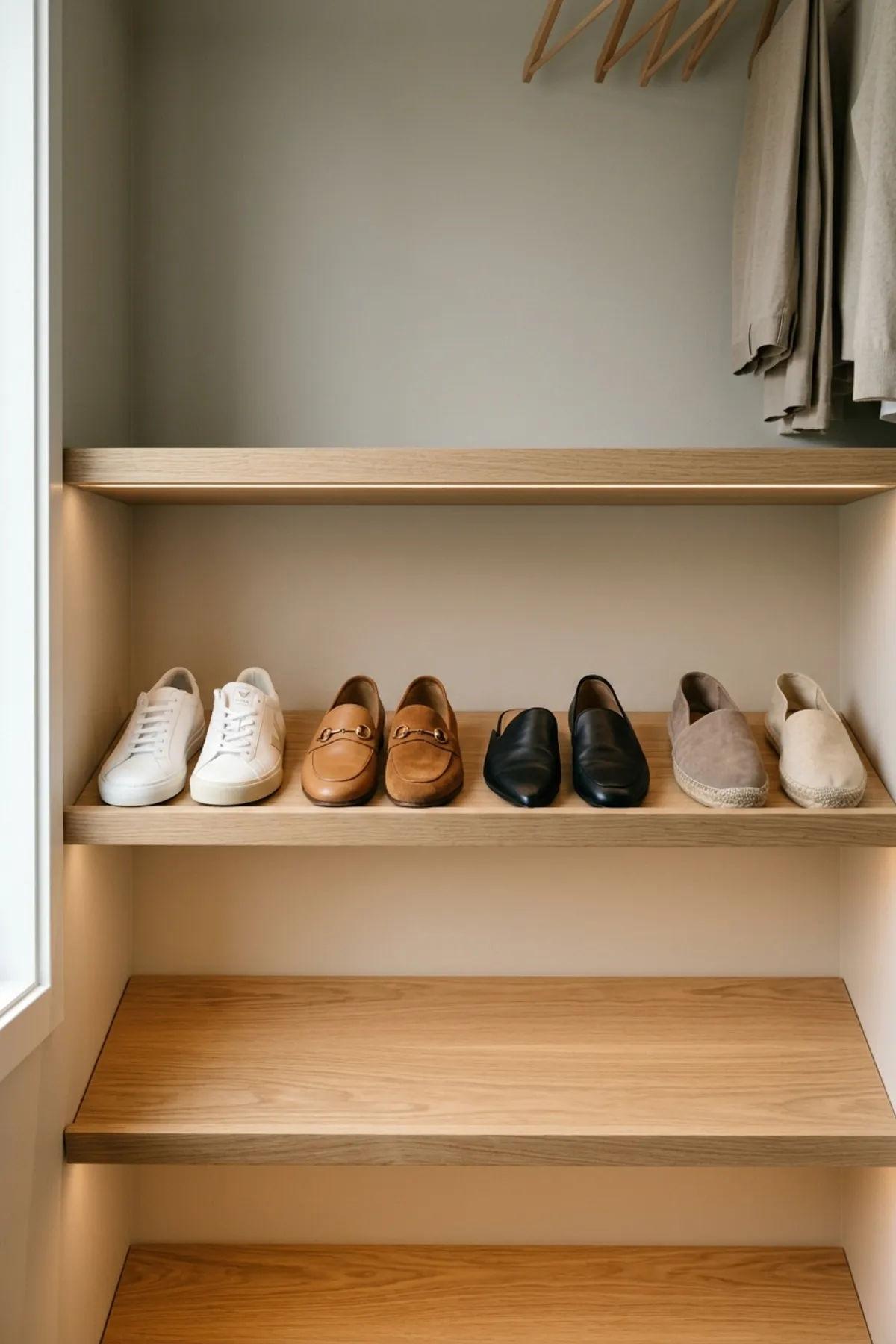
2. Subdivide Tall Shelves with Low-Profile 5-Inch Flat Inserts
When a closet only has two fixed wooden shelves spaced 14 inches apart, smart shoe closet ideas rely on low-profile inserts; stacking sandals and ballet flats directly on top of each other scuffs leather uppers and causes piles to topple. Slide expandable metal or white oak under-shelf risers into those tall gaps to create 5-inch micro-tiers specifically for flat footwear.
Why This Works Visually: Matching the shelf height tightly to the profile of the shoe mimics bespoke boutique millwork and instantly doubles your horizontal storage capacity.
Actionable Tip: Place low-profile flats and slides on the lower 5-inch tier and slightly taller canvas sneakers or mules on the upper tier where hanging clothes offer flexible clearance above.
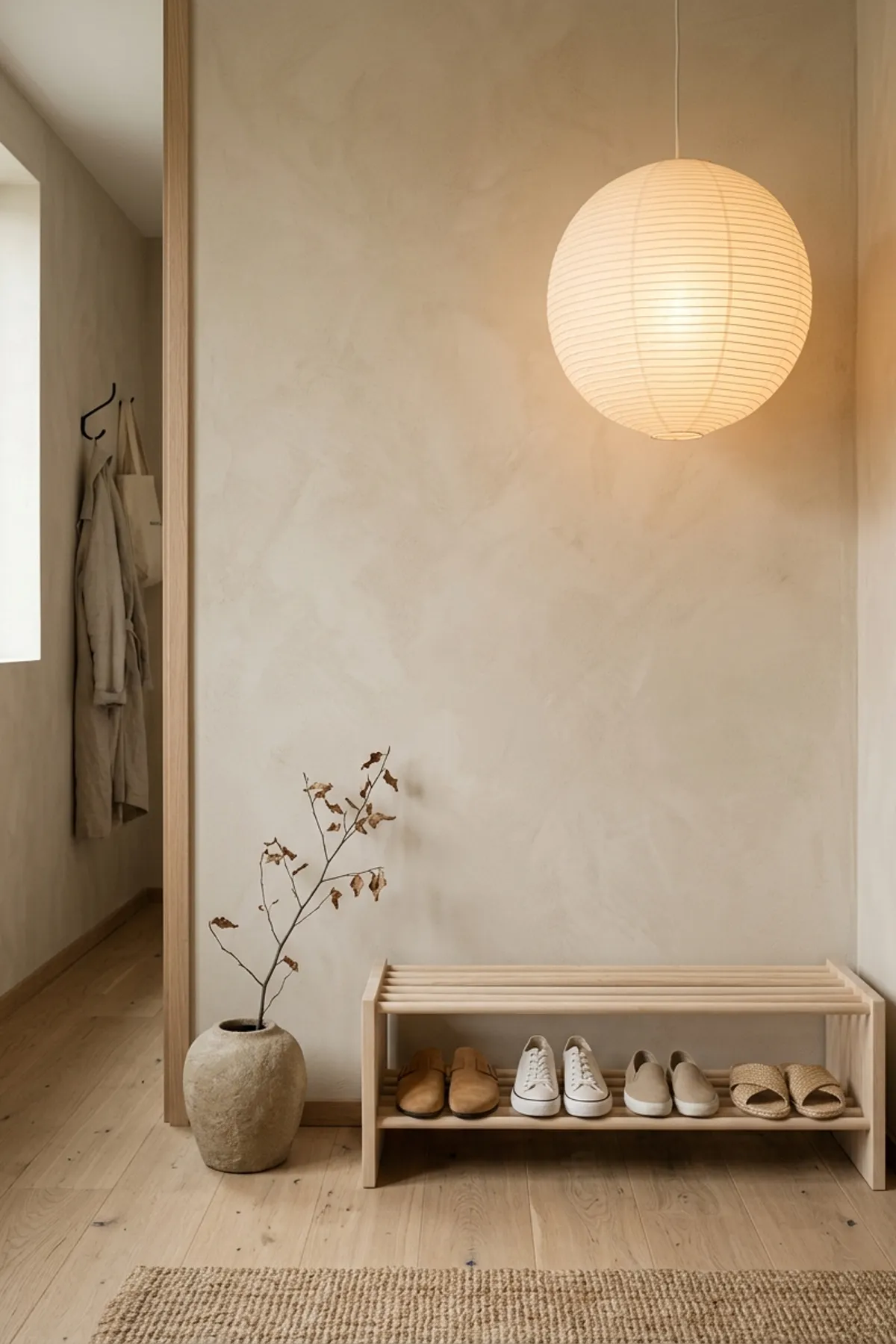
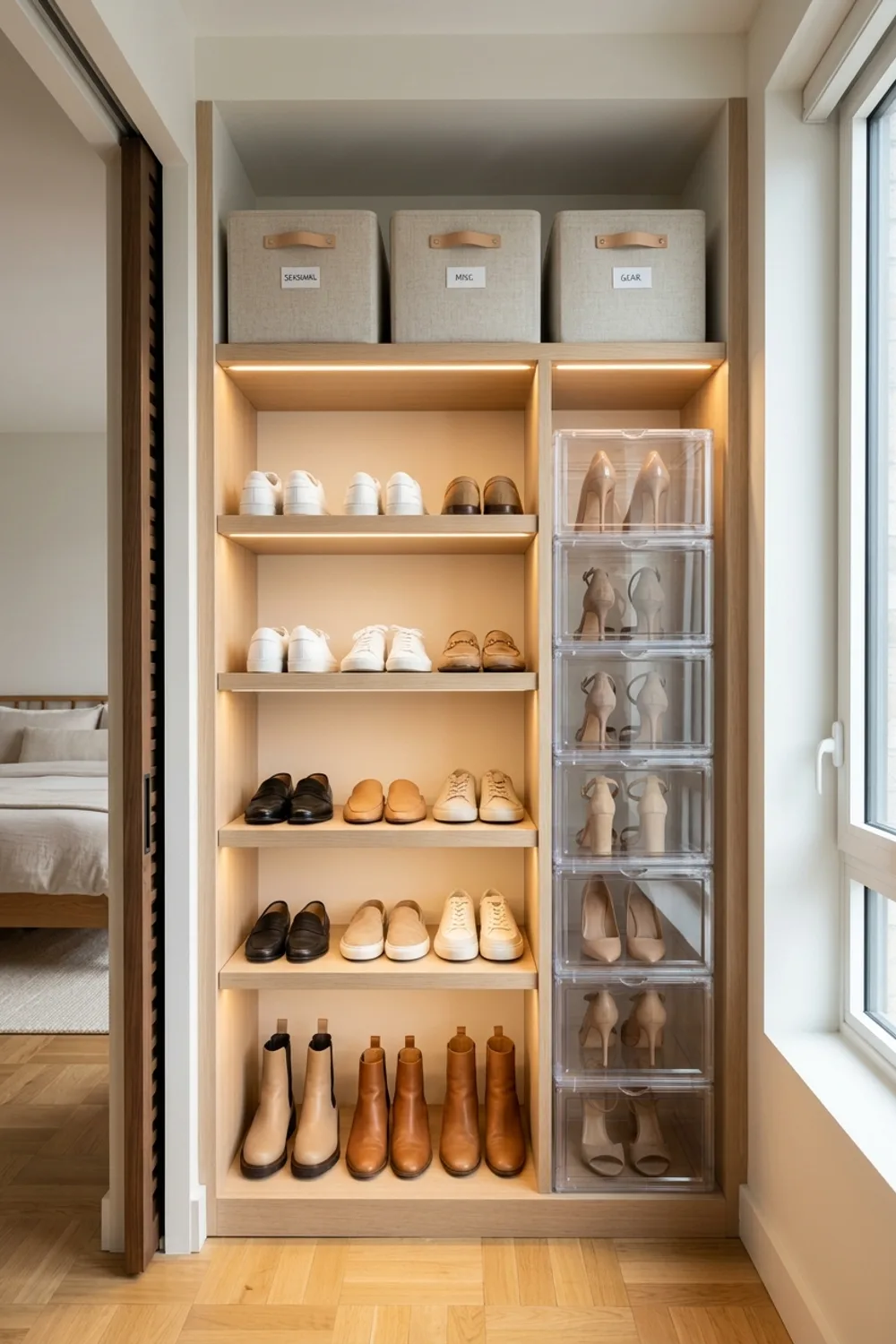
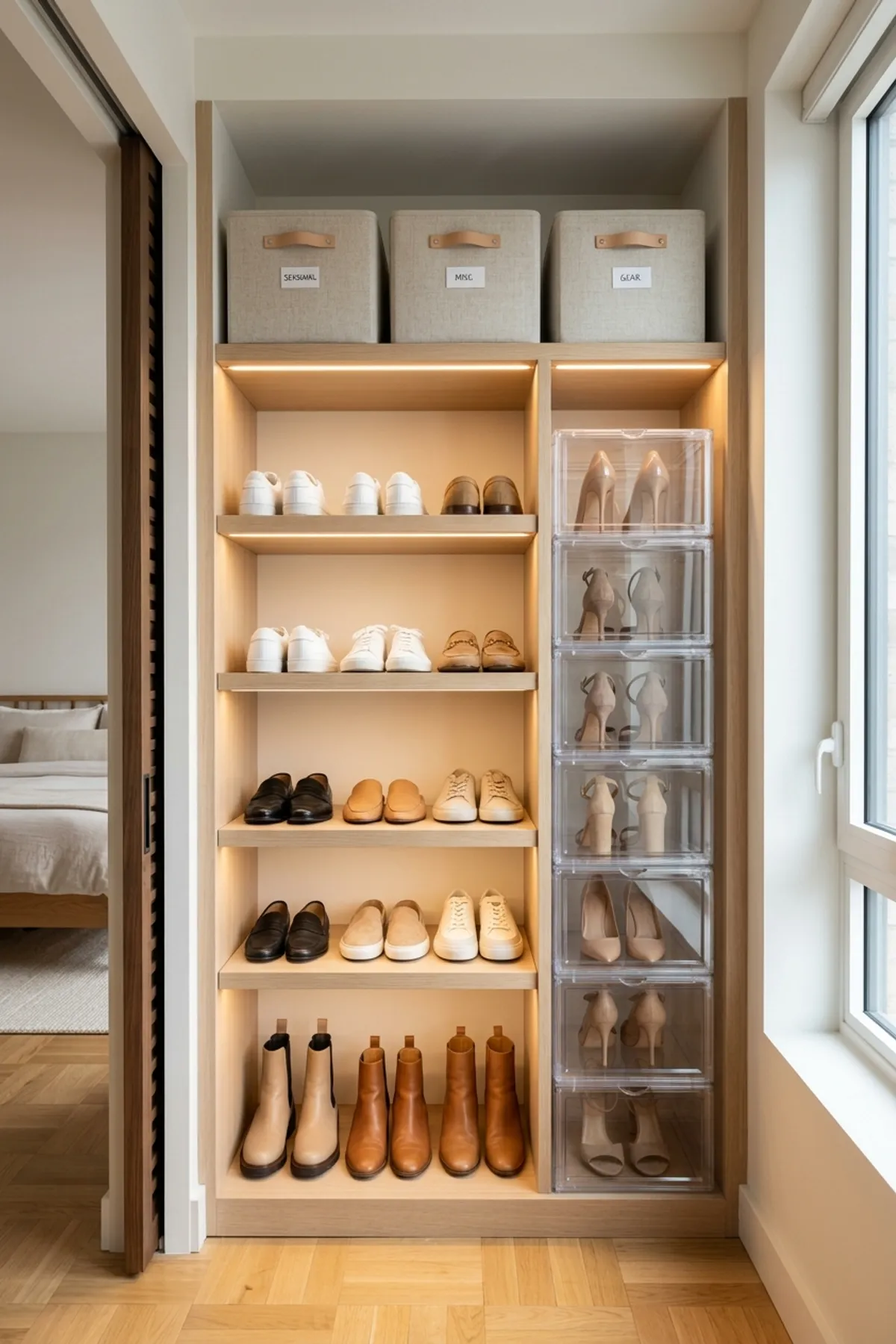
3. Stack Clear Drop-Front Acrylic Boxes for Occasion Heels & Suede
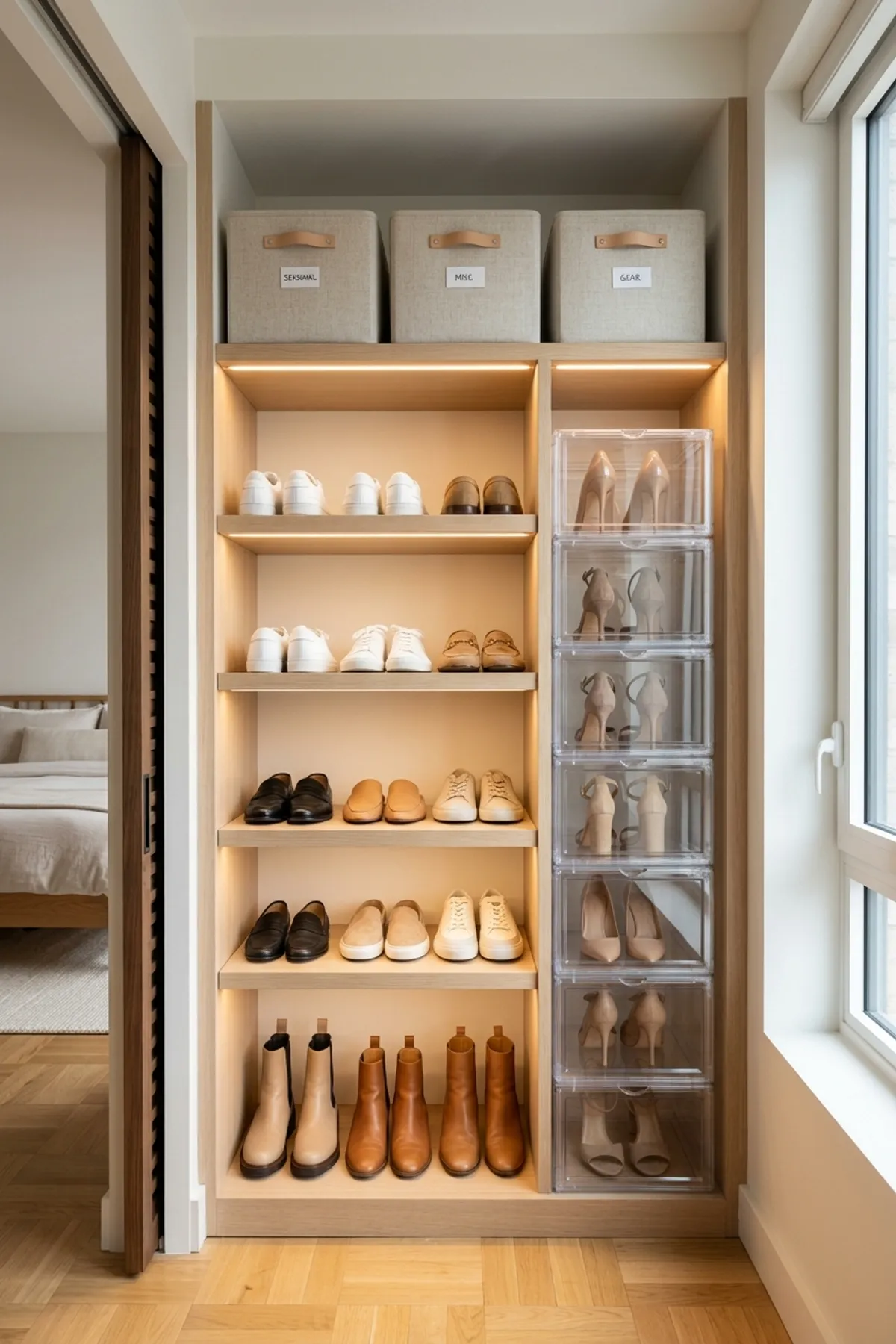
Delicate suede pumps, silk wedding heels, and collector sneakers collect dust and fade when left on open shelves, yet storing them in solid boxes means you forget you own them. Stack modular clear acrylic shoe boxes equipped with magnetic drop-front doors along your upper or side closet shelves.
Why This Works Visually: Uniform acrylic cubes turn an irregular collection of pointy heels and chunky soles into a sleek, architectural grid while letting you pull out the bottom pair without unstacking the column.
Actionable Tip: Verify that your clear boxes have rear ventilation perforations. According to preservation guidelines published by the National Park Service Museum Management Program, sealing genuine leather and suede inside 100% airtight plastic containers traps humidity, promotes mildew growth, and dries out natural hides over time.
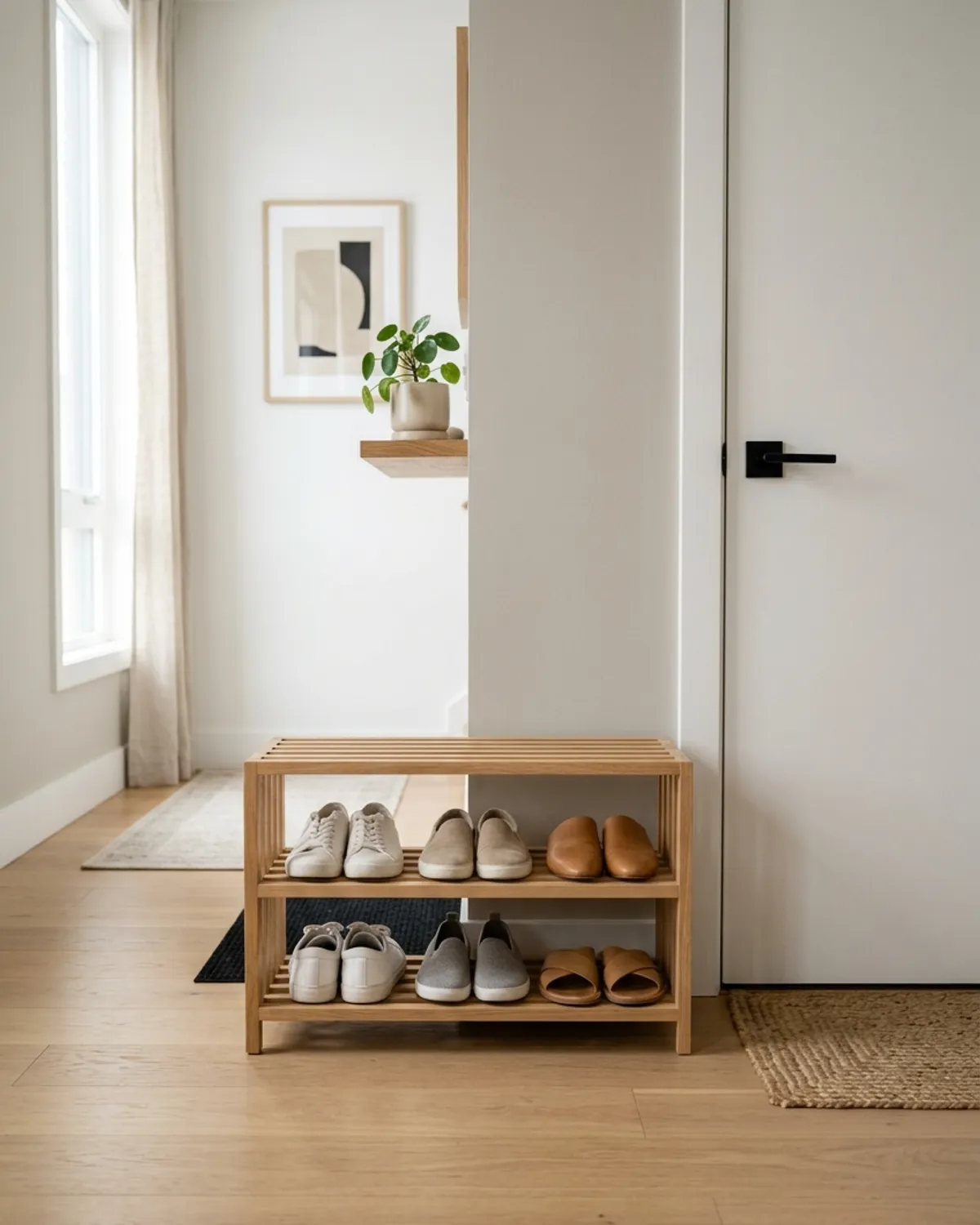
4. Anchor the Closet Floor with a Contained Tray & Low Slatted Rack
Leaving the closet floor as an open free-for-all guarantees that kicked-off gym shoes and slippers will pile up until the closet door cannot close. Ground-level shoe closet ideas define the floor perimeter with a low-profile two-tier low wooden rack (12 inches tall) paired with a washable rubber-lined tray underneath for damp or muddy soles. (If you prefer natural timber accents, check our curated guide to wooden shoe rack ideas for durable moisture-sealed options.)
Why This Works Visually: Giving the floor a rigid frame elevates shoes off the carpet or hardwood and stops stray laces from tangling with long hanging coats.
Renter-Friendly Tip: Choose an expandable metal-and-wood floor rack that adjusts from 24 to 42 inches wide so it fits snugly from wall to wall inside any standard rental reach-in closet.
5. Zone Shelves Strictly by Shoe Category Instead of Color
Color-coded rainbow closets look striking in social media photos, but cramming a 15-inch knee-high black boot next to a 2-inch black flip-flop ruins shelf geometry and wastes half your vertical height. Group your footwear strictly by structural category: one shelf for athletic sneakers, one for loafers and flats, one for dress heels, and one tall zone for boots.
Why This Works Visually: Uniform silhouettes lined up together create a clean horizontal line across each shelf, making the closet look calm and balanced.
Interior Stylist Tip: Once your categories are separated by shelf, you can still arrange pairs from lightest to darkest within each category for a polished editorial finish.
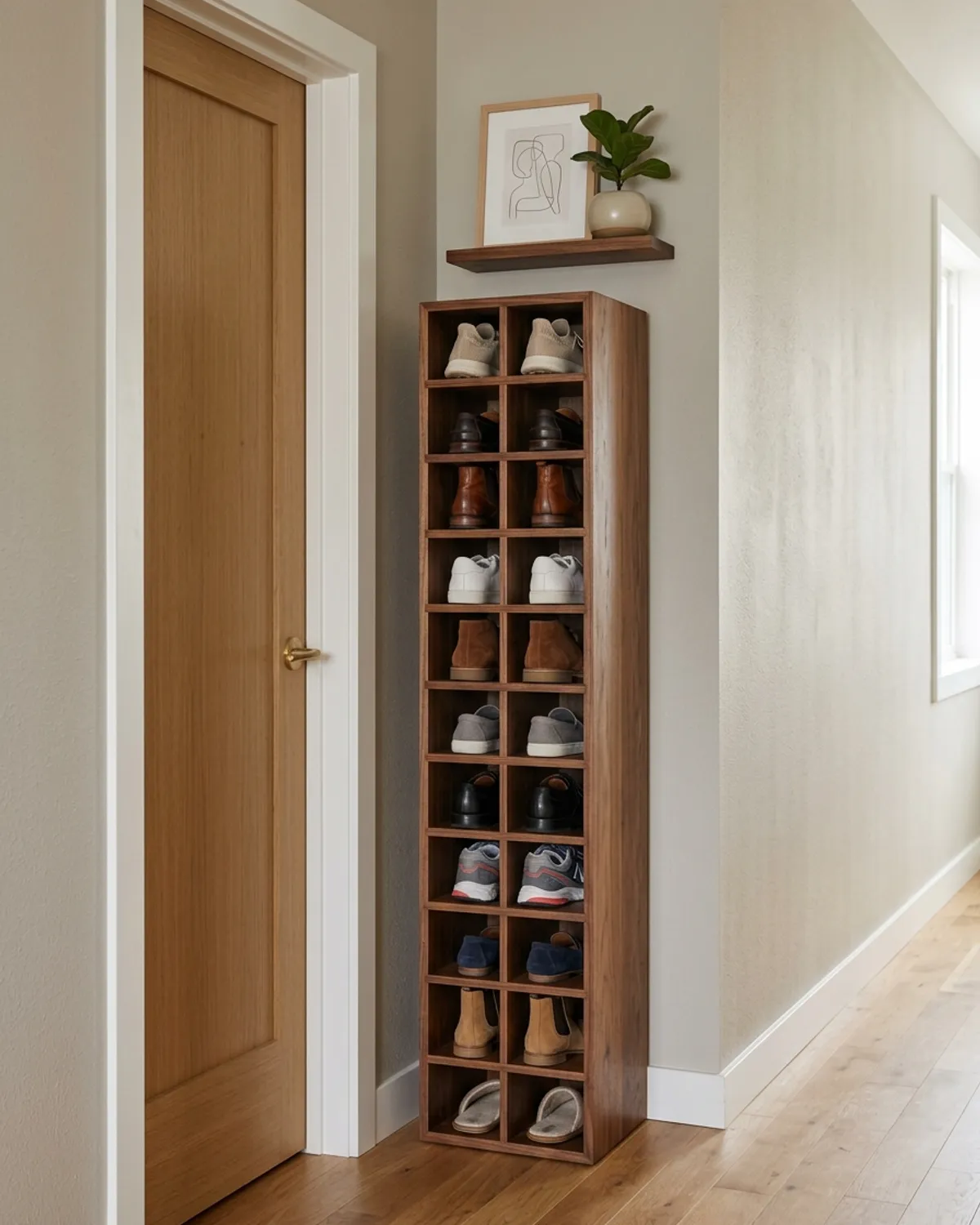
6. Slide Acrylic Shelf Dividers Onto Wide Closet Boards
In wide reach-in closets with a single long upper shelf, shoe boxes, folded dust bags, and upright sandals inevitably slide into a messy heap in the middle. Clean shoe closet ideas solve this by clipping clear acrylic or matte-metal vertical shelf dividers onto the board every 12 to 16 inches.
Why This Works Visually: Transparent dividers establish invisible bookends that keep stacked shoe boxes and soft-sided bins perfectly upright without visually chopping up the continuous shelf line.
7. Curate a Single “Capsule Wardrobe” Front-Row Shelf
Decision fatigue hits hard when 30 pairs of shoes stare back at you at 7:00 AM. Dedicate your single most visible eye-level shelf to a five-pair neutral capsule wardrobe—such as one crisp white sneaker, one black leather loafer, one tan ankle boot, one neutral heel, and one everyday flat.
Why This Works Visually: Giving your five most versatile pairs generous 2-inch breathing room between shoes elevates a basic apartment closet into a calm personal dressing room. (If your storage is located right by a front vestibule, review our curation of small entrance hall ideas for space-efficient entryway solutions.)
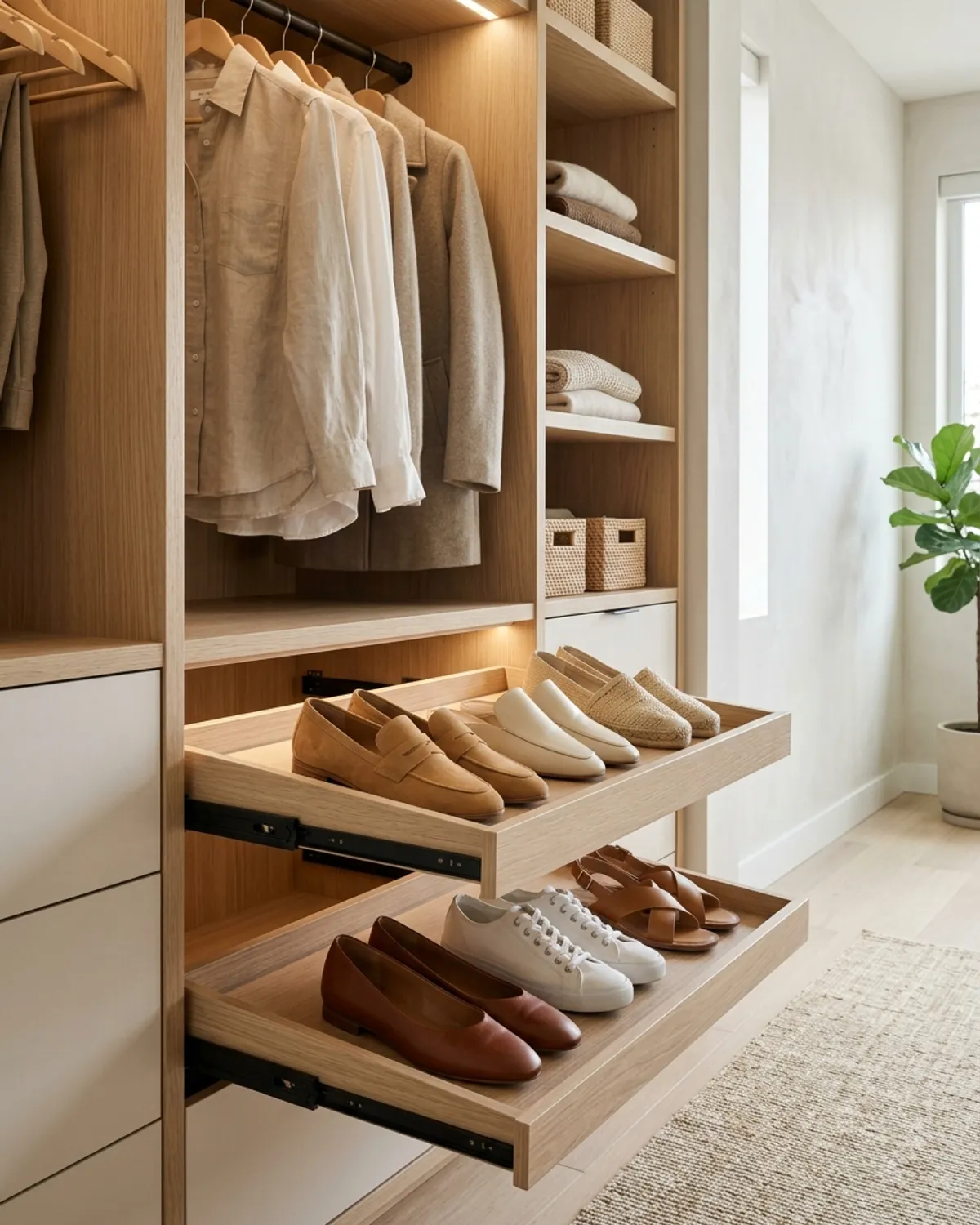
8. Install Smooth-Gliding Pull-Out Shoe Drawers or Trays
When closet shelves are deeper than 14 inches, reaching into dark back corners becomes a chore. Ergonomic shoe closet ideas utilize shallow pull-out wire baskets, wooden sliding trays, or concealed drawers on full-extension ball-bearing glides brings the entire depth of the closet out into the bedroom light.
Why This Works Visually: Concealed drawers hide vibrant running shoes and worn soles completely out of sight, leaving your bedroom closet looking serene even when the closet doors are left open.
Renter-Friendly Tip: If you cannot screw glides into rental closet walls (or want to explore more renter-friendly home upgrades), place freestanding stackable pull-out drawer frames on the bottom floor of the closet under your shortest hanging shirts.
9. Use a Structured Over-the-Door Rack Selectively for Flats & Slippers
A swinging closet door offers six vertical feet of bonus storage, but stuffing a flimsy canvas pocket organizer with heavy leather boots will warp the door hinges and prevent the door from latching. Hang a rigid powder-coated metal or structured linen over-the-door rack and restrict it strictly to lightweight flats, sandals, kids’ shoes, and house slippers.
Why This Works Visually: Keeping the rack profile under 5 inches deep with uniform slim footwear prevents the back of the door from looking bloated or chaotic.
Actionable Tip: Stick two small adhesive silicone bumper pads to the bottom corners of the metal rack frame so it never rattles against the wood door when you open and close it.
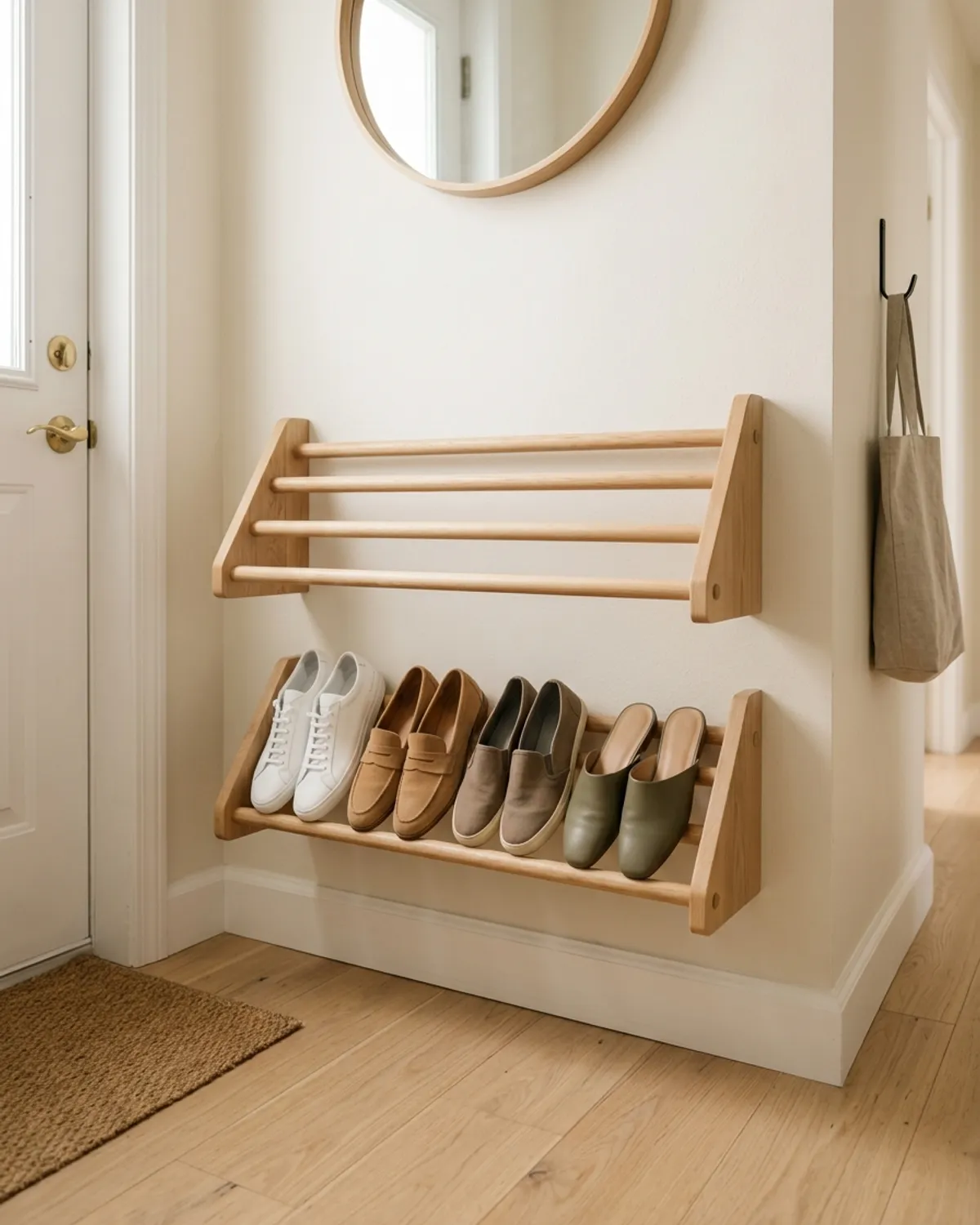
10. Build a Dedicated Tall Boot Zone with Upright Shapers or Hangers
Tall leather and suede boots suffer permanent ankle creases when they flop over on standard shelves. Dedicate one 18-inch-tall lower cubby or floor section specifically to boots, and insert spring-loaded cedar boot trees, rolled-up cardstock, or foam inserts into the shafts so they stand tall.
Why This Works Visually: Upright boot shafts create neat vertical columns and take up half the horizontal width of collapsed boots.
Alternative Space-Saver: In tight quarters or open studio apartment layouts with extra hanging rod space, clip tall boots upside-down onto padded clip boot hangers suspended from a low tension rod so the leather hangs completely straight without touching the floor.
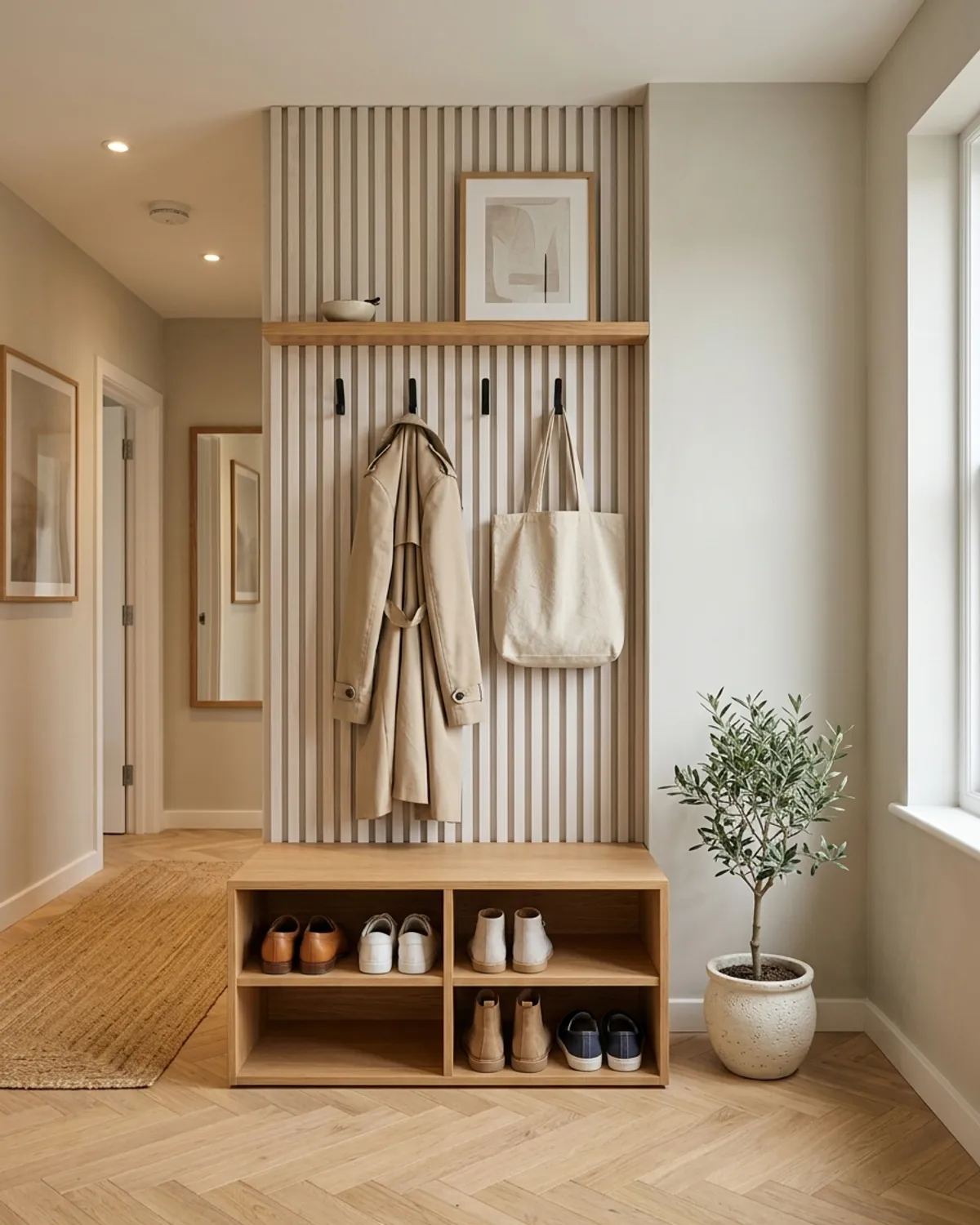
11. Move Off-Season & Formal Footwear into Labeled Upper Bins
Heavy shearling snow boots do not belong next to linen espadrilles, and black-tie patent leather shoes only get worn two or three times a year. Pack off-season and rare-occasion shoes inside matching lidded canvas or linen storage bins on the highest shelf above your closet rod (72+ inches high).
Why This Works Visually: Replacing a jumble of seasonal footwear on the top shelf with three identical oatmeal linen boxes instantly quiets the upper sightline of the closet.
Actionable Tip: Slip a clean cotton shoe dust bag or acid-free tissue paper between pairs inside the bin so buckles and heels never scratch neighboring leather, and clip a bold brass or cardstock label to the front handle (“Winter Boots”, “Event Heels”, “Beach Sandals”).
12. Tuck a Slim Try-On Stool or Bench Just Outside the Closet Door
Half of all shoe closet messes happen because you try on three pairs of shoes while standing on one foot, run late, and leave the rejects kicked across the bedroom rug. Place a compact 12-inch-deep upholstered stool or narrow bench right beside the closet threshold. (For dedicated seating ideas that integrate lower shoe storage, see our guide to entryway bench with shoe storage.)
Why This Works Visually: Having a dedicated perch right at the closet door encourages you to sit comfortably while lacing up and place unworn pairs straight back onto their shelf before walking away.
13. Standardize All Bins, Boxes, and Hangers to One Neutral Palette
Small closets look cramped when hot-pink shoe boxes, wire store hangers, plastic grocery bags, and dark brown baskets compete for attention. Commit every storage container in your shoe closet to a single low-contrast palette—such as warm alabaster, natural seagrass, pale white oak, and clear acrylic.
Why This Works Visually: Visual repetition tricks the eye into reading a packed reach-in closet as a calm, unified system rather than a crowded utility locker.
14. Add Motion-Sensor 3000K LED Strip or Puck Lighting
Even the most organized shoe shelf fails if the bottom half of your closet sits in pitch-black shadow. Stick rechargeable, magnetic motion-sensor LED light bars (2700K to 3000K warm white) under the front lip of each shoe shelf or vertically along the interior door jamb. Aligned with ENERGY STAR color quality guidelines, 2700K–3000K high-CRI illumination reveals the true shade of dark navy vs. black shoes without washing out neutral leather tones.
Why This Works Visually: Under-shelf lighting illuminates footwear clearly and gives an ordinary rental closet the warm, high-end glow of a custom walk-in dressing room.
Renter-Friendly Tip: Magnetic adhesive metal plates peel off cleanly without damaging paint and let you pop the LED bar off in two seconds for USB-C recharging every two months.
15. Organize by Frequency Tiers (Daily, Weekly, Monthly, Seasonal)
If you want a shoe closet system that stays neat for years without Sunday-afternoon reorganizing marathons, map your closet vertically by usage frequency:
- Tier 1 — Daily Rotation (Waist/Knee Height, 28″–48″): Open shelves for your 6–8 most-worn pairs.
- Tier 2 — Weekly & Work Rotation (Lower Shelves, 12″–26″): Open shelves or slanted racks for gym shoes, office loafers, and casual weekend pairs.
- Tier 3 — Monthly & Special Occasion (Eye-to-Shoulder Height, 50″–64″): Clear drop-front boxes for heels, dress shoes, and delicate suede.
- Tier 4 — Seasonal Archive (Top Shelf, 68″+): Labeled lidded linen bins for winter snow boots or vacation sandals.
Why This Works Visually: Your physical effort matches how often you wear the shoe—zero lids to open for daily sneakers, full dust protection for rare pairs.
16. Reclaim Vertical Dead Space with Individual Shoe Slot Stackers
If your closet shelves are permanently fixed in place and you cannot add new boards, use individual double-deck shoe slot organizers (tiered plastic or bamboo ramps that hold one shoe directly above its mate in a single pair’s footprint). (For other tight drop zones around the home, explore our solutions in small entryway ideas.)
Why This Works Visually: By stacking the left shoe on an angled upper platform right over the right shoe below, you cut the horizontal width required per pair from 8 inches down to 4 inches—instantly doubling shelf capacity without structural changes.
17. Apply the “One-In, One-Out” Shelf Capacity Rule
No organization product can fix a closet holding 60 pairs of shoes in a space built for 25. Once your shelves, clear boxes, and seasonal bins are neatly arranged with a half-inch of breathing room between pairs, treat your shelf count as a hard physical boundary. (When outfitting shallow rooms across an apartment, check our space-stretching strategies in apartment entryway storage ideas and narrow entryway ideas.)
Why This Works Visually: Leaving 10% to 15% of your closet shelf space intentionally open prevents pairs from getting crushed together and ensures putting shoes away takes two seconds.
Shoe Closet Storage Matrix by Footwear Type & Closet Layout
Use this quick-reference matrix to match every footwear category in your wardrobe to its optimal storage container, vertical clearance, and closet placement:
| Footwear Category | Best Storage Method | Required Shelf Height | Ideal Closet Placement |
|---|---|---|---|
| Daily Sneakers & Loafers | Open flat or slatted wood shelf | 6″ to 7″ clearance | Waist-to-knee level (easy grab zone) |
| Ballet Flats, Slides & Sandals | Low-profile shelf risers or over-the-door rack | 4.5″ to 5.5″ clearance | Mid-level micro-tiers or back of closet door |
| Dress Heels & Suede Shoes | Ventilated clear drop-front acrylic boxes | 7.5″ to 9″ box height | Eye-to-shoulder height shelves |
| Ankle Booties & High-Tops | Open shelf with acrylic vertical dividers | 9.5″ to 12″ clearance | Lower-middle shelves (18″ to 28″ high) |
| Knee-High & Winter Boots | Tall cubby + cedar boot shapers or clip hangers | 16″ to 19″ clearance | Bottom floor tray zone or low tension rod |
| Off-Season & Event Footwear | Labeled lidded linen bins + cotton dust bags | 10″ to 12″ bin height | Top overhead closet shelf (68″+ high) |
Common Closet Shoe Storage Mistakes to Avoid
Protect your footwear investment and keep your closet functioning smoothly by avoiding these common organizational traps:
- Storing damp or just-worn leather shoes inside sealed boxes: Feet release moisture throughout the day. Putting just-worn leather loafers or athletic sneakers straight into an enclosed plastic box traps humidity, encourages bacteria, and breeds mildew. Let worn shoes air out on an open shelf or floor tray for 12 to 24 hours before boxing them.
- Using wire pinch-rod racks that dent leather: Cheap tension-rod metal loops that poke inside the toe box or grip the heel counter can permanently stretch knit uppers and dent delicate leather soles. Stick to flat shelves, slatted wood racks, or padded boot clips.
- Hanging heavy organizers on hollow-core bifold doors: Many apartment bedroom closets use lightweight hollow-core bifold or sliding bypass doors. Hanging 25 pounds of shoes on a bifold door will pull the top roller pin out of its ceiling track. Only use over-the-door racks on solid hinged swing doors.
- Stacking shoes directly on top of each other: Resting dirty rubber outsoles directly on the canvas or leather uppers of the bottom shoe leaves permanent scuff marks. Use double-deck shoe slot risers or under-shelf inserts instead.
Frequently Asked Questions
Conclusion
The most effective shoe closet ideas turn a chaotic pile of footwear into a calm, friction-free part of your daily routine. By matching your shelf spacing to the true height of your shoes, placing your core weekly rotation at effortless waist height, protecting occasion pairs inside ventilated clear boxes, and lighting dark shelves with warm motion-sensor LEDs, even a compact apartment closet can feel twice as spacious. Start today by pulling every pair out of your closet, archiving off-season shoes to the top shelf, and setting up one dedicated mid-height grab zone for the pairs you truly love to wear.