Low-Maintenance Balcony Trees: 15 Best Picks for Urban Apartments
Adding low maintenance balcony trees to a compact outdoor space is one of the most rewarding ways to make an apartment feel grounded, lush, and architecturally complete. In small apartment living, square footage is always at a premium, but vertical volume is almost always underutilized. A slender potted olive tree, a clipped bay laurel standard, or a compact dwarf citrus tree draws the eye upward, softens harsh exterior concrete, and provides a leafy natural canopy without crowding out your bistro chair or folding coffee table.
The secret to keeping container trees healthy in an apartment setting is matching each tree species to your specific microclimate—especially sunlight exposure, wind speed, and container weight limits. By selecting naturally dwarf or slow-growing cultivars and potting them in lightweight, well-draining planters, you can enjoy year-round greenery with minimal pruning and effortless watering routines.
Renter Note: If your apartment lease prohibits heavy outdoor loads or permanent fixtures, review our practical guide to renter-friendly balcony ideas for mobile rolling caddies and zero-damage setups. For broader space-planning strategies, see our foundational advice on small apartment ideas.
How to Choose Low Maintenance Balcony Trees for Apartments
Not every tree thrives in a container on an elevated terrace. Before selecting a specimen from your local nursery, evaluate your balcony against these four environmental realities:
- Sunlight Direction: South- and west-facing balconies receive intense afternoon sun suitable for Mediterranean evergreens like olive trees and citrus. North- and east-facing balconies suit shade-tolerant Japanese maples and camellias.
- Wind Exposure: Upper-floor apartments experience persistent gusts that dry out soil rapidly and tear large, delicate leaves. Tough, waxy-leafed varieties like bay laurel or flexible dwarf conifers handle exposed wind channels best. For screening wind and sightlines, pair your trees with our proven balcony privacy tips.
- Container Weight and Material: Wet potting soil is remarkably heavy. To prevent exceeding balcony load limits while keeping maintenance manageable, choose lightweight composite, fiberglass, or resin planters rather than solid concrete or unglazed stoneware.
- Root Confinement Tolerance: True low maintenance balcony trees naturally tolerate restricted root zones. Look for naturally dwarf rootstocks or slow-growing varieties that do not require annual repotting.
Table of Contents
- How to Choose Low Maintenance Balcony Trees for Apartments
- Quick Wins: Low-Stress Container Tree Essentials
- 15 Low-Maintenance Balcony Trees for Apartment Living
- Balcony Tree Comparison Matrix: Light, Care, & Evergreen Status
- Frequently Asked Questions About Balcony Trees
- Balcony Safety: Wind, Drainage, and Weight Limits
- Final Thoughts on Compact Balcony Greenery
Quick Wins: Low-Stress Container Tree Essentials
If you want fast results without trial and error, follow these five golden rules for cultivating low maintenance balcony trees in small spaces:
- Put heavy pots on wheeled rolling caddies: Being able to effortlessly roll a 15-gallon container out of driving rain or strong drafts makes seasonal maintenance completely painless.
- Mulch the soil surface: Top-dressing your container with a 2-inch layer of pine bark chips or smooth river pebbles cuts water evaporation by up to 50%, reducing watering frequency dramatically during summer heatwaves.
- Install pot feet or risers: Elevating planters slightly off the balcony deck ensures unobstructed drainage, prevents stained floor tiles, and protects roots from sitting in stagnant puddles.
- Use quality container potting mix: Never dig up garden soil for balcony containers. A lightweight mix enriched with perlite and bark chunks retains essential moisture while allowing oxygen to reach root systems, as recommended by the Penn State Extension container gardening guidelines.
- Integrate ambient evening lighting: Wrap warm LED fairy lights around your tree’s trunk or place a solar uplight at the base to turn your outdoor space into an atmospheric evening sanctuary, matching the principles in our cozy apartment aesthetic ideas.
15 Low-Maintenance Balcony Trees for Apartment Living
Here are the fifteen best low maintenance balcony trees suited for apartment balconies, grouped by their unique aesthetic benefits, sunlight tolerances, and care needs.
1. Dwarf Olive Tree (Olea Europaea)
The dwarf olive tree is the reigning champion of modern small-space outdoor styling. With its silvery willow-like foliage, gnarled architectural trunk, and remarkable drought resistance, it thrives on warm, sunny south-facing balconies. Olive trees grow very slowly in containers, meaning they will not outgrow a modest 14-to-18-inch pot for years. They tolerate drying out between waterings and easily withstand hot summer winds.
2. Bay Laurel Standard (Laurus Nobilis)
Bay laurel is a hardy Mediterranean evergreen that can be clipped into a crisp, elegant lollipop standard or left to grow as an informal multi-stem shrub. Its dense, deep-green leathery leaves are wind-firm, pest-resistant, and frost-tolerant down to roughly 20°F (-6°C). As an added apartment bonus, you can harvest fresh bay leaves directly from your balcony for home cooking. It thrives in both full sun and partial shade.

3. Japanese Maple (Acer Palmatum)
For sheltered, east-facing or north-facing balconies that receive gentle morning light rather than scorching afternoon sun, a potted Japanese maple is unmatched in beauty. Compact cultivars like ‘Bloodgood’, ‘Garnet’, or ‘Shindeshojo’ offer sculptural branches, delicate lacy foliage, and breathtaking ruby-red autumn color. Japanese maples have shallow, non-aggressive root systems that adapt comfortably to wide, shallow ceramic containers. For complementary minimalist styling, explore our guide to Japanese style balcony decor.
4. Calamondin Orange (Citrofortunella Microcarpa)
If you want a fruitful citrus tree that does not demand commercial greenhouse conditions, the calamondin orange is your best choice. Naturally compact and continuous-fruiting, it produces intensely fragrant white blossoms alongside miniature bright orange fruits throughout spring and autumn. Calamondin trees are remarkably pest-resilient compared to standard lemons, and in cooler climates, their container can be easily wheeled indoors next to a sunny window for winter.
5. Dwarf Conifer / Mugo Pine (Pinus Mugo)
If your apartment balcony is high on the tenth floor and exposed to howling crosswinds and winter freezes, deciduous trees might suffer. Enter dwarf conifers like the Mugo Pine (Pinus mugo ‘Pumilio’) or Dwarf Alberta Spruce (Picea glauca ‘Conica’). These rugged miniature evergreens require zero shaping, laugh off sub-zero winter temperatures, and maintain dense, needle-textured emerald volume all twelve months of the year without dropping seasonal litter.
6. Japanese Camellia (Camellia Japonica)
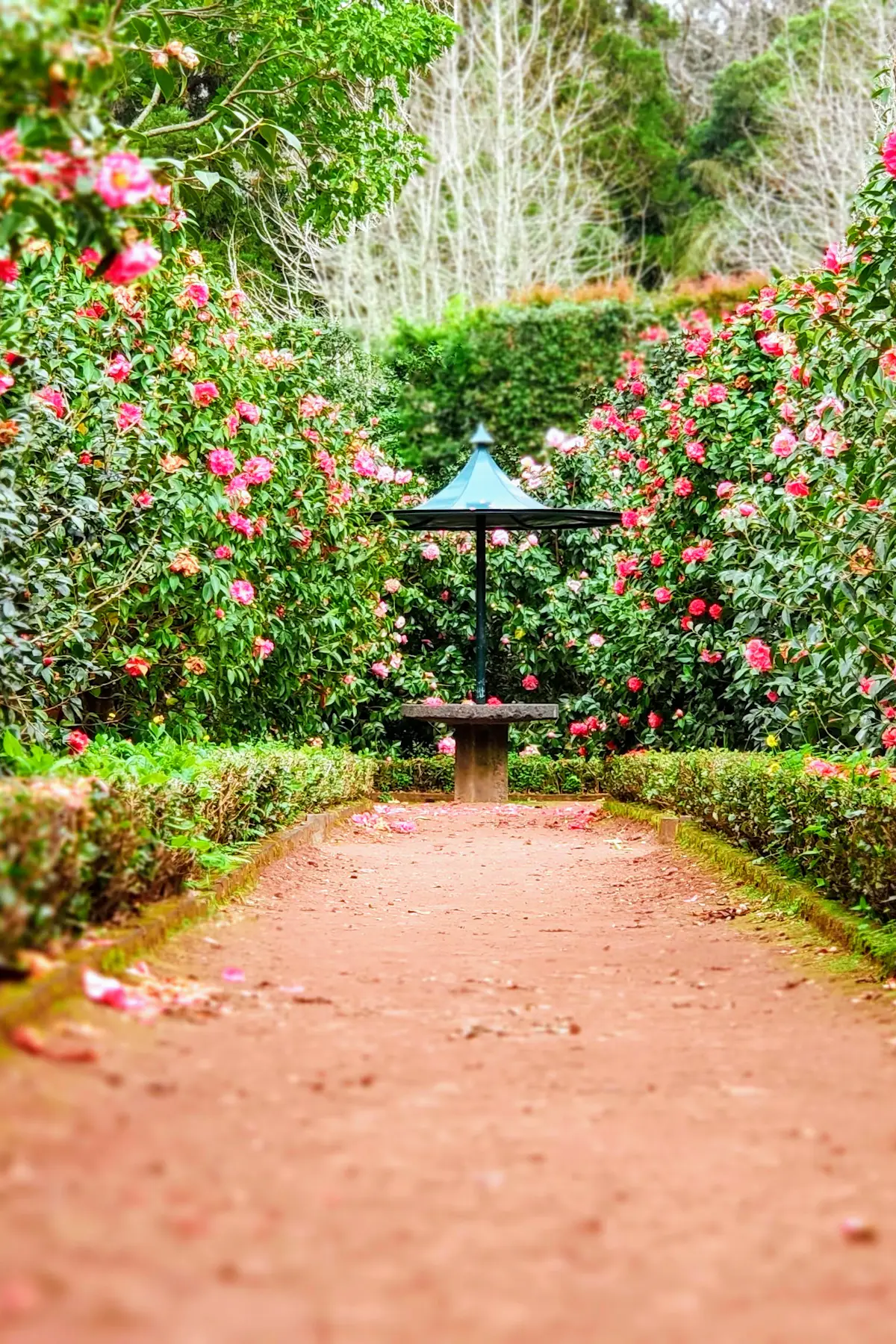
Camellias are glossy, broadleaf evergreen shrubs that can easily be trained into slender upright patio trees. What makes them exceptional for urban balconies is their flowering schedule: while most container plants are dormant, camellias burst into opulent rose-like blooms from late autumn through early spring. They prefer slightly acidic potting soil, sheltered partial shade, and consistent moderate moisture.
7. Dwarf Fig Tree (Ficus Carica ‘Little Miss Figgy’)
Standard edible fig trees quickly grow massive, but modern dwarf mutations like ‘Little Miss Figgy’ or ‘Fignomenal’ remain under 4 to 5 feet tall in containers. Their dramatic, hand-shaped lobed leaves provide unbeatable tropical-style privacy screening during summer. In sunny spots, they reward you with sweet, edible dark purple figs in late summer before dropping their leaves in autumn to allow winter light into your apartment.
8. Crepe Myrtle Dwarf (Lagerstroemia Indica)
Dwarf crepe myrtles (such as the ‘Barrita’ or ‘Petite’ series) are heat-loving, drought-tolerant deciduous trees that put on a spectacular floral display from July through September. Huge crinkly clusters of pink, watermelon, or white blossoms cover the canopy for 90 to 100 days straight. During winter, their smooth cinnamon-and-cream exfoliating bark provides refined sculptural appeal on an otherwise quiet balcony.
9. Star Magnolia (Magnolia Stellata)
While classic southern magnolias become forest giants, the Star Magnolia remains naturally compact and shrubby, reaching only 6 to 8 feet after a decade in a pot. In very early spring before leaves appear, silky buds open into dozens of fragrant, pure-white starburst flowers. It is much hardier than evergreen magnolias and adapts beautifully to container cultivation in temperate climates.
10. Dwarf Pomegranate (Punica Granatum ‘Nana’)
Growing barely 3 to 4 feet tall in a pot, the dwarf ornamental pomegranate is a powerhouse of visual interest. Throughout summer, it bears vibrant scarlet trumpet flowers followed by miniature decorative pomegranates that hang like holiday ornaments well into autumn. Its small, glossy leaves resist pest damage and tolerate heat, bright sun, and occasional underwatering effortlessly.
11. Serviceberry / Juneberry (Amelanchier Lamarckii)
Serviceberry is celebrated by landscape designers because it provides four distinct seasons of interest in a single container. Snowy white blossoms cover the slender branches in spring, followed by edible blueberry-like summer fruit that attracts songbirds to your high-rise perch. In autumn, the leaves turn brilliant shades of fiery orange and crimson before falling to reveal graceful, multi-stem silver bark in winter.
12. Dwarf Kumquat (Fortunella Japonica)
Compact, bushy, and intensely decorative, kumquat trees are among the most forgiving citrus trees for apartment balconies. They possess thick, deep-green foliage, sweet white blossoms, and clusters of small oval fruits with sweet, edible skins. They handle container confinement better than full-sized oranges and lemons and thrive in sunny corners beside a compact railing counter—an idea inspired by our balcony bar ideas.
13. Sweet Bay Magnolia (Magnolia Virginiana)
If your balcony floor stays damp or you tend to overwater your plants, the Sweet Bay Magnolia is an ideal choice. Unlike most trees that rot in moist soil, sweet bay naturally thrives in damp conditions. It features slender upright growth, leaves with silvery-white undersides that shimmer in the breeze, and creamy lemon-scented blossoms in late spring.
14. Dwarf Korean Lilac (Syringa Meyeri ‘Palibin’)
Standard lilacs quickly become unruly thickets, but the dwarf Korean lilac standard is grafted onto a clean 3-foot trunk to form an exquisite miniature lollipop tree. In late spring, it produces an explosion of highly fragrant lavender-pink flower panicles that perfume your entire apartment when the balcony door is open. It is completely mildew-resistant and fully frost-hardy.

15. Japanese Stewartia (Stewartia Pseudocamellia)
For gardeners looking for a rare, high-end design tree that stays refined in a large planter, Japanese Stewartia is an exquisite choice. A member of the tea family, it produces white camellia-like blossoms in midsummer when few other trees flower. In autumn, its foliage shifts to dramatic bronze and burgundy, while the winter trunk reveals gorgeous peeling bark resembling modern abstract art. Pair it with compact patio styling from our tiny balcony ideas and apartment balcony ideas for a curated outdoor sanctuary.
Balcony Tree Comparison Matrix: Light, Care, & Evergreen Status
Use this quick-reference selection matrix to match the best low maintenance balcony trees to your apartment’s specific sunlight and climate profile:
| Tree Species | Sunlight Need | Evergreen / Deciduous | Wind Tolerance | Primary Appeal |
|---|---|---|---|---|
| Dwarf Olive | Full Sun | Evergreen | High | Silvery foliage, drought-hardy |
| Bay Laurel | Sun to Partial Shade | Evergreen | Very High | Architectural topiary, culinary leaves |
| Japanese Maple | Morning Sun / Shade | Deciduous | Moderate | Lacy foliage, brilliant autumn color |
| Calamondin Orange | Full Sun | Evergreen | Moderate | Fragrant blossoms, edible citrus |
| Mugo Pine / Conifer | Full Sun | Evergreen | Maximum | Frost-hardy, zero-pruning evergreen |
| Camellia Japonica | Partial Shade | Evergreen | Moderate | Winter blooms, glossy leathery foliage |
| Dwarf Fig | Full Sun | Deciduous | Moderate | Large privacy leaves, sweet fruit |
| Dwarf Crepe Myrtle | Full Sun | Deciduous | High | 90 days of summer flowers, mottled bark |
| Star Magnolia | Full Sun to Part Sun | Deciduous | Moderate | Early spring starburst flowers |
| Dwarf Pomegranate | Full Sun | Deciduous | High | Scarlet blooms, decorative fruit |
| Serviceberry | Full Sun to Part Shade | Deciduous | Moderate | Spring blooms, berries, autumn foliage |
| Dwarf Kumquat | Full Sun | Evergreen | Moderate | Sweet fruit, compact habit, scented blooms |
| Sweet Bay Magnolia | Sun to Part Shade | Semi-Evergreen | Moderate | Shimmering leaves, tolerates damp soil |
| Dwarf Korean Lilac | Full Sun | Deciduous | High | Intense spring perfume, mildew-free |
| Japanese Stewartia | Part Sun / Morning Sun | Deciduous | Moderate | Summer blooms, multi-toned bark |
Frequently Asked Questions About Balcony Trees
Practical answers on container tree care, wind protection, winter hardiness, and safety limits for apartment balconies.
Balcony Safety: Wind, Drainage, and Weight Limits
Responsible balcony gardening means respecting both engineering safety and building regulations. Keep these safety practices in mind before installing your container trees:
- Place Heavy Containers Near Structural Support: Position your largest planters along the building’s exterior masonry wall or over support beams where structural capacity is highest, rather than clustering them on the outer railing edge.
- Never Block Emergency Egress: Ensure at least 30 to 36 inches of clear walking pathway between your balcony door, seating area, and any fire escape ladders or access gates.
- Control Drainage Runoff: Never let dirty irrigation water drip freely onto neighbors below. Use fitted drip trays or saucers to capture runoff and empty them 30 minutes after watering to prevent root rot.
- Secure Against Gale-Force Gusts: If severe storm warnings are issued, roll mobile containers flat against the wall or lay taller standard trees gently on their sides to prevent broken stems or blown-over pots.

Final Thoughts on Compact Balcony Greenery
Living in a compact urban apartment does not mean sacrificing the joy of garden living. By introducing one or two well-chosen low maintenance balcony trees, you immediately elevate a bare concrete outdoor area into a serene, leafy sanctuary. Start small with a single potted olive tree or a bay laurel standard, observe how it adapts to your balcony’s sunlight and breezes, and gradually layer in complementary herbs and outdoor seating for a space you will love spending time in every single day.